Early Byzantine Period · Byzantine Empire
Anthimus's Chicken with Vinegar
From De Observatione Ciborum · Anthimus · 511
Verified from original source
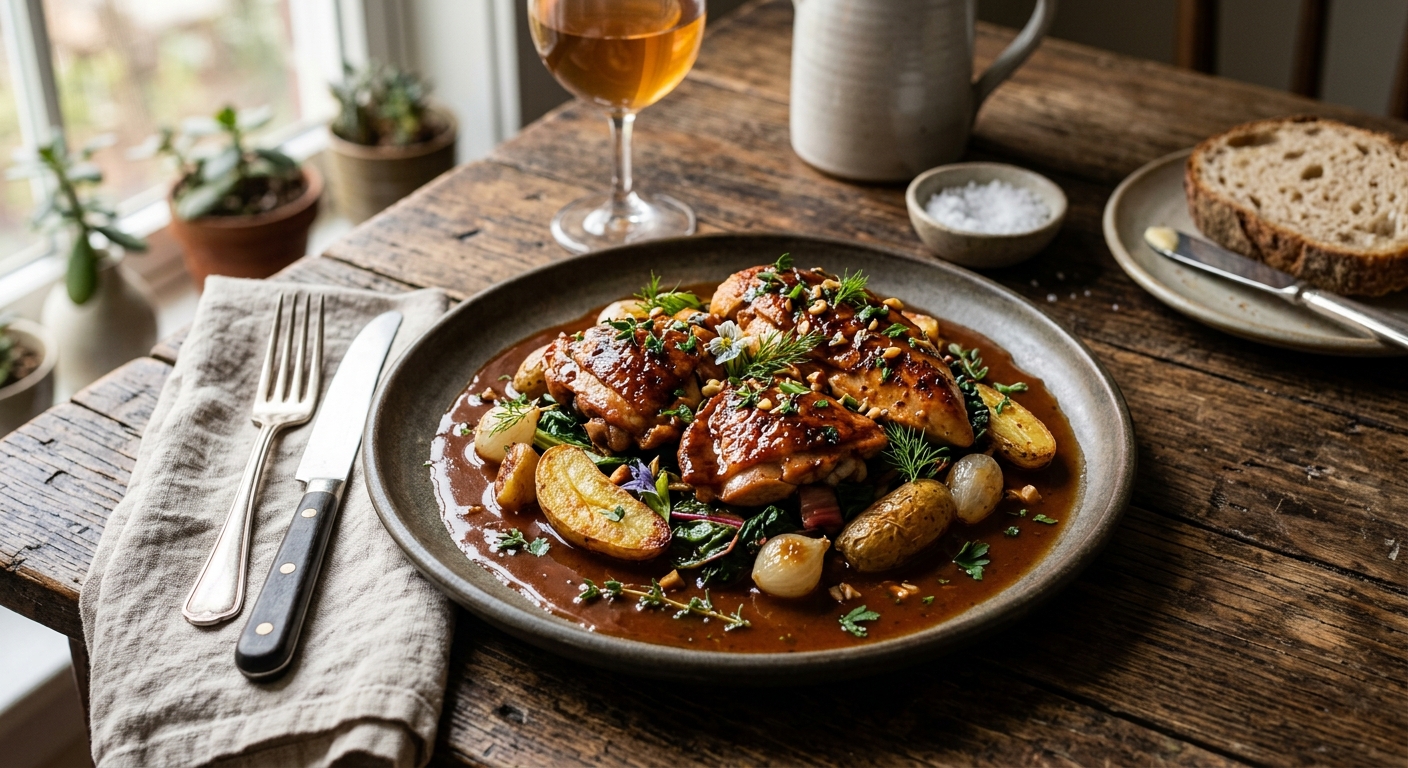
An early Byzantine dish of boiled chicken finished with vinegar and parsley.
History
Anthimus's chicken with vinegar comes from 'De Observatione Ciborum' (c. 511–534 CE), a dietary letter written by the Byzantine physician Anthimus to Theodoric, king of the Franks. The text bridges late Roman and early medieval cooking, reflecting medical concerns about digestibility alongside practical cookery. Vinegar-braised fowl was common in Roman cuisine, valued for preserving and tenderising meat whilst balancing humours. Anthimus recommended boiling chicken with vinegar for easier digestion, particularly for the Frankish nobility unaccustomed to southern Mediterranean diets. This technique persists in modern European cookery, from French poulet au vinaigre to Italian pollo all'aceto, maintaining the ancient pairing of poultry and acidic reductions.
Sources
- Anthimus, 'De Observatione Ciborum' (c. 511–534 CE), edited and translated by Mark Grant (1996)
- Apicius, 'De Re Coquinaria' (4th–5th century CE compilation), various editions
- Andrew Dalby, 'Flavours of Byzantium' (2003)
- Ken Albala, 'Eating Right in the Renaissance' (2002)
- C. Anne Wilson, 'Food and Drink in Britain' (1973)
Serves
4
Prep
10m
Cook
50m
Difficulty
Easy
Ingredients
- · 1 whole chicken (about 1.5 kg), jointed
- · 1.5 l water
- · 120 ml wine vinegar
- · 2 teaspoons salt
- · 4 tablespoons chopped fresh parsley
- · 1 teaspoon black pepper
Method
- 1
Place chicken pieces in a large pot with water and salt.
- 2
Bring to a boil, then reduce heat and simmer for 45 minutes until tender.
- 3
Remove chicken and keep warm.
- 4
Add vinegar and pepper to the cooking liquid.
- 5
Return chicken to pot, sprinkle with parsley and serve with the broth.