Ancient Greece · Greece
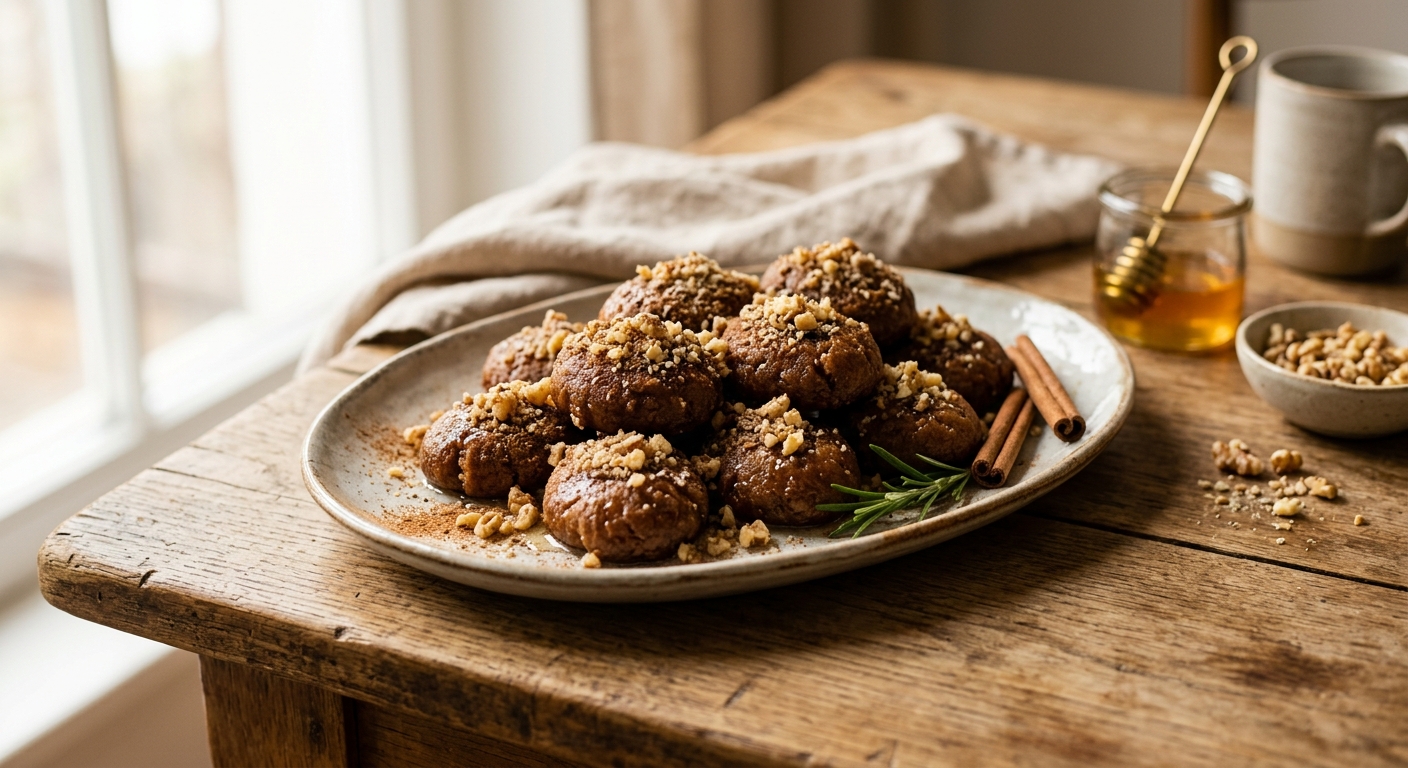
Melomakarona (Ancient Honey Cakes)
From Deipnosophistae (compiled) · Various Greek authors · 200
Verified from original source
Semolina cakes soaked in warm honey syrup — a Hellenic staple documented across centuries.
History
Melomakarona are Greek honey-dipped cookies with ancient roots in classical Athens. Early honey cakes (plakous, enkris) appear in Athenaeus's Deipnosophistae (c. 200 CE), which documents Greek culinary traditions from centuries earlier. These sweet offerings combined wheat flour, honey, olive oil, and nuts—ingredients central to Mediterranean life. They served ritual purposes at festivals and symposia. The modern melomakarona, spiced with cinnamon and cloves, evolved during Byzantine and Ottoman periods, becoming essential Christmas treats in Greece. The honey-soaking tradition persisted across millennia, linking ancient religious offerings to contemporary holiday tables.
Sources
- Athenaeus, Deipnosophistae (The Learned Banqueters), c. 200 CE
- Dalby, Andrew. Siren Feasts: A History of Food and Gastronomy in Greece, 1996
- Dalby, Andrew and Sally Grainger. The Classical Cookbook, 1996
- Davidson, Alan. The Oxford Companion to Food, 1999
- Faas, Patrick. Around the Roman Table: Food and Feasting in Ancient Rome, 2003
Serves
8
Prep
20m
Cook
30m
Difficulty
Medium
Ingredients
- · 200g plain flour
- · 100g fine semolina
- · 100ml olive oil
- · 80ml orange juice
- · 50ml honey
- · 1/2 tsp ground cinnamon
- · 1/4 tsp ground cloves
- · For syrup: 200g honey, 100ml water, 1 cinnamon stick
Method
- 1
Preheat oven to 180°C. Mix all dough ingredients until smooth.
- 2
Shape into 16 small oval cakes and place on a lined tray.
- 3
Bake for 22 minutes until golden brown.
- 4
Meanwhile simmer syrup ingredients for 8 minutes.
- 5
Dip warm cakes into hot syrup for 10 seconds each, then drain.
- 6
Scatter with crushed walnuts and rest until sticky and cool.