Historical cookbook
Deipnosophistae: Athenaeus's Banquet of Ancient Food
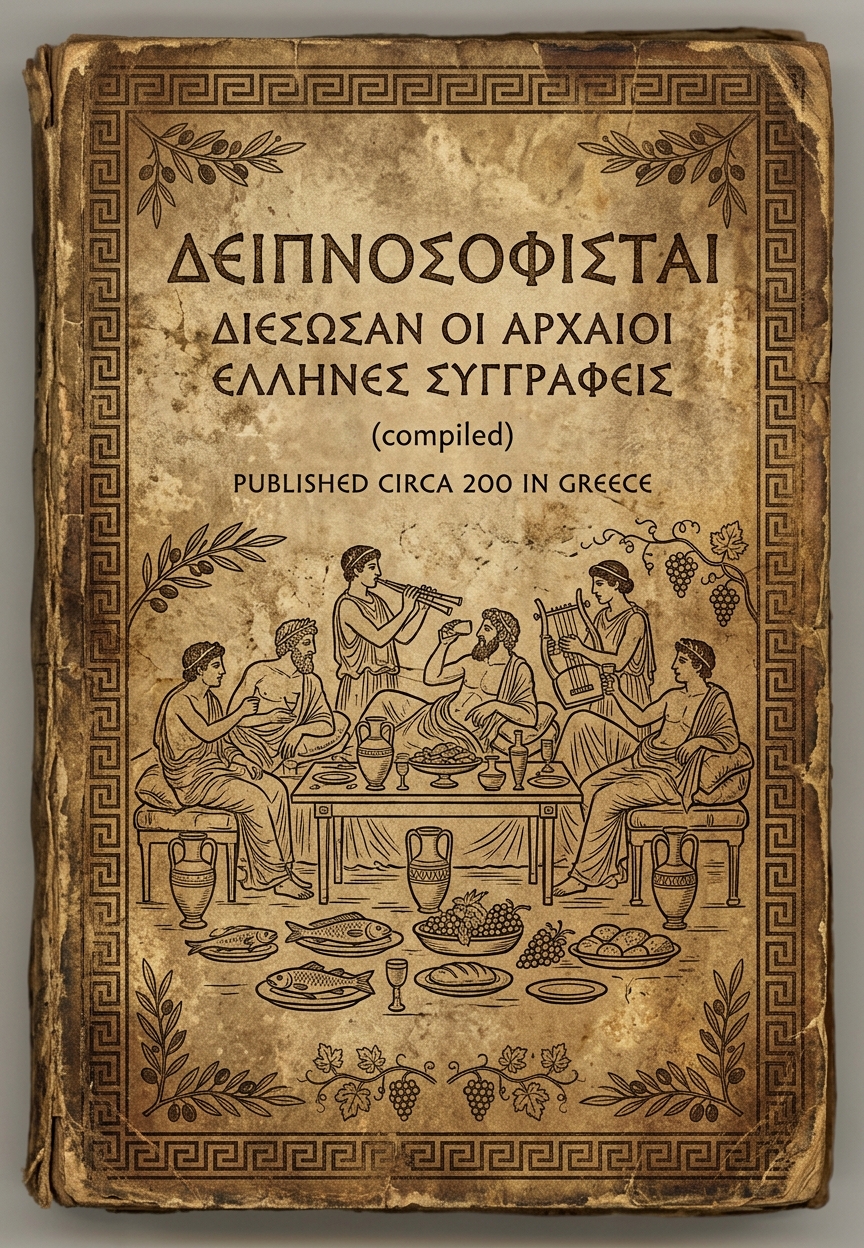
Compiled by Athenaeus of Naucratis around AD 200, a Greek banquet dialogue that preserves ancient food writing.
The story behind the book
The Deipnosophistae, usually rendered as "The Learned Banqueters" or "Philosophers at Dinner", is a long Greek prose work dating from around AD 200. Although it is sometimes described as compiled from various Greek authors, it was assembled as a single work by Athenaeus, who wove in quotations from a vast range of earlier writers. It is framed as a conversation across a series of dinners in Rome, where scholars, doctors, grammarians and musicians trade anecdotes, verses and arguments about food, wine, language and literature. Much of what survives about ancient Greek eating and drinking reaches us through this one rambling, digressive book, which is part of its appeal.
Who wrote it
Athenaeus came from Naucratis, a Greek trading city in the Nile Delta, and wrote in the late second or early third century AD. Beyond that, little about his life is securely known, so it is best not to say more. The book is addressed to a friend called Timocrates, to whom the narrator reports the dinners. The host in the story is a wealthy Roman named Larensius, and the guests form a large cast of learned talkers. Whether such banquets ever took place is uncertain, and most scholars treat the setting as a literary device. What matters is that Athenaeus drew on an enormous library, naming hundreds of authors, many of whom would be unknown to us if he had not quoted them.
What's inside
The work originally ran to fifteen books, though the first two, parts of the third and the end of the fifteenth survive only in an abridged form. The organisation is loose rather than systematic. Topics include fish, bread, wine, drinking vessels, luxury, parasites and flatterers, cooks, music and sweets. It is not a cookbook in the modern sense, so you will not find tidy ingredient lists and methods. Instead there are fragments, such as verse by Archestratus of Gela, a fourth-century BC poet who wrote about the best places to find fish and other delicacies, along with passing descriptions of cakes and sweets, many of them made with honey. Book 14 is especially rich on cakes and confectionery. The tone is conversational, so a discussion of one dish can slide into a quarrel over the meaning of a word.
Why it still matters
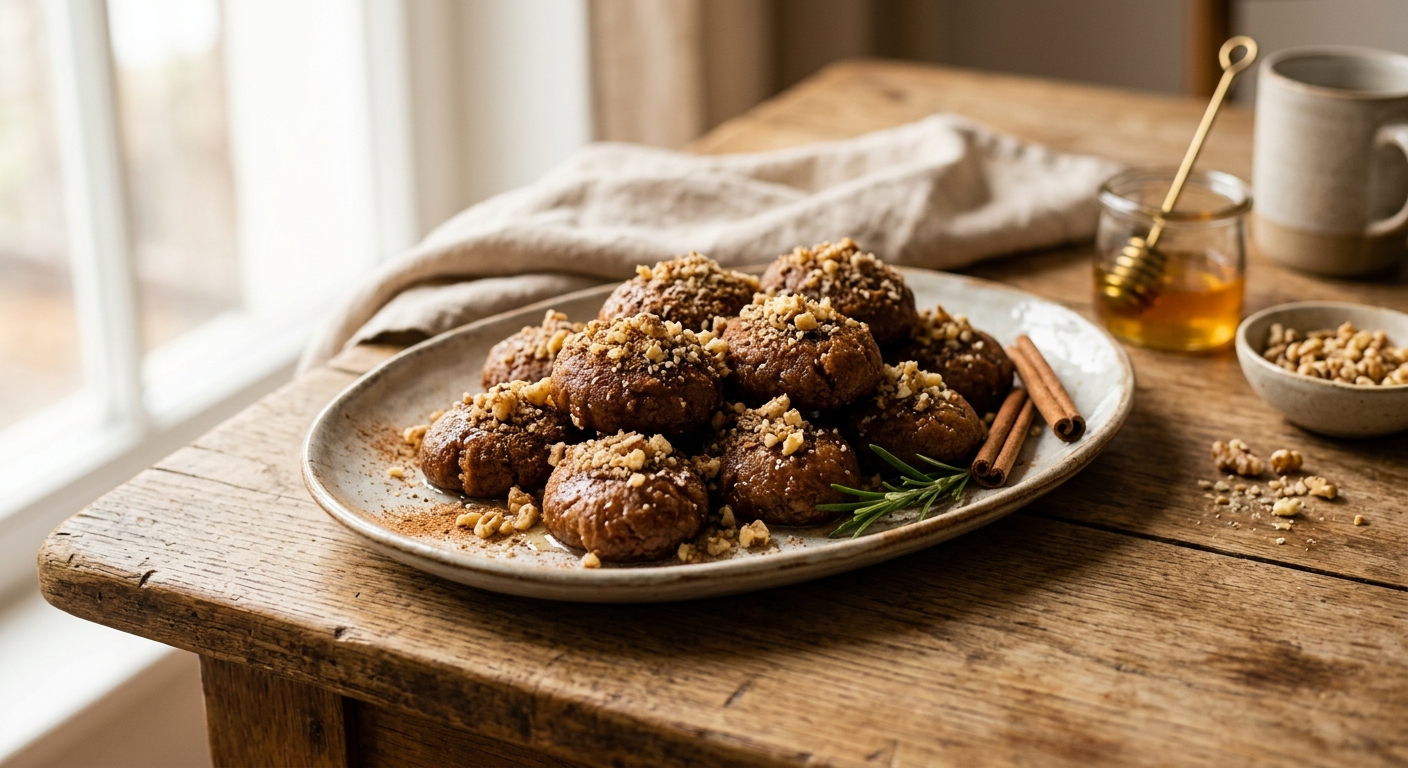
Recipe Filer's melomakarona, the Greek honey-soaked biscuits made with olive oil, orange and warm spices, is a modern recipe rather than a translation. Athenaeus does not give a recipe for melomakarona, and the biscuit as it is known today is a later Greek tradition, so any link to ancient honey cakes is one of inspiration, not proven descent. What the book does show is how central honey was to Greek sweets and how keenly Greeks discussed flavour, luxury and restraint at the table. It also preserved passages from works that are otherwise lost, which is why food historians keep returning to it. Readers wanting the full text in English can turn to the Loeb Classical Library edition translated by S. Douglas Olson, published in several volumes.
Recipes from Deipnosophistae (compiled)
Frequently asked questions
Who wrote the Deipnosophistae?
+
It was written by Athenaeus of Naucratis, a Greek author working around AD 200. He quoted from hundreds of earlier writers, which is why it is often described as a compilation.
What does Deipnosophistae mean?
+
The title is usually translated as "The Learned Banqueters" or "Philosophers at Dinner". It refers to the scholarly guests who discuss food, drink and literature at the dinners described in the book.
Does the Deipnosophistae contain recipes?
+
Not in the modern sense, as it has no standard ingredient lists or methods. It offers quotations, descriptions of dishes and food poetry, including material on cakes and sweets, which later cooks can interpret.