Ancient Rome · Italy
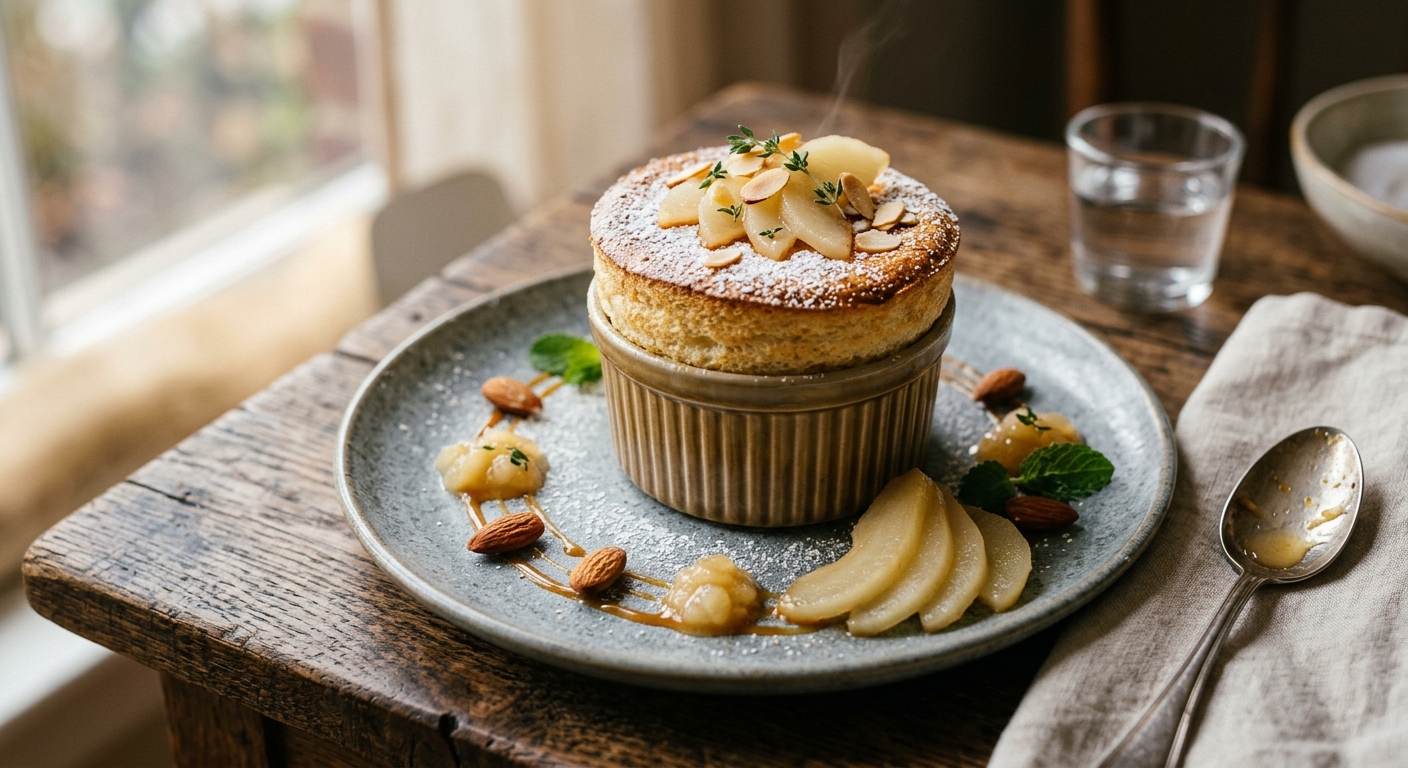
Patina de Piris (Pear Souffle)
From De Re Coquinaria · Apicius · 1
Verified from original source
A honey-sweet pear custard baked with pepper and cumin — Ancient Rome's answer to the modern souffle.
History
Patina de Piris is a baked pear dish from Apicius's De Re Coquinaria, the only surviving Roman cookbook from the 4th-5th century CE (though attributed to the 1st-century gourmet Marcus Gavius Apicius). This 'patina' refers to the shallow pan used for cooking. The recipe combines pears with eggs, honey, cumin, liquamen (fish sauce), oil, and wine, baked into a custard-like dish. It represents elite Roman dining, showcasing their preference for sweet-savory combinations and spiced fruit preparations. While the original disappeared with Roman cuisine, modern reconstructions appear in historical cooking circles, demonstrating ancient Rome's sophisticated culinary techniques.
Sources
- Apicius, De Re Coquinaria (4th-5th century CE, various modern editions by Vehling 1936, Grocock & Grainger 2006)
- Andrew Dalby, Food in the Ancient World from A to Z (2003)
- Sally Grainger, Cooking Apicius: Roman Recipes for Today (2006)
- Patrick Faas, Around the Roman Table (2003)
- Alan Davidson, The Oxford Companion to Food (1999, 2nd ed. 2006)
Serves
4
Prep
15m
Cook
45m
Difficulty
Medium
Ingredients
- · 4 ripe pears, peeled and cored
- · 3 tbsp honey
- · 4 large eggs
- · 60ml passum (or sweet dessert wine)
- · 1 tsp ground cumin
- · 1/2 tsp ground black pepper
- · 60ml olive oil
- · Pinch of salt
Method
- 1
Preheat oven to 170°C (fan 150°C).
- 2
Simmer the pears in water until soft, about 10 minutes. Drain and mash.
- 3
Whisk the eggs with honey, wine, cumin, pepper, oil and salt.
- 4
Fold the pear pulp through the egg mixture.
- 5
Pour into a buttered oven-proof dish and bake for 30–35 minutes until set.
- 6
Serve warm, dusted with extra pepper (Roman style).