By Maisie Sullivan
The History of the Christmas Pudding: From Figgy Pudding to Plum Pudding and Beyond
How a medieval porridge became Britain's flaming, sixpence-hiding festive showstopper, and why we still love it.
Every year around now, I find myself standing in the kitchen with a wooden spoon, a bowl of dark, boozy fruit and a child asking if they can have a lick. (No, it's raw suet, my love.) It got me wondering how this heavy, glorious, slightly odd pudding ended up on our tables. It turns out it has a very British story, with a few surprises along the way.
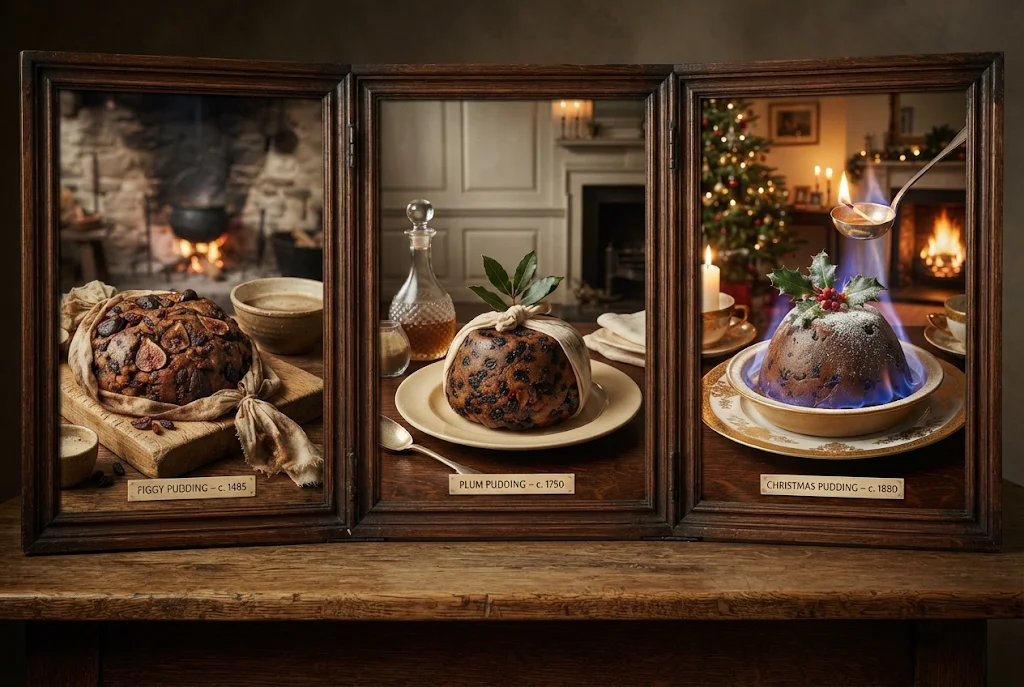
Let's go back a long way. Long before anyone steamed a pudding in a basin, medieval cooks made something called pottage, a thick, spiced mixture of meat, grains, dried fruit and sometimes wine, bubbling away in a pot. Over the centuries it grew sweeter and the meat slowly slipped out of the picture. Somewhere along the line, a fruity, boiled pudding appeared, and that's where figgy pudding comes in. Historians don't agree on a neat family tree, so I'll keep it light, but figs were a prized treat, and the old West Country carol 'We Wish You a Merry Christmas' still demands some, rather firmly. Notice that the carollers refuse to leave until they get it. I admire the commitment.
Here's a fun one. When people said 'plum pudding', there were often no plums at all. 'Plum' was a catch-all word for dried fruit, so raisins, currants and prunes all counted. That's why a pudding stuffed with raisins and currants was called a plum pudding. Very British, very confusing, and very delicious.
Then comes a bit of royal gossip. The story goes that King George I, nicknamed the 'pudding king', asked for plum pudding at his Christmas feast in 1714, which helped make it the dish of the season. Puritans, meanwhile, are often said to have frowned on it as far too jolly. Parliament did try to cancel Christmas festivities in the 1640s, though how much pudding-banning really went on is hard to say.
It was the Victorians who gave us the pudding we'd recognise. In A Christmas Carol (1843), Dickens describes Mrs Cratchit's pudding as 'like a speckled cannon-ball', topped with a sprig of holly. Boiling the mixture in a cloth made that round shape, and later the basin gave us the neat dome. The brandy, the flames and the holly all became part of the picture, and so did the name Christmas pudding. Try the 1845 Eliza Acton's classic brandy infused Christmas Pudding if you want to impress on Christmas Day.
Then there are the traditions, which are half the fun:
Stir-up Sunday, the last Sunday before Advent (22 November this year), is traditionally when the pudding gets made. The name comes from a prayer that begins 'Stir up, we beseech thee'.
Tradition says a proper pudding has thirteen ingredients, for Jesus and the twelve apostles.
Everyone in the family should stir it from east to west, in honour of the Three Wise Men, and make a wish while they do.
A silver sixpence or other small coin is hidden inside for luck. Whoever finds it is meant to have a fortunate year, so do warn the guests before they bite down.
The pudding I make today is not so different from the Victorian one: suet, dried fruit, spices, treacle, breadcrumbs and a good glug of brandy or stout. A few practical tips from my kitchen. Make it a few weeks ahead if you can, since the flavour deepens as it rests in a cool, dark cupboard. Give it a spoonful of brandy every week or so if you like it boozy. On Christmas Day, steam it for a couple of hours to heat it through. To flame it, warm a little brandy in a ladle, pour it over the pudding and light it at the table, then step back with your eyebrows in mind.
I like that every stir carries a few centuries of cooks behind it. If you have a family pudding recipe, the one with the splashes and scribbles, do save it to your Recipe Filer cookbook so the next generation can wish on it too. Now, who's got the sixpence? RecipeFiler has a Traditional Christmas Pudding recipe with a rum base, but do share yours with everyone here, we'd love to see some different creative recipes for this ever changing festive pud!