By Mrs B
Save Family Recipes Before They're Lost: A Simple Way to Start Today
Gran's scribbled cards and saved social posts deserve a safe home. Here's how to give them one.
Think of the one dish that tastes like home. Now think about where the recipe lives. A greasy card in a drawer? A page torn from a magazine? Someone's head?
If it's the last one, we need to talk.
I spend my life at markets and on allotments, chatting to growers who cook the way their grandparents did. Pinch of this. Handful of that. Cook it until it smells right. Wonderful food, and almost none of it written down. When that person goes, so does the recipe, and a little piece of the family goes with it.
The good news? Saving it is easier than you think. You can do it this week.
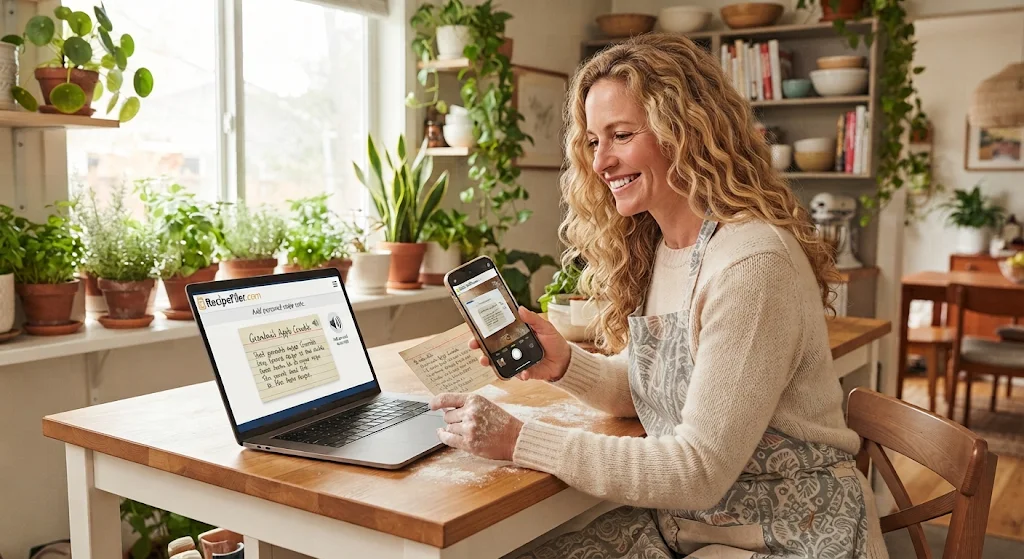
Start with the stained card. The one with the butter thumbprint and the crossed-out measurements. Those marks are part of the story, so keep them in mind as you save it. Scan it simply, let the hard work be done by your phone or computer or type the recipe in as it was written, quirks and all. Then add a note about who made it, when you ate it and what the kitchen smelled like. In future you will be grateful.
Now for my favourite bit: the voice note. Ring your mum, your nan or your uncle who makes the legendary stew. Ask them to talk you through it while they cook. Press record. Hearing someone say "no, no, not too much salt, love" is worth more than any tidy method. On RecipeFiler you can attach voice notes to a recipe, so the cook's own voice sits right beside the ingredients. Imagine your grandchildren hearing that laugh while they stir the pot.
Then there's the modern mess. We all do it. You see a brilliant flatbread on social media, you save it, and three weeks later it has vanished under a pile of videos. Recipe Filer lets you pop those finds into one safe place, quickly, so they sit alongside your family classics instead of getting lost. One home for everything. No more scrolling back through months of posts, muttering.
And it's yours to shape. You can edit everything. Swap the ingredient you can never find. Halve the sugar. Add "works brilliantly with leftover roast squash" at the bottom. Recipes are living things, and they should change as you do.
Once your collection is in, the organising gets satisfying. Sort recipes into cookbooks that make sense to you: Sunday lunches, Christmas bakes, midweek rescues. Share a recipe with a cousin who has been begging for it for years. Share a whole cookbook with the family and everyone cooks from the same trusted version.
Then put it to work. Recipe Filer has shared meal planning, so the whole household can see what's for dinner and who's cooking. Pick your meals for the week and build a shareable shopping list from them. Whoever pops to the shop sees the same list, on their own phone. No more three tins of tomatoes and no onions.
Here's the part that surprised me most: it's cheap. An individual membership is £25 (around $33) a year. A family annual membership is £100 (around $133). For a safe, tidy home for every recipe you care about, that's less than a single decent restaurant meal for a family. No fiddly set-up, no tech degree. Just you, your recipes and a bit of time.
But the real payoff is the feeling. That quiet relief of knowing it's all saved. The fire, the flood, the house move, the lost box: none of them can take it away.
So here's your challenge. Tonight, pick one recipe. Just one. Get it saved, add a memory, and if you can, record the voice of the person who taught you. Tomorrow, do another.
In a year, you'll have a collection you can cook from, share and hand on. Start with the dish that tastes like home. Go on. Your friends and family will thank you.