Historical cookbook
Directions for Cookery: Eliza Leslie's American Classic
Eliza Leslie's 1837 Philadelphia cookbook taught a generation of American home cooks, and its recipes still repay a modern cook.
The story behind the book
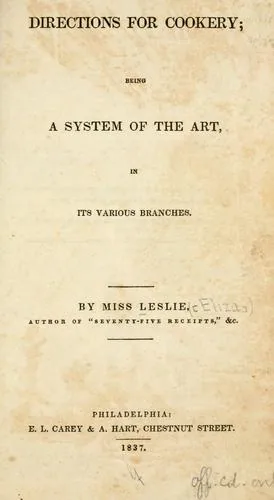
Directions for Cookery, in Its Various Branches was published in Philadelphia in 1837 by Carey & Hart. It was Eliza Leslie's third cookery title, following Seventy-five Receipts for Pastry, Cakes, and Sweetmeats in 1828 and Domestic French Cookery in 1832. It went on to become one of the most popular American cookbooks of its century and was reprinted many times in the decades that followed. Its appeal lay in a plain promise: instructions that an ordinary household cook, with ordinary equipment, could follow from start to finish.
Who wrote it
Eliza Leslie was born in Philadelphia in 1787 and trained in the city at Elizabeth Goodfellow's well-known cooking school, which gave her a practical grounding in pastry and baking. She never limited herself to the kitchen. Over her career she wrote short stories, children's books and an etiquette guide, Miss Leslie's Behaviour Book, published in 1839. She also produced further cookery and housekeeping titles, including The New Receipt Book in 1846. She died in 1858. Readers of the time knew her as an author with a clear, no-nonsense voice, and that voice is what makes her recipes easy to read today.
What's inside
The book is arranged by type of dish rather than by meal, and it covers the full range of a nineteenth-century household table, from soups, fish and meat to vegetables, puddings, pastry, cakes, pickles and preserves. Leslie calls her recipes receipts, as was usual then, and writes them as continuous prose instead of a tidy list of ingredients followed by method. Quantities are given in pounds, teacups and wineglasses, and she often tells the cook to judge doneness by sight and feel rather than by a thermometer or timer. Her notes are specific about technique, such as how to handle pastry or when a mixture is ready, because she expected her readers to learn as they went.
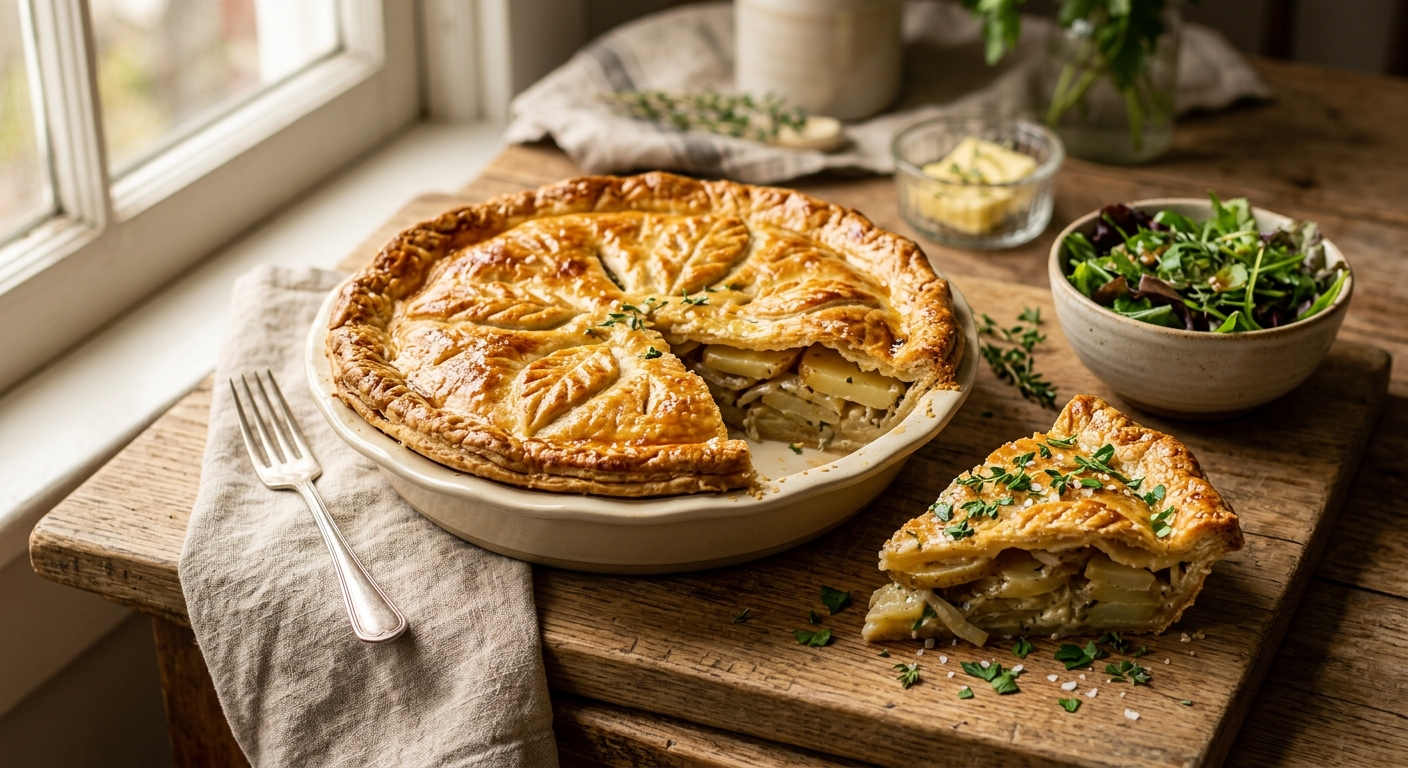
Her potato pie shows the book's character well. It takes a cheap, familiar vegetable and treats it with the same care as a more expensive ingredient. Recipe Filer has modernised it with metric weights, oven temperatures and a clear ingredient list, while keeping to the spirit of her instructions.
Why it still matters
Directions for Cookery is a valuable record of what American home cooks ate in the 1830s and how they thought about food, economy and hospitality. Because Leslie wrote for people who had to work out each step themselves, her recipes are unusually explicit about method, which helps anyone who wants to cook from the past without guessing. The book also shows how much nineteenth-century cookery depended on fuel, time and judgement, and how those constraints shaped the dishes themselves. For anyone interested in food history, it is a useful starting point, and for anyone who simply likes a good pie, it is a reliable one. Modernising these recipes means converting the measurements and temperatures carefully and testing the results, so that her cooking can be enjoyed in a present-day kitchen without losing its character.
Recipes from Directions for Cookery
Frequently asked questions
Who wrote Directions for Cookery?
+
Directions for Cookery, in Its Various Branches was written by Eliza Leslie, a Philadelphia author who also wrote fiction, children's books and etiquette guides.
When was Directions for Cookery first published?
+
It was first published in 1837 in Philadelphia by Carey & Hart, and it was reprinted many times during the nineteenth century.
Can you cook from Eliza Leslie's recipes today?
+
Yes, but the original measurements and oven guidance are imprecise by modern standards, so the recipes need converting and testing. Recipe Filer's modernised versions, such as her potato pie, do this for you.