Historical cookbook
Modern Cookery for Private Families: Acton's Victorian Classic
Eliza Acton's 1845 cookery book, written for ordinary households, and four of its recipes modernised.
The story behind the book
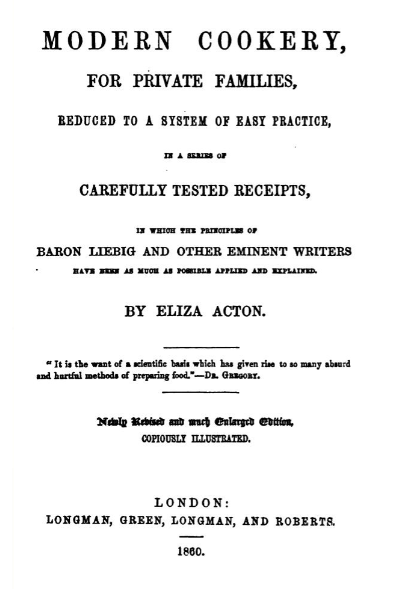
Modern Cookery for Private Families was first published in London in 1845 by Longman. Its full title promised cookery "in all its branches", reduced to a system of easy practice for the use of private families. That last phrase identifies the audience: not great houses with professional kitchen staff, but ordinary middle-class homes where the mistress of the house wanted instructions she could trust.
The book sold well and was revised and enlarged for a new edition in 1855. It remained a reference for English cooks for many years and, after a period of relative neglect, has been reprinted again in modern times.
Who wrote it
Eliza Acton (1799–1859) was born in Sussex and brought up in Ipswich, Suffolk. Before she wrote about food she was a poet, and a volume of her Poems appeared in 1826. A frequently repeated story says that a publisher suggested she write a cookery book rather than more verse. It is a neat tale, but it is best treated as tradition rather than settled fact.
What is clear is that Acton approached cookery as a writer approaches a text: with care for precision and plain language. She went on to publish The English Bread Book in 1857, and she died in 1859.
What's inside
The book moves through the standard concerns of a Victorian household: soups, sauces, fish, meat, poultry, vegetables, puddings, pastry, cakes and preserves. Acton is often credited with presenting ingredients and cooking times in a clear, practical way that modern readers will recognise, instead of burying quantities inside running prose. Her instructions favour exactness over flourish, and she writes with evident concern that a cook following her directions should get a good result.
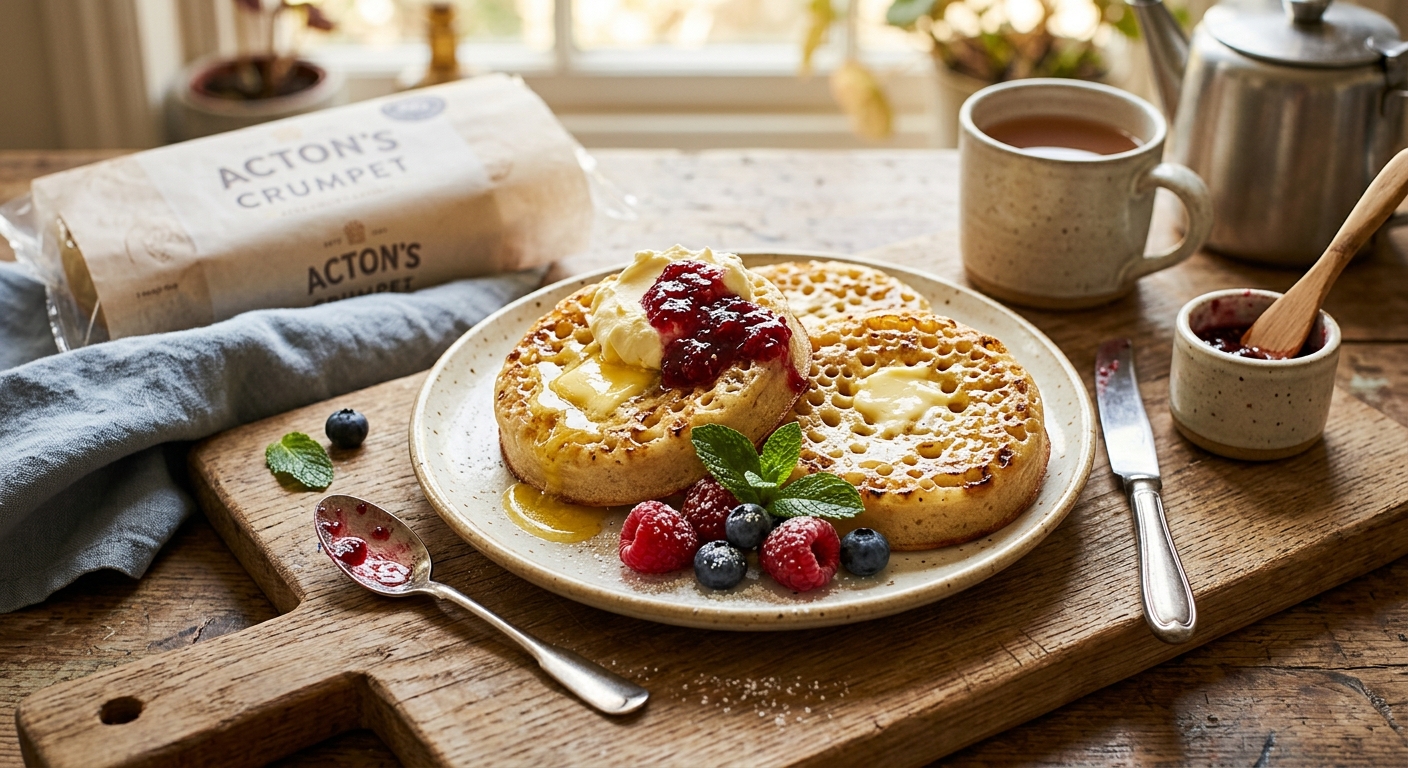
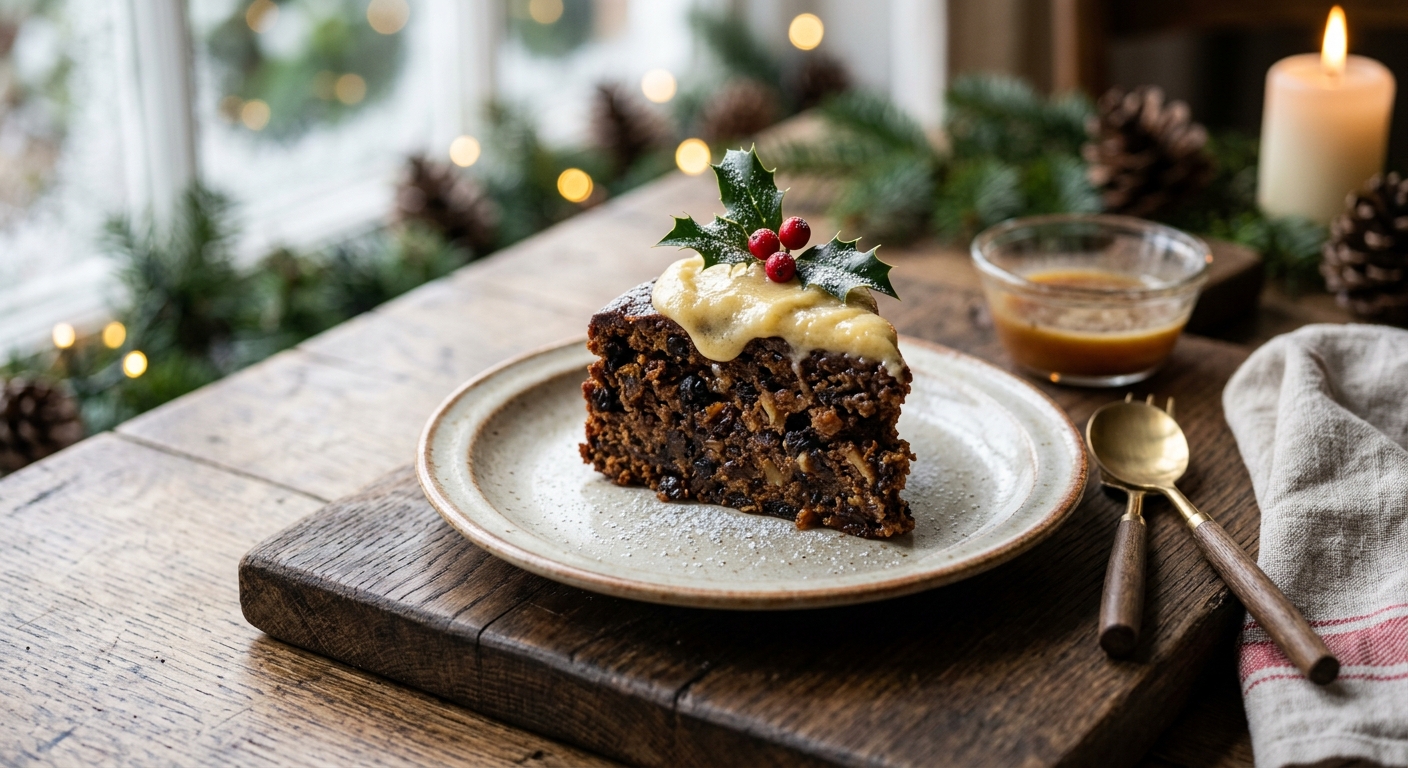
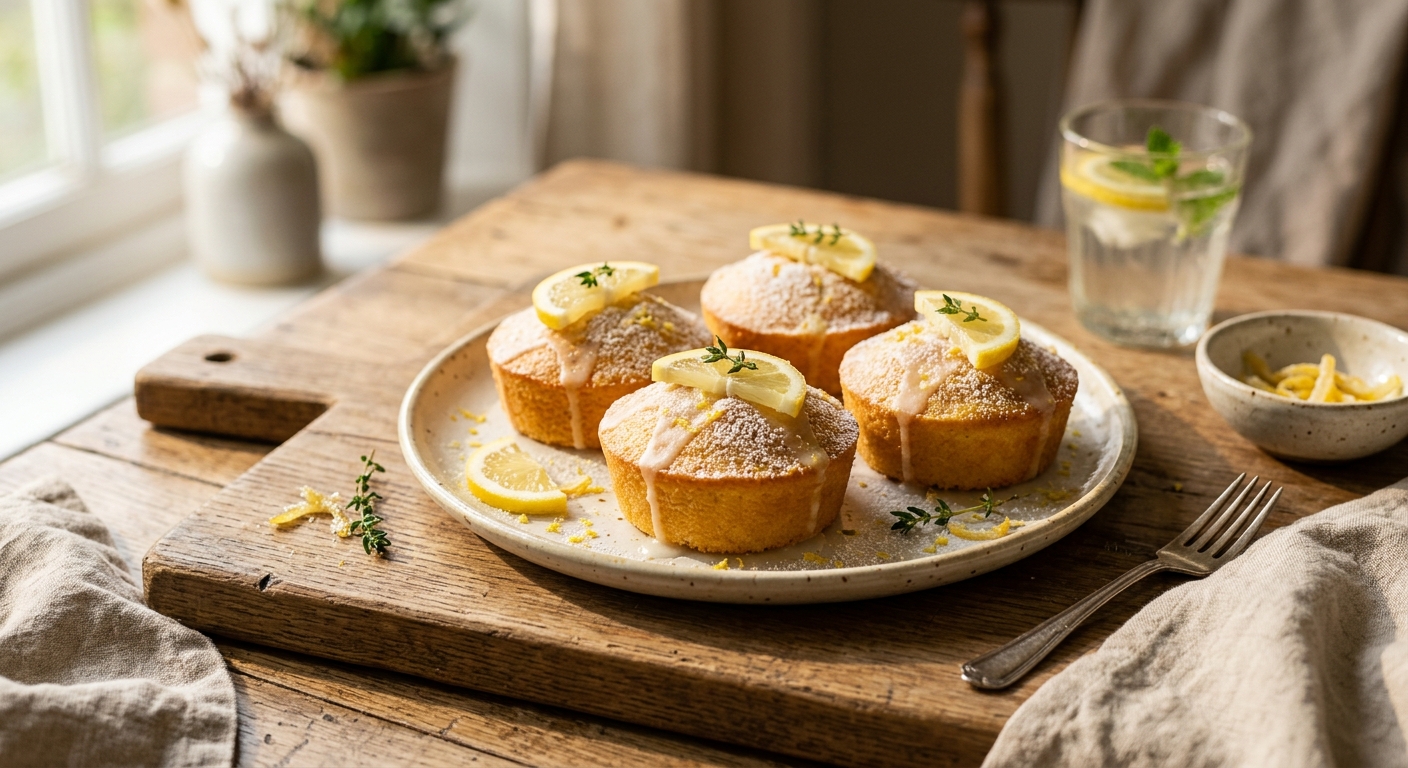
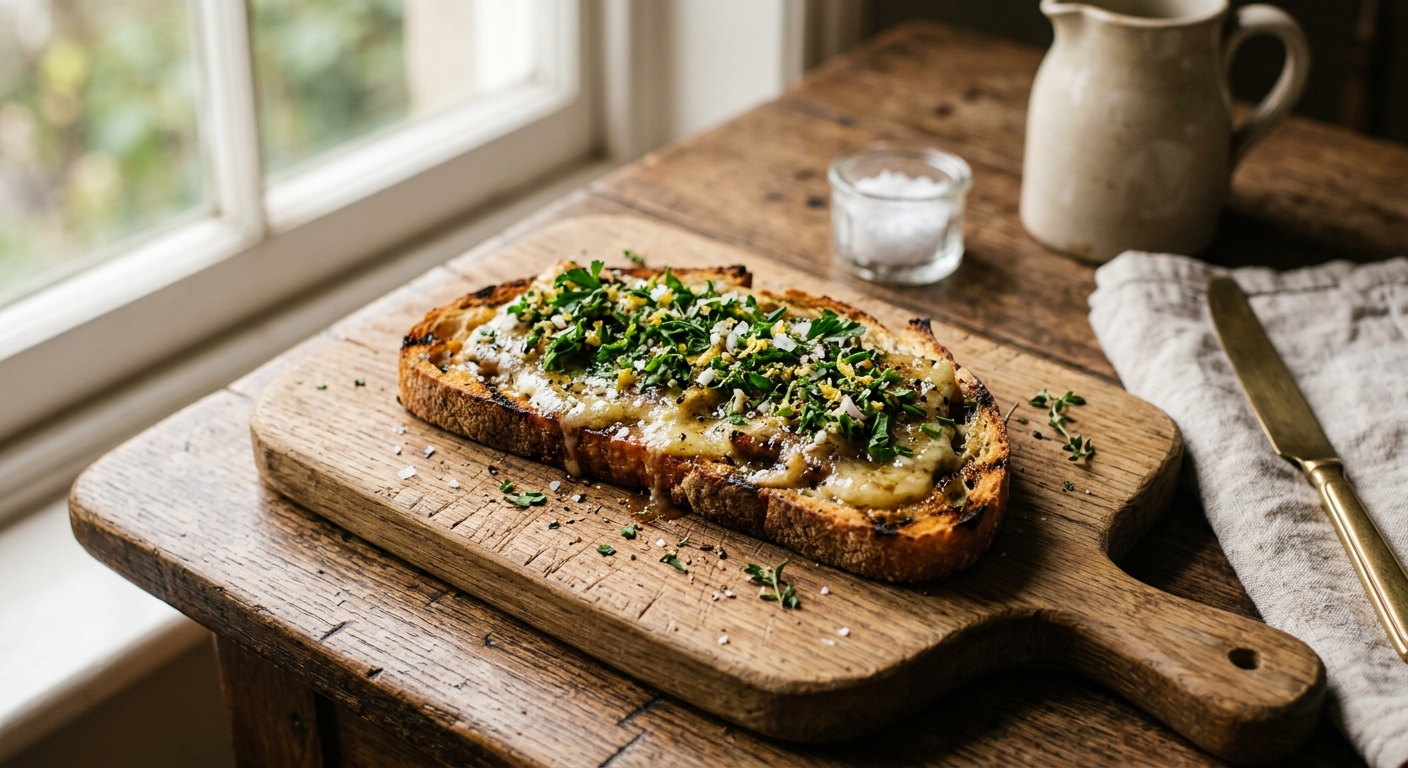
Recipe Filer has modernised four recipes from the book: Acton's Crumpets, Christmas Pudding (Acton's Recipe), Eliza Acton's Lemon Cakes and Eliza Acton's Marrow Toast. They range from a teatime staple to a festive set piece, which gives a fair sense of how broad her range was. In each case we have adapted the quantities, equipment and method for a present-day kitchen, while keeping the character of the original dish.
Why it still matters
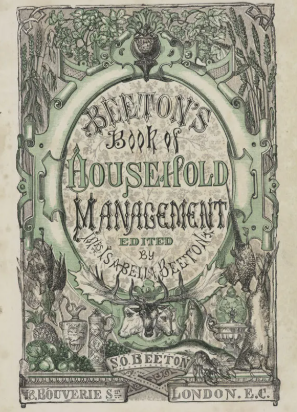
Acton's influence is easy to underestimate because later books took so much from her. Isabella Beeton's Book of Household Management, published in 1861, is widely acknowledged to have borrowed from Acton's recipes, and Beeton became far better known. In the twentieth century, food writers such as Elizabeth David admired Acton's clarity and good sense, and helped to bring her back to notice.
For a home cook today, the appeal is practical as well as historical. The recipes are short, the reasoning is clear, and the dishes show what ordinary English households ate in the 1840s. Her recipes also reward close reading, because they often explain why a step matters. Cooking from Acton is a way to see how recipe writing itself took its modern shape.
Recipes from Modern Cookery for Private Families
Frequently asked questions
When was Modern Cookery for Private Families published?
+
It was first published in 1845 by Longman in London. A revised and enlarged edition followed in 1855.
Who was Eliza Acton?
+
Eliza Acton (1799–1859) was an English poet turned cookery writer, born in Sussex and raised in Ipswich. She also wrote The English Bread Book, published in 1857.
Which recipes from the book has Recipe Filer modernised?
+
Recipe Filer has adapted Acton's Crumpets, Christmas Pudding (Acton's Recipe), Eliza Acton's Lemon Cakes and Eliza Acton's Marrow Toast for modern kitchens.