Historical cookbook
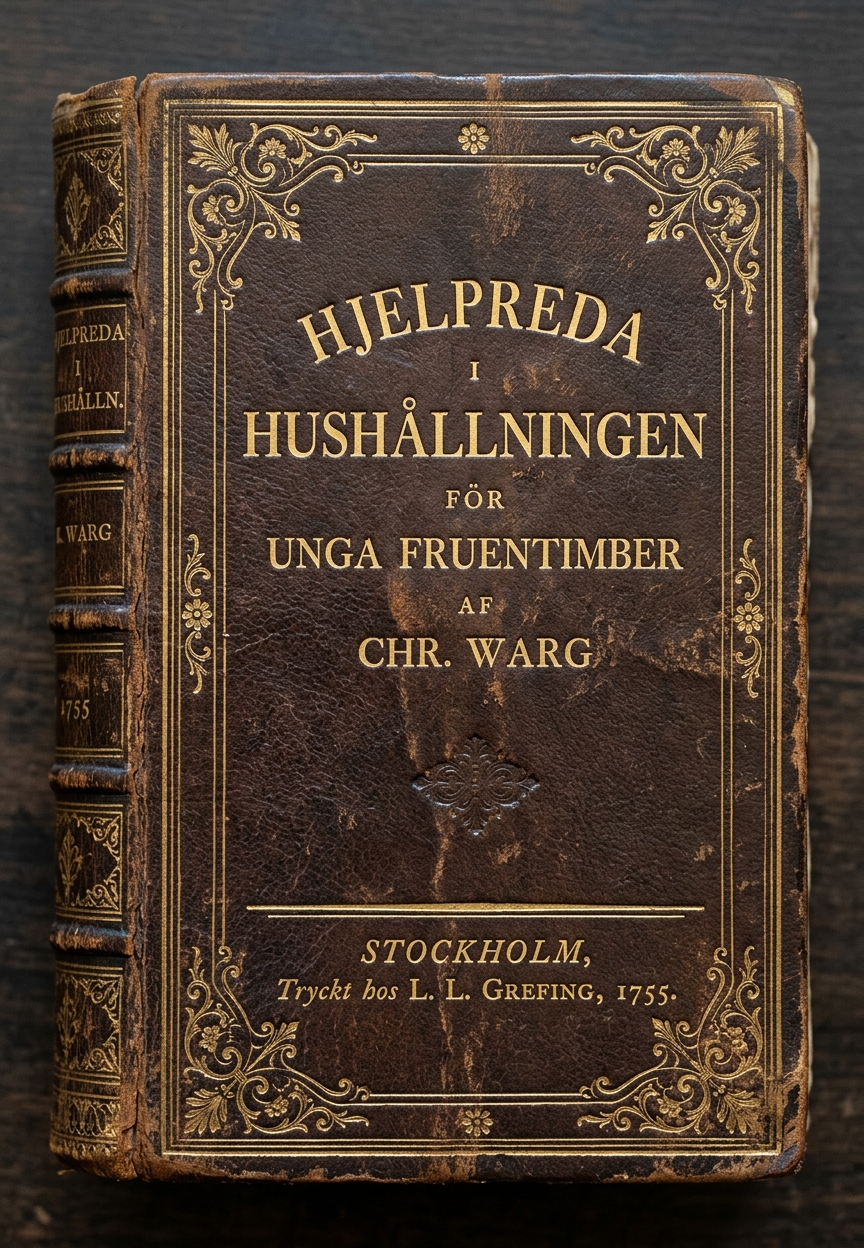
Hjelpreda i Hushållningen för Unga Fruentimber: Kajsa Warg, 1755
Kajsa Warg's 1755 Swedish housekeeping guide, and the yellow pea soup we modernised from it.
The story behind the book
Hjelpreda i Hushållningen för Unga Fruentimber was published in Sweden in 1755. The title can be rendered as "a helping guide to housekeeping for young women", and the old-fashioned spelling of "Hjelpreda" is how it appeared in print. It belongs to the eighteenth-century tradition of printed household manuals, aimed at readers who were learning to manage a kitchen and a larder rather than simply to follow a handful of recipes. The book was reprinted many times after its first appearance, which is one reason it remains the best-known Swedish cookery book of its era. For modern cooks, it offers a view of what was being cooked, preserved and served in Swedish homes in the middle of the eighteenth century.
Who wrote it
Kajsa Warg, also spelt Cajsa, was born around 1703 and died in 1769. She worked as a cook and housekeeper, and her book reads as the work of someone experienced in running kitchens. Beyond that, the details of her life are patchier than her reputation suggests, and we prefer not to fill the gaps with guesswork. What is clear is that she wrote as a working professional, addressing younger women who needed to learn the trade, and that her name has stayed attached to Swedish home cooking ever since.
What's inside
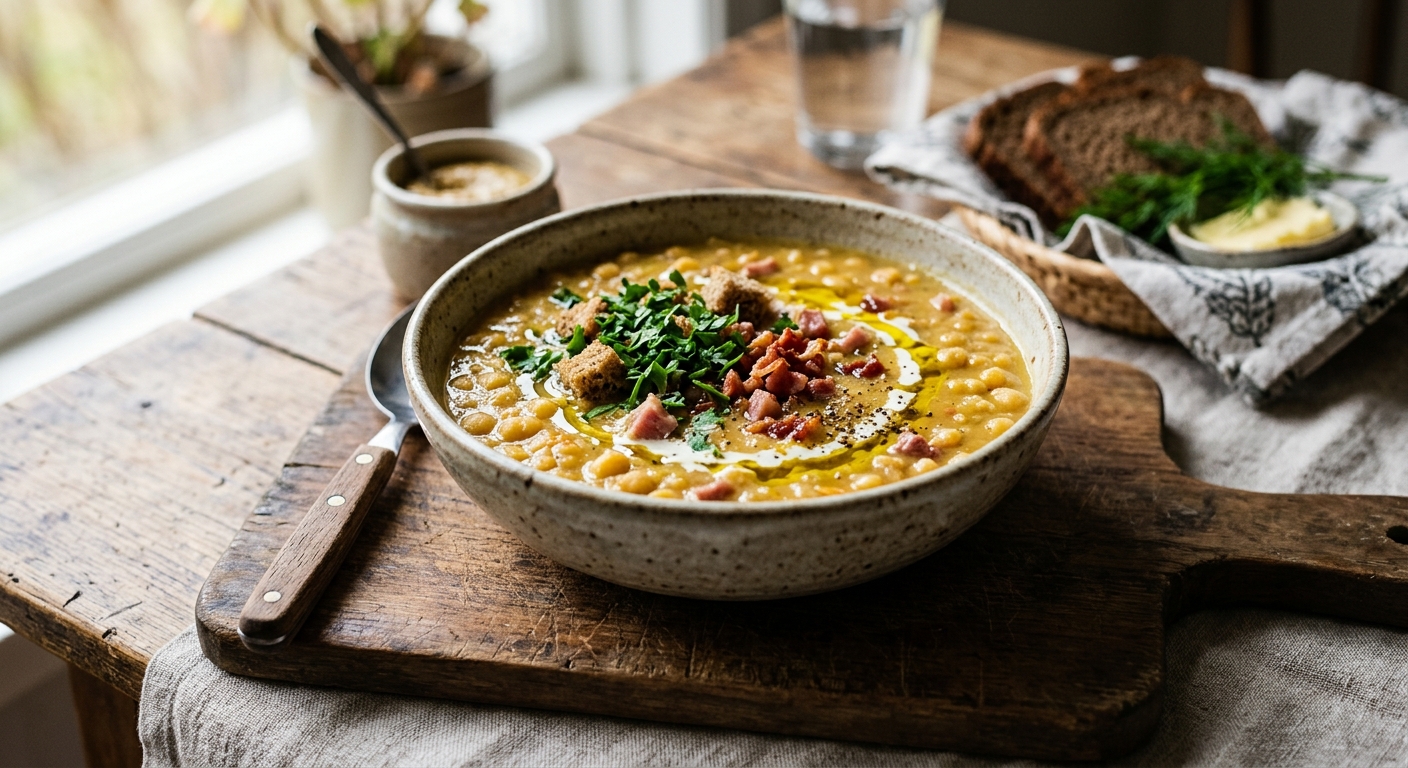
The book is a collection of recipes and household instruction arranged for practical use. Readers can expect dishes from the everyday to the festive, written in the compact style of the period, with few exact quantities, no oven temperatures and a good deal left to the cook's judgement. Recipe Filer has modernised one of its dishes, Ärtsoppa, a yellow pea soup. Our version translates the period method into present-day quantities and timings, so that it can be cooked reliably in a modern kitchen. Because the original gives so little guidance on measurements, any modern adaptation involves some interpretation, and we have tried to keep ours faithful to the dish rather than to a precise historical formula. In its familiar form, dried yellow peas are simmered until soft and often flavoured with pork and onion, producing a thick, filling soup that is still eaten across Sweden, traditionally on Thursdays.
Why it still matters
Hjelpreda matters because it records Swedish home cooking at a specific moment, written by someone who worked in kitchens rather than observing them from outside. For food historians it is a useful source on eighteenth-century ingredients, methods and household routine. Cookery books also show how a society ate, and a title aimed squarely at young women reminds us that housekeeping was once taught partly through such manuals. For cooks, it is a reminder that dishes such as Ärtsoppa have deep roots in Swedish kitchens, and that a humble pot of dried peas can carry a tradition. Recipe Filer's modernised version keeps the spirit of the original while using metric measures, clear timings and ingredients available in British shops. If you want to understand where Swedish home cooking comes from, this book is a sensible place to start.
Recipes from Hjelpreda i Hushållningen för Unga Fruentimber
Frequently asked questions
Who wrote Hjelpreda i Hushållningen för Unga Fruentimber?
+
It was written by Kajsa Warg (also spelt Cajsa), who was born around 1703 and died in 1769. She worked as a cook and housekeeper.
When was Hjelpreda i Hushållningen för Unga Fruentimber published?
+
It was first published in Sweden in 1755 and was reprinted many times afterwards.
What does the title Hjelpreda i Hushållningen för Unga Fruentimber mean?
+
It translates roughly as "a helping guide to housekeeping for young women". It reflects the book's aim of teaching household management as well as cooking.