Historical cookbook
Le Ménagier de Paris: A Medieval Husband's Household Guide
Written anonymously in 1393, a Parisian husband's manual for his young wife on running a household and kitchen.
The story behind the book
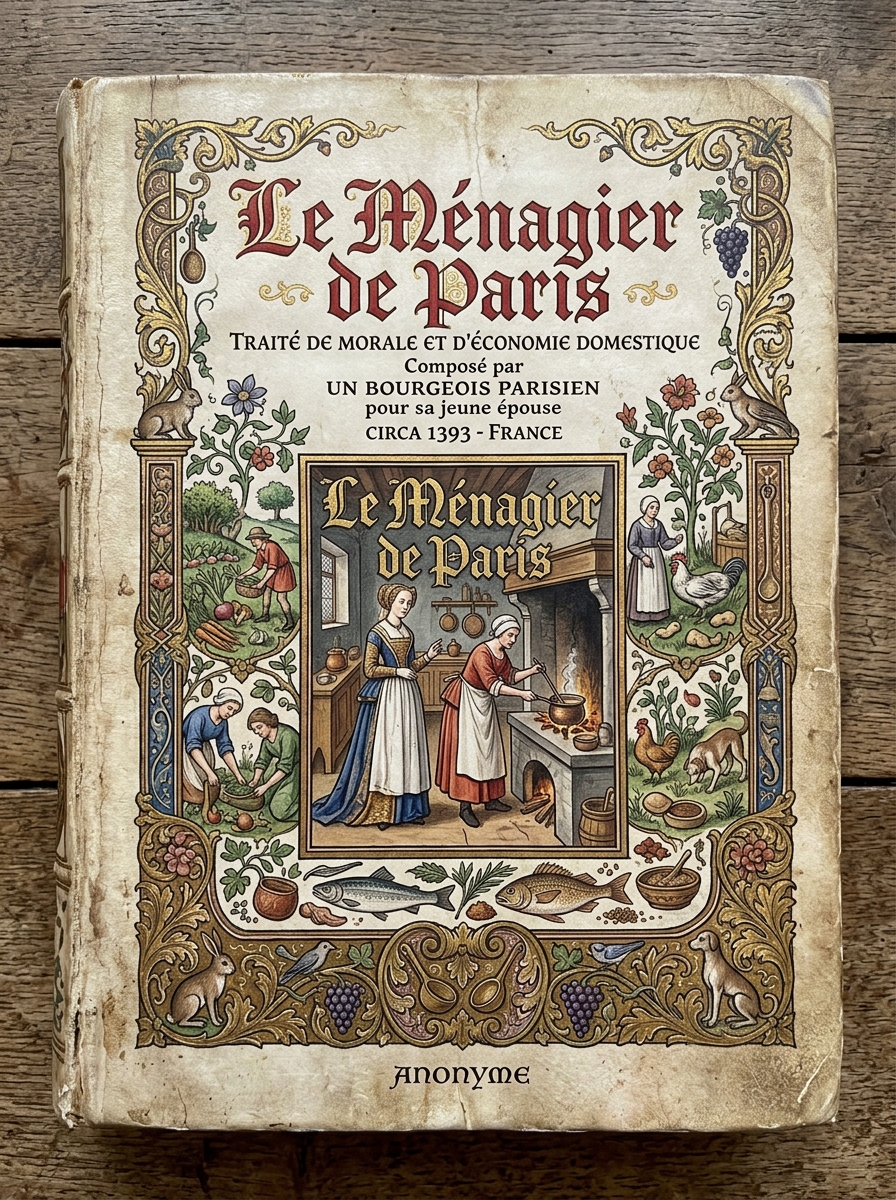
Le Ménagier de Paris is a household manual written in 1393 by an older Parisian man for his young wife. He tells her that she is fifteen, and that he is writing so she can run their home well and, should he die first, serve a future husband just as capably. It was a private text rather than a published book, and it survives in manuscript. It reached a wider audience only in the nineteenth century, when Jérôme Pichon edited it in 1846. English readers know it chiefly through Eileen Power's 1928 translation, The Goodman of Paris, and Gina Greco and Christine Rose's 2009 version, The Good Wife's Guide.
Who wrote it
The author is anonymous, and scholars have not settled who he was. The text offers clues: he is much older than his wife, well read, comfortable enough to employ servants, and knowledgeable about shopping in Paris. Beyond that, confident claims should be treated cautiously. It is also worth remembering that the only voice we hear is his. The wife never speaks, so the book tells us what a husband wanted from a wife rather than what she thought or did.
What's inside
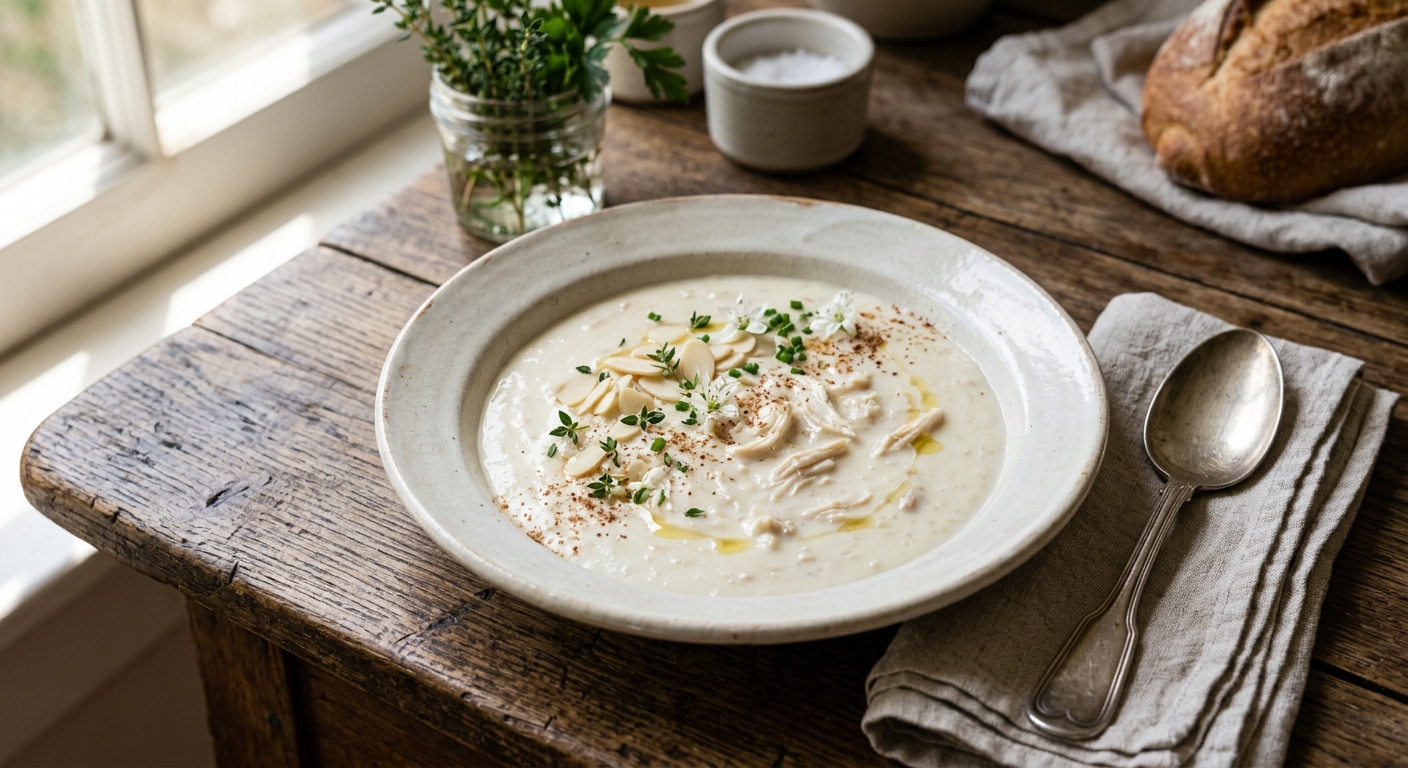
The surviving text has two main parts; a third was promised but has not come down to us. The first covers religion, morals and a wife's duties to her husband, and includes a retelling of the patient Griselda story. The second turns practical: hiring and supervising servants, gardening, buying provisions and running a household in good order. Within it sits the cookery material, with menus for large dinners and a substantial collection of recipes for soups, sauces, roasts, pies and fish. Much of this draws on earlier French cookery writing, notably Le Viandier, but the author adds his own advice on shopping and planning meals. Blanc mengier, the dish Recipe Filer has modernised, belongs to the family of white dishes later known as blancmange. In medieval kitchens these were pale preparations often built around almond milk, and they were quite unlike the set puddings that the name later came to describe. Medieval recipes give few quantities and little method, so any modern version involves interpretation.
Why it still matters
The book matters because it records ordinary urban life rather than court life. Most surviving medieval cookery texts come from noble kitchens, whereas this one is addressed to a householder who has to hire staff, shop and keep her husband content. That makes it valuable to historians of food, domestic work and marriage alike. It is also a useful corrective to the idea that medieval cooking was crude; the menus show planning, and the recipes show a taste for contrasts of sour, sweet and savoury. For a modern cook, the recipes are a way into flavours that predate the tomato and potato in European kitchens, since those arrived from the Americas after 1492. Recipe Filer's adaptations keep the character of the originals while giving clear quantities and methods, so you can cook from a household guide written over six centuries ago.
Recipes from Le Ménagier de Paris
Frequently asked questions
Who wrote Le Ménagier de Paris?
+
The author is unknown. He was an older Parisian man who wrote the book in 1393 for his young wife, whom he describes as fifteen.
What is Le Ménagier de Paris about?
+
It is a medieval household manual covering religion and morals, the wife's duties, managing servants and a garden, and cooking, with menus and many recipes.
Is there an English translation of Le Ménagier de Paris?
+
Yes. Eileen Power published The Goodman of Paris in 1928, and Gina Greco and Christine Rose published The Good Wife's Guide in 2009.