Historical cookbook
Le Viandier: Taillevent's Medieval French Kitchen
Guillaume Tirel, called Taillevent, and the medieval French cookery book traditionally dated to 1380.
The story behind the book
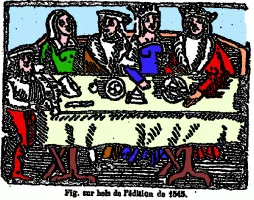
Le Viandier is one of the oldest surviving cookery books in French, and a key witness to how the nobility ate in the Middle Ages. It is traditionally dated to around 1380, when Guillaume Tirel, known as Taillevent, was working in the royal kitchens. That date needs care, though. The text did not appear all at once. Earlier manuscript versions circulated before Tirel's time, and later copyists expanded, trimmed and rearranged the contents. His name became attached to the work, and printed editions followed in the late fifteenth century and were reissued well into the sixteenth, still under the name of Taillevent.
Who wrote it
Guillaume Tirel took the nickname Taillevent. Records place him in royal service during the fourteenth century, rising through the kitchen ranks to become head cook, or maître queux, to Charles V, and later serving Charles VI. He died in 1395. How much of the Viandier he actually composed is debated by scholars, so it is safer to think of him as the figure who revised the text and lent it his reputation. His name carried enough prestige that publishers were still using it a century after his death.
What's inside
The Viandier is a practical working collection rather than a narrative. Its recipes cover pottages, which are soups and stews, along with roasts, meat and fish dishes and sauces. The instructions are short and usually give no quantities or timings, because they were written for professional cooks who already knew the methods. Flavourings include ginger, cinnamon, cloves, saffron and verjuice, while bread and ground almonds are used to thicken and enrich.
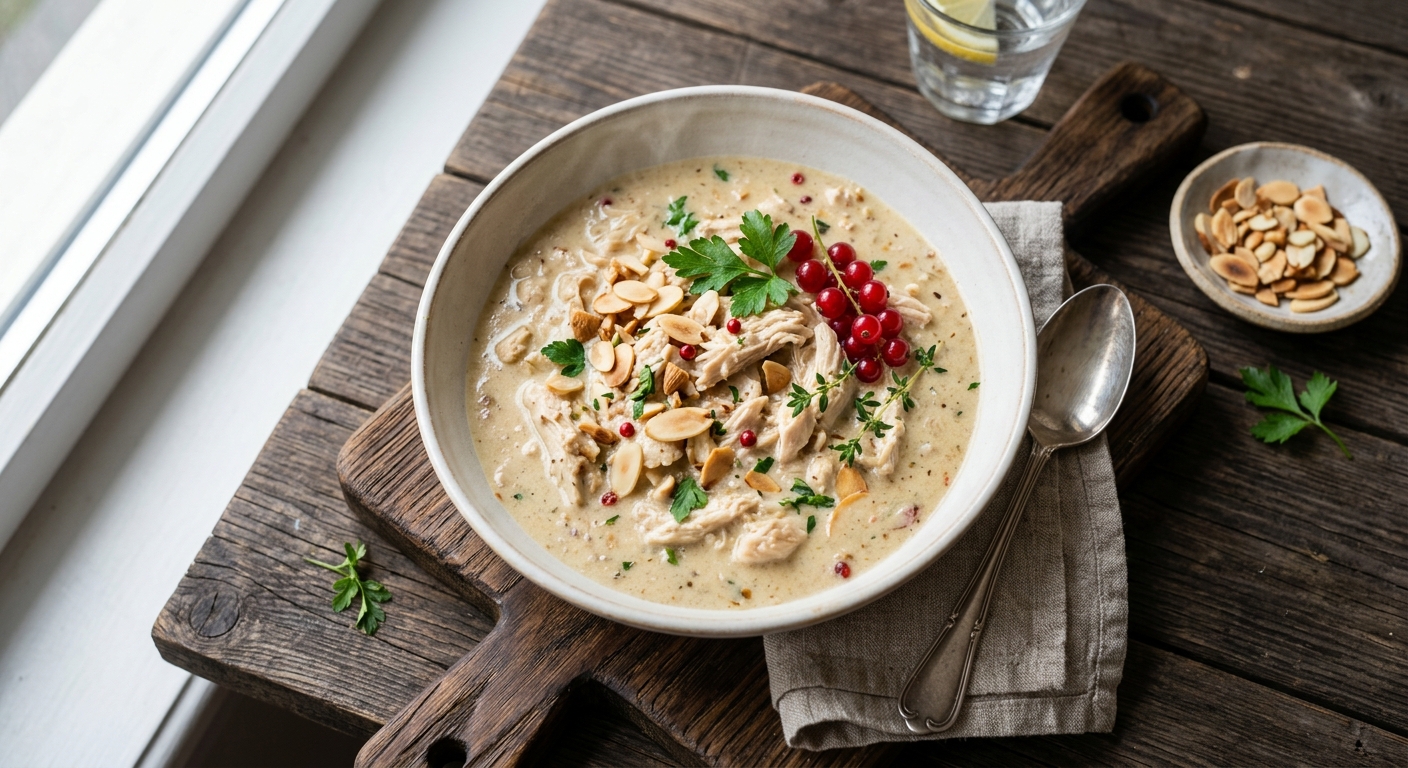
Blanc manger is a good example. In medieval French cookery it was a pale, mild dish built on chicken, almond milk and rice, sweetened and prized for its whiteness. Dishes of this kind were also considered suitable for invalids. Recipe Filer's modernised version keeps that spirit of delicate, creamy chicken and almond, but adds the measurements, timings and hob guidance that the original leaves out.
Why it still matters
The Viandier shows that elite medieval cooking was more varied and more carefully considered than the popular image of roughly roasted meat suggests. It records a taste for combining sweet, sour and spiced flavours, a reliance on almonds as a substitute for dairy, and a professional kitchen culture that was already writing its knowledge down. For historians it is a valuable link between medieval practice and later French cookery.
For home cooks it is a reminder of how old some familiar ideas are. The name blancmange, still used for a British pudding, descends from the same family of dishes, although the modern version is usually set with cornflour or gelatine and contains no chicken. Cooking from the Viandier, even in adapted form, is a practical way to taste a very different culinary world.
Recipes from Le Viandier
Frequently asked questions
Who wrote Le Viandier?
+
The book is attributed to Guillaume Tirel, known as Taillevent, a royal cook in fourteenth-century France. Earlier versions of the text existed before him, so scholars regard it as a work revised and copied over time rather than written by one person.
When was Le Viandier written?
+
It is traditionally dated to around 1380, when Taillevent was active at the French court. Manuscript versions predate his career, and printed editions appeared in the late fifteenth century.
What is blanc manger in Le Viandier?
+
It is a pale, mild medieval dish made with chicken, almond milk and rice, sweetened and valued for its white colour. Recipe Filer's version is a modernised adaptation with clear quantities and method.