Historical cookbook
Libro de Cozina: Ruperto de Nola's Renaissance Spanish Cookbook
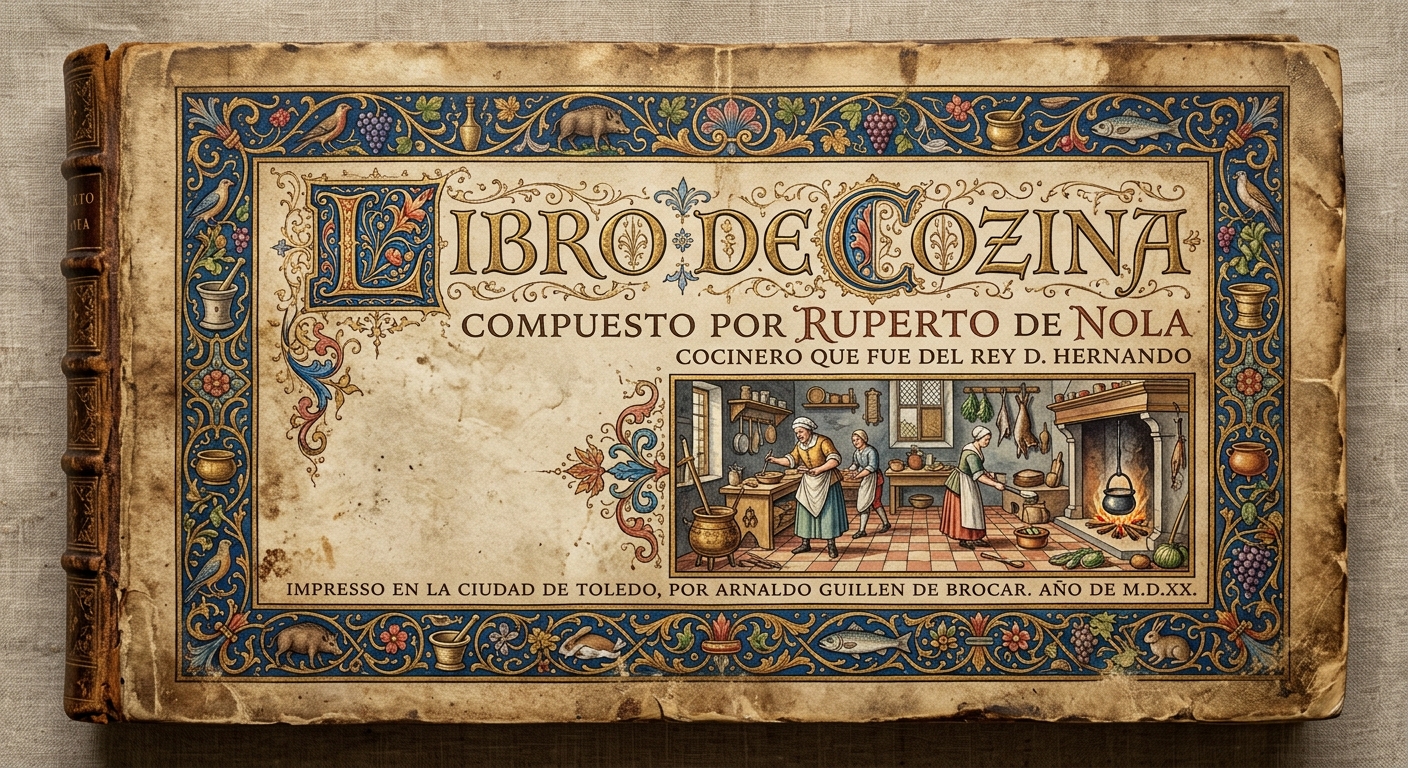
Ruperto de Nola's Libro de Cozina, first printed in 1520, is an early landmark of Spanish and Catalan cookery writing.
The story behind the book
Ruperto de Nola's Libro de Cozina is one of the earliest printed cookery books to come out of the Iberian Peninsula. The work began in Catalan, as the Llibre del Coch, and its first printed edition is usually dated to 1520. A Castilian version followed in the years after, and the book was reprinted a number of times during the sixteenth century and beyond. That publishing history suggests it was useful to working cooks and to readers who wanted a window onto grand dining.
Much of the material is thought to reflect late medieval court cooking, drawing on Catalan, Mediterranean and Arab-influenced traditions rather than on a single new invention. It is best read as a record of how a well-supplied kitchen approached feasts at the turn of the Renaissance.
Who wrote it
Ruperto de Nola is the Castilian form of the name, and the Catalan form is usually given as Robert de Nola or Mestre Robert. Tradition describes him as a cook serving King Ferdinand I of Naples, a ruler of the Aragonese dynasty, which would explain the book's Mediterranean outlook. Beyond that, little is firmly established. His exact dates, his origins and the degree to which he gathered existing recipes rather than devising them are all matters on which scholars remain cautious, and we do not try to settle them here.
What's inside
The book is a practical collection. It covers sauces, soups and broths, meat and poultry, fish, eggs, vegetables and sweet dishes, and its original Catalan title also points to guidance on serving and carving at table. The flavours are those of the period: almonds and almond milk, sugar, saffron, vinegar or verjuice, and a generous hand with spices. Sweet and savoury sit side by side in ways that now seem unfamiliar.
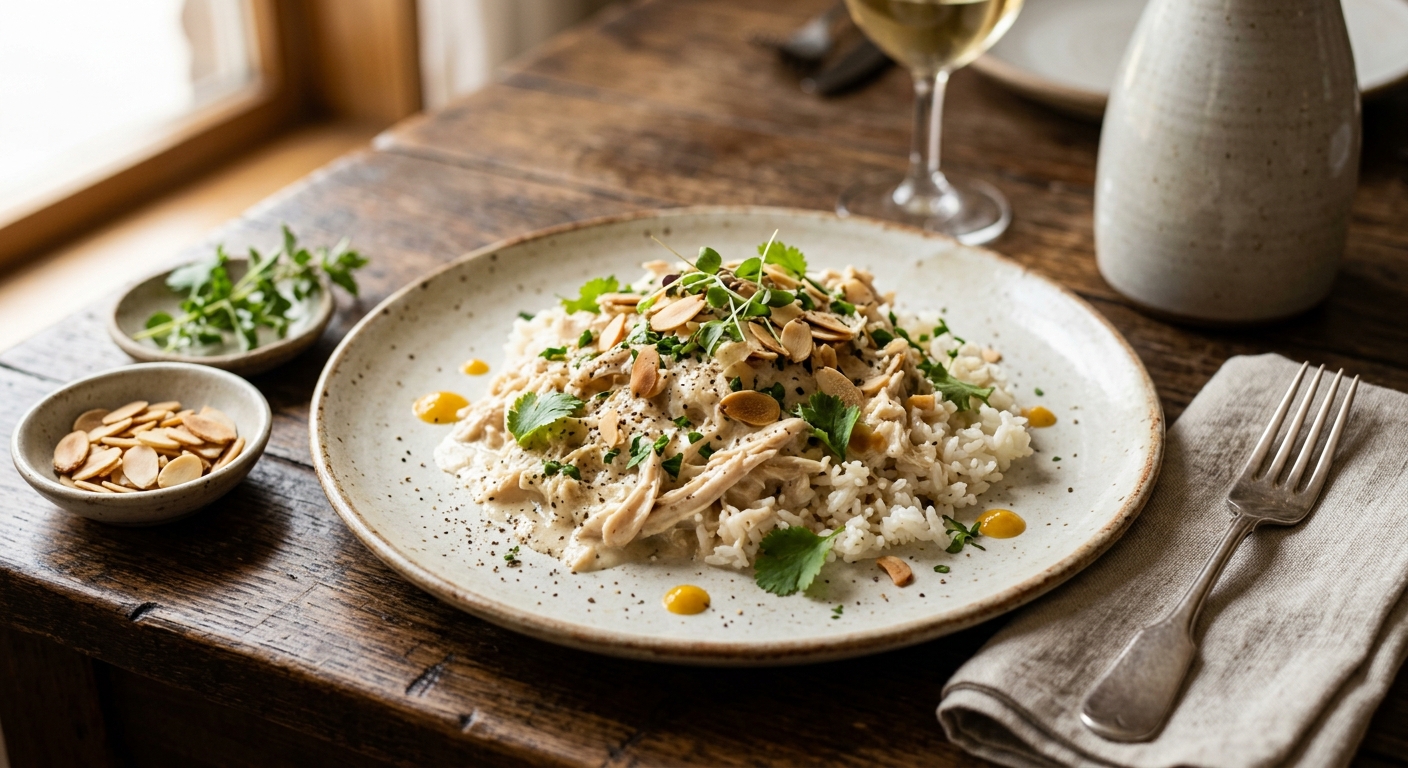
Manjar blanco, the dish Recipe Filer has modernised, is a good example. It belongs to the medieval family of white dishes built on finely worked chicken, rice, almonds and sugar, and it is a relative of the blancmange later known in Britain. Our version, chicken and rice with almonds, keeps that gentle, pale character while using modern measurements, oven and hob timings, and ingredients that are easy to buy. We have adapted the method for a contemporary kitchen, so it should be read as an interpretation rather than a strict reconstruction.
Why it still matters
Nola's book shows what Spanish and Catalan cooks were preparing before many New World ingredients became everyday fare. There are no tomatoes or potatoes to speak of in this kitchen, and that gives the cooking a distinctive profile built on nuts, grains, spices and sugar. It also offers evidence of the long Arab-Andalusian influence on the region's food.
For the home cook, the appeal is practical as well as historical. Dishes such as manjar blanco are mild, comforting and easy to adapt, and they invite you to think about how sweet and savoury were once balanced differently. Cooking from the book is a simple way to taste five centuries of culinary history, and to see how many of its ideas have quietly survived in modern Mediterranean cooking.
Recipes from Libro de Cozina
Frequently asked questions
Who was Ruperto de Nola?
+
Ruperto de Nola is the Castilian name of Robert de Nola, traditionally described as a cook to King Ferdinand I of Naples. Few details of his life are securely documented.
When was Libro de Cozina first published?
+
The first printed edition is usually dated to 1520, in Catalan as the Llibre del Coch. Castilian editions followed and were reprinted repeatedly.
What is manjar blanco in Ruperto de Nola's book?
+
Manjar blanco is a medieval white dish made with chicken, rice, almonds and sugar, related to blancmange. Recipe Filer's version is a modernised interpretation as chicken and rice with almonds.