Historical cookbook
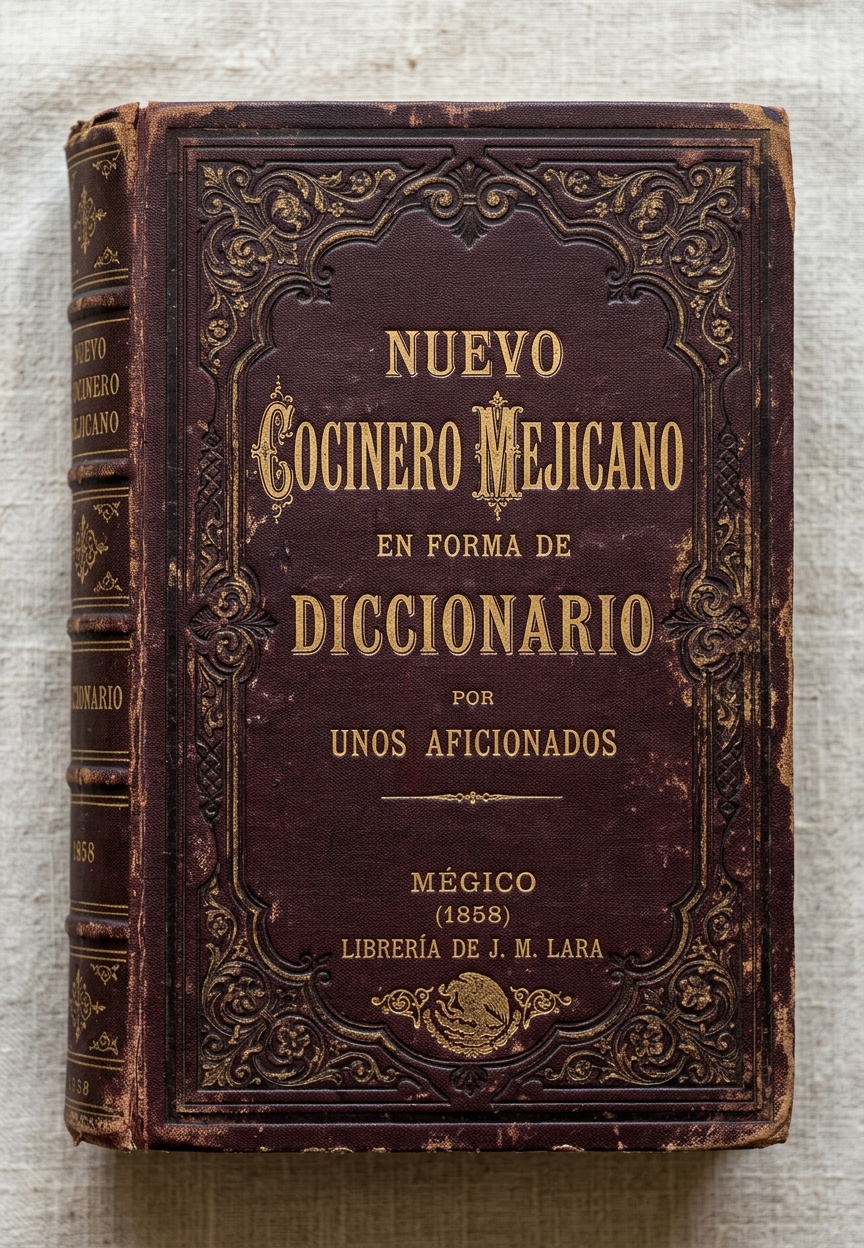
Nuevo Cocinero Mejicano: A Dictionary of Mexican Cooking
An anonymous Mexican cookery dictionary from 1858, with its Mole Poblano modernised for today's kitchen.
The story behind the book
Nuevo cocinero mejicano en forma de diccionario appeared in 1858, a little under four decades after Mexico gained independence from Spain. Printed cookery books in Spanish were by then familiar, and Mexican titles had begun to appear alongside them. This book belongs to that growing tradition. Its title makes two claims: that it is new, and that it is arranged as a dictionary. Instead of grouping dishes by course or season, it sets out its entries alphabetically, so a cook who wanted to know about a particular dish or ingredient could look it up by name, much as they would look up a word. Mexico in 1858 was also a country in political turmoil, with the Reform War under way, yet cookery remained a subject worth putting into print.
Who wrote it
The book is anonymous, and we will not guess at a name. Cookery books of the period were often compilations, drawing on earlier printed works, handwritten collections and everyday kitchen practice, and an alphabetical layout suited that approach because entries could be gathered from many places without a single narrative voice. Without a named compiler, however, we cannot say how much of the book came from its maker's own kitchen and how much was borrowed. Readers should treat it as the work of an unknown hand rather than the record of one famous cook.
What's inside
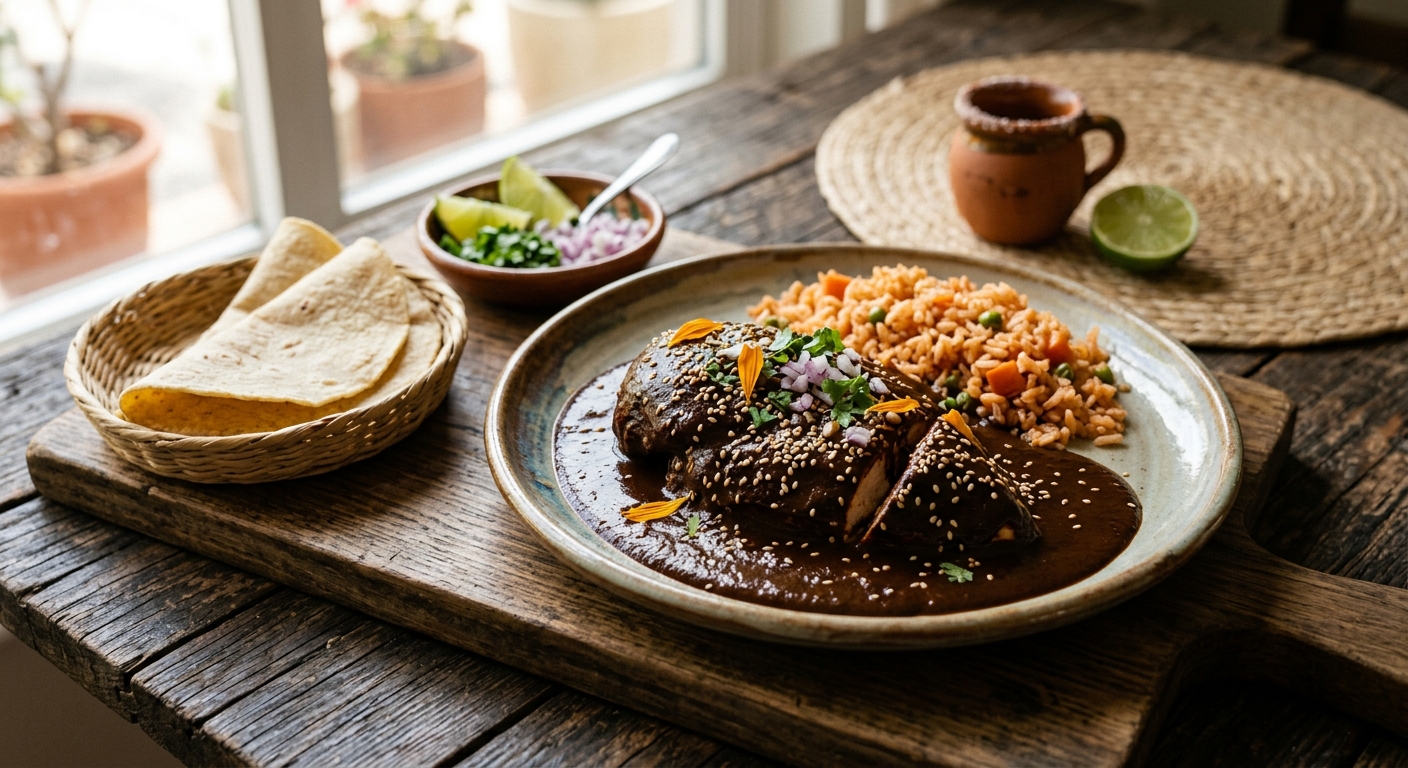
The dictionary form means the book is meant to be consulted rather than read from start to finish. We have not tried to summarise its full contents here, and we would rather say less than describe pages we cannot vouch for. What Recipe Filer has done is take one dish from it, Mole Poblano, and modernise it for a present-day kitchen, with measured quantities, clear steps and ingredients that can be found in the UK.
Mole poblano is a sauce associated with the city of Puebla, and its name simply means a mole in the style of Puebla. The word mole comes from the Nahuatl molli, meaning sauce. Modern versions typically combine dried chillies with spices, nuts or seeds and a little chocolate, and are served with poultry, most often turkey or chicken. A popular story credits nuns in a Puebla convent with inventing it, but that tale is best treated as legend rather than established fact.
Why it still matters
Early printed recipes are valuable because they show how a dish was described at a particular moment. Setting a nineteenth-century Mexican recipe beside modern versions of mole poblano lets a cook see what has stayed constant and what has changed in technique, seasoning and presentation. The dictionary format is also a reminder that cookery books were reference works as much as collections of dishes, built to answer a question quickly in a busy kitchen. Because the book is anonymous, it also stands as evidence of the many unnamed people who recorded and passed on Mexican cooking. Our modernised Mole Poblano is a practical way into it: a dish with a long history, adapted so that it can be cooked and enjoyed at home today.
Recipes from Nuevo Cocinero Mejicano en forma de diccionario
Frequently asked questions
Who wrote Nuevo cocinero mejicano en forma de diccionario?
+
The book is anonymous, and no author is named. We do not attribute it to anyone.
When was Nuevo cocinero mejicano first published?
+
It was first published in 1858. It is a Mexican cookery book arranged as an alphabetical dictionary.
Is there a Mole Poblano recipe based on this book?
+
Yes. Recipe Filer has modernised a Mole Poblano from the book, with measured quantities and clear steps for a home kitchen.