Historical cookbook
The Accomplisht Cook: Robert May's Restoration Feast
Robert May's 1660 cookbook gathered a lifetime of English professional cookery into one grand volume.
The story behind the book
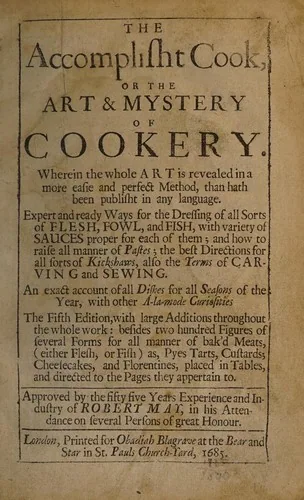
The Accomplisht Cook, or the Art and Mystery of Cooking was published in London in 1660, the year Charles II returned to the English throne. After the upheavals of civil war and the Commonwealth, it looked back to the lavish household cookery of an earlier England. The book was reprinted several times in the decades that followed, which points to a steady readership. It was written chiefly for professional cooks and the great households that employed them, rather than for the occasional home cook. It explains how to keep a table of real ambition, from everyday dishes to full-scale banquets, in a practical voice that assumes a busy kitchen with plenty of hands to help.
Who wrote it
Robert May was born in 1588 into a family of cooks, and his father worked in a grand household. As a youth he was sent to France to train, then returned to England to serve in the kitchens of wealthy families. By the time the book appeared he was an old man, and the engraved portrait at the front shows him at the age of 72. He presented the work as the fruit of a lifetime in service, and he plainly wanted to set down a craft learned through long practice. The book remains the best witness to his career. His writing is direct and confident, with the authority of someone who had cooked at scale for decades rather than collected recipes at a distance.
What's inside
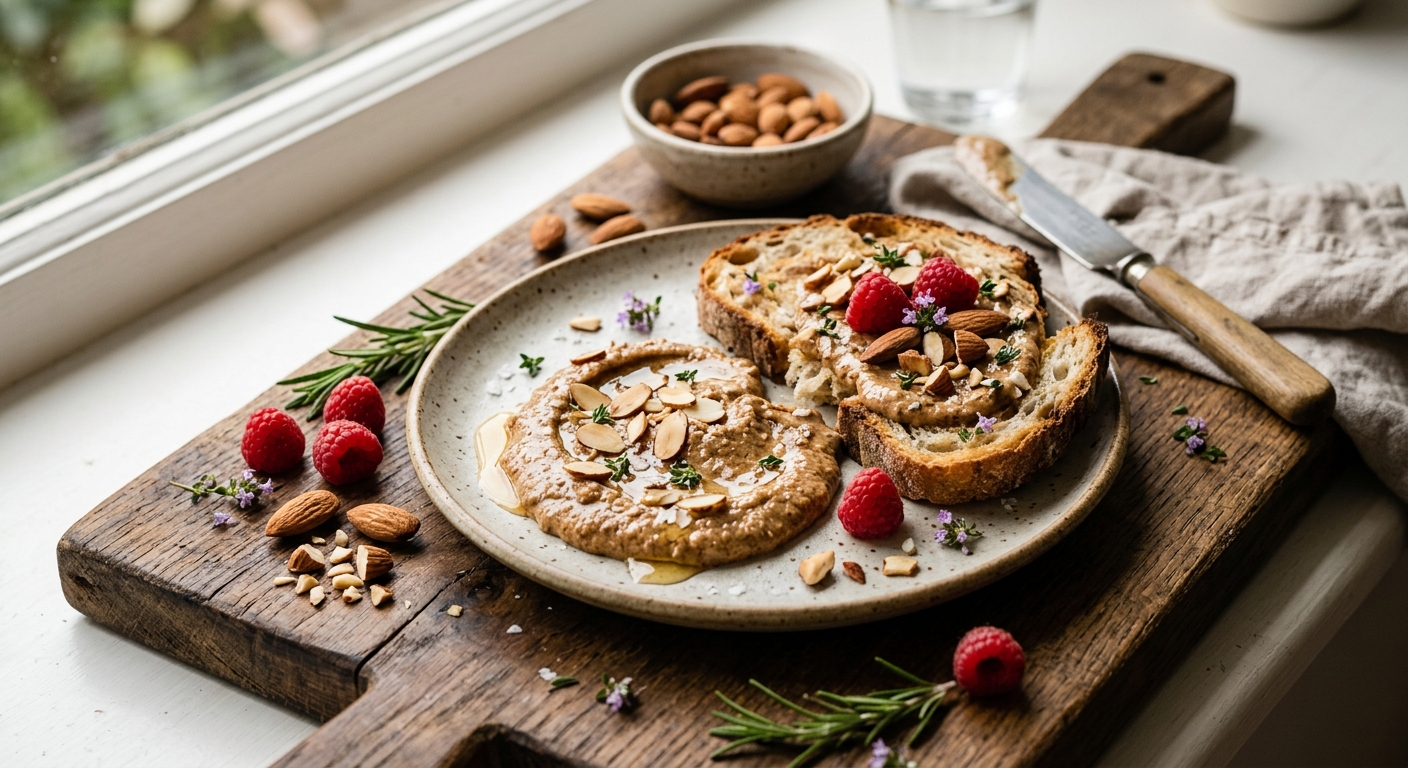
The book contains more than a thousand recipes, covering meat, poultry, game, fish, pies, puddings, sauces and sweet dishes. It also offers bills of fare arranged for different seasons and occasions, including fish days, so that a cook could plan an entire meal as well as single dishes. May included French, Spanish and Italian dishes alongside English ones, showing how international the best kitchens had become. Instructions are set out plainly, one dish after another, with little ceremony. The most famous passages describe showpiece pastry, such as elaborate pies and edible sculptures made to amaze the guests, including pies that released live birds when cut. Almonds appear throughout the rich cooking of the period, and the almond butter we have modernised belongs to that tradition.
Why it still matters
The Accomplisht Cook is one of the most important English cookery books of the seventeenth century because it records, in a cook's own words, how a leading professional worked. It captures a moment when older habits, such as mixing sweet and savoury and cooking with plenty of spice and dried fruit, sat alongside newer continental influences. Food historians value it for the detail it gives about ingredients, techniques and the staging of a feast. For modern cooks it is harder going, since quantities are often vague and methods assume a trained hand. That is why modernising is worthwhile: it turns a period description into something you can make in an ordinary kitchen while keeping the spirit of the original. Recipes such as May's almond butter offer an easy way into a book that might otherwise seem the preserve of specialists.
Recipes from The Accomplisht Cook
Frequently asked questions
Who wrote The Accomplisht Cook?
+
It was written by Robert May, an English professional cook born in 1588 who trained in France and worked in the kitchens of wealthy households.
When was The Accomplisht Cook first published?
+
It was first published in London in 1660, and it was reprinted several times afterwards.
What kinds of recipes does The Accomplisht Cook contain?
+
It has more than a thousand recipes for meat, poultry, game, fish, pies, puddings, sauces and sweet dishes, plus seasonal bills of fare and spectacular showpiece pastry.