Historical cookbook
The Compleat Housewife: Georgian Kitchen Classic
Eliza Smith's 1727 cookery book, a bestseller reprinted for decades and the first cookbook printed in colonial America.
The story behind the book
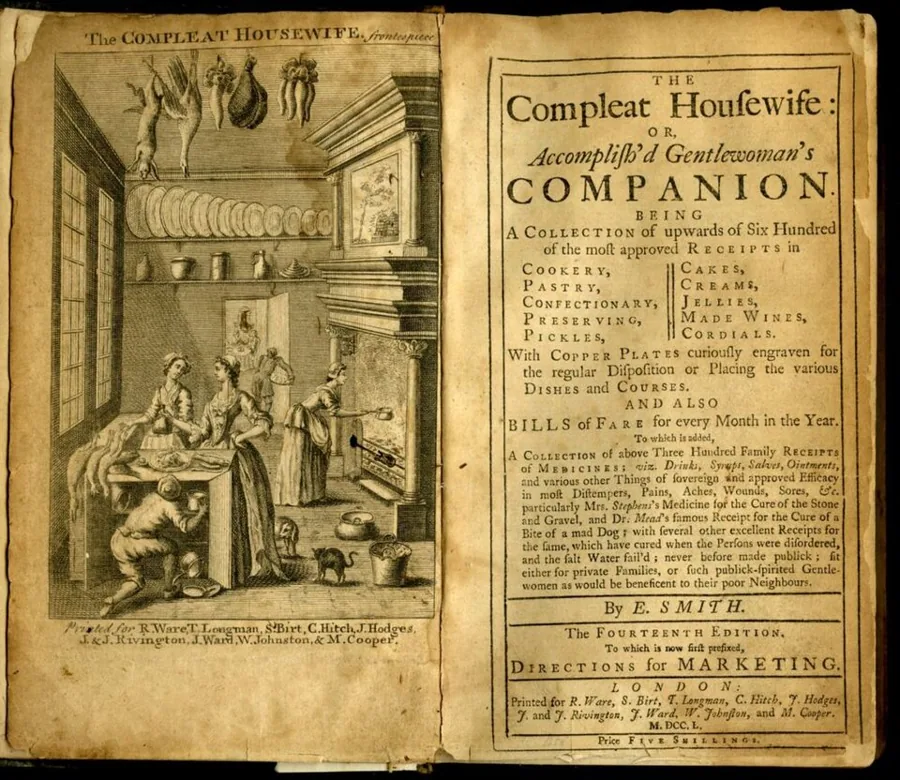
The Compleat Housewife: or, Accomplish'd Gentlewoman's Companion was published in London in 1727 and became one of the most widely read cookery books of the Georgian period. It appeared when printed cookery was aimed at gentry and well-to-do middle-class households, where the mistress was expected to oversee the kitchen, the dairy and the medicine chest. The book was reprinted many times through the eighteenth century. In 1742 William Parks issued an edition in Williamsburg, Virginia, which is generally regarded as the first cookery book printed in the American colonies.
Who wrote it
The title page names Eliza Smith, and very little else about her can be stated with confidence. The details of her life, her household and her sources remain uncertain, so it is wiser not to repeat the colourful stories sometimes attached to her. What survives is the book itself, which speaks in the practical voice of someone accustomed to managing a large establishment. Recipes of the period circulated freely in manuscript and print, so the book is best read as a snapshot of early Georgian practice rather than the record of a single kitchen.
What's inside
The title page promises upwards of six hundred receipts, the period word for recipes, covering cookery, pastry, confectionery, preserving, pickles, cakes, creams, jellies, made wines and cordials. It also offers bills of fare for every month of the year, showing how a table might be laid out through the seasons, along with a section of family medicines such as drinks, syrups and ointments. Cooking and household physic sat side by side, as they did in most homes of the time. Quantities and timings are often left to the cook's judgement, which is one reason modern adaptation takes some care.
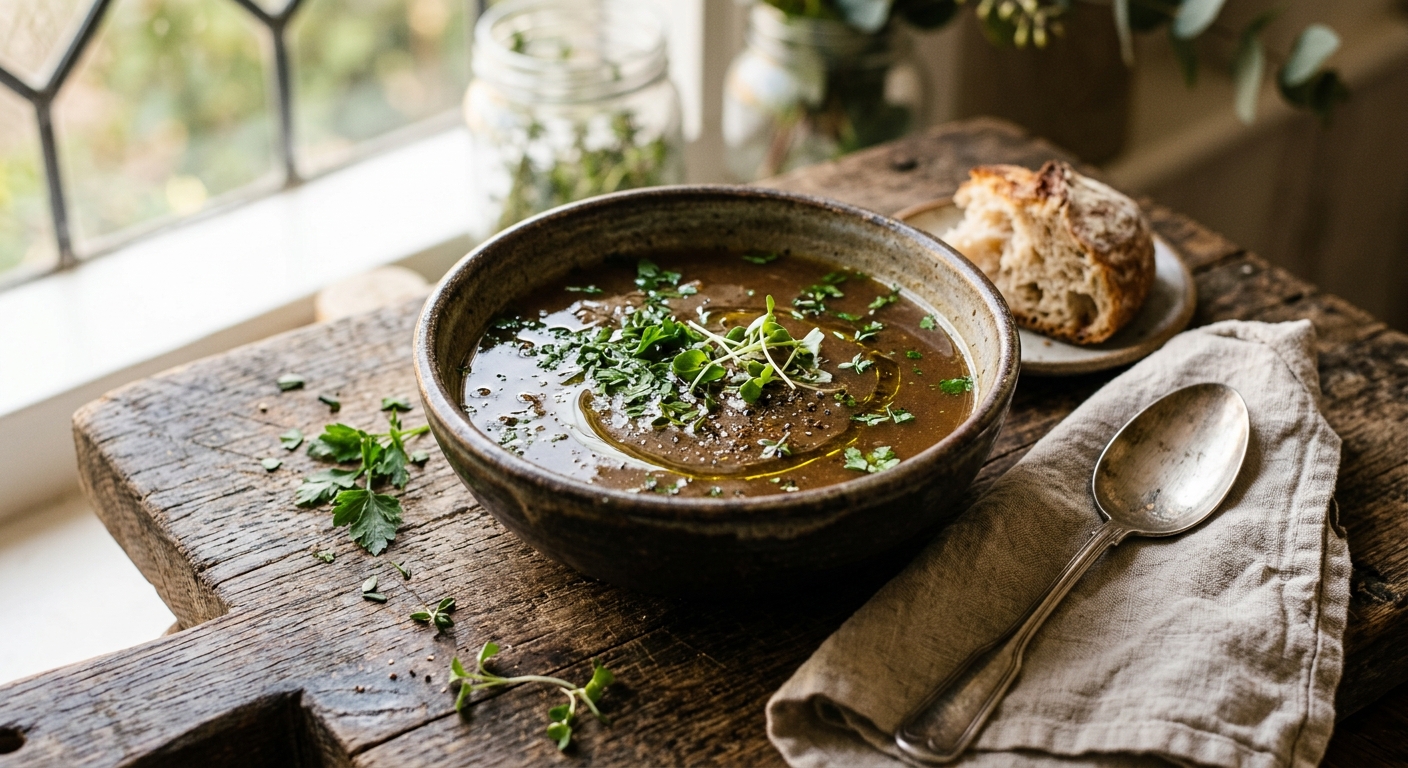
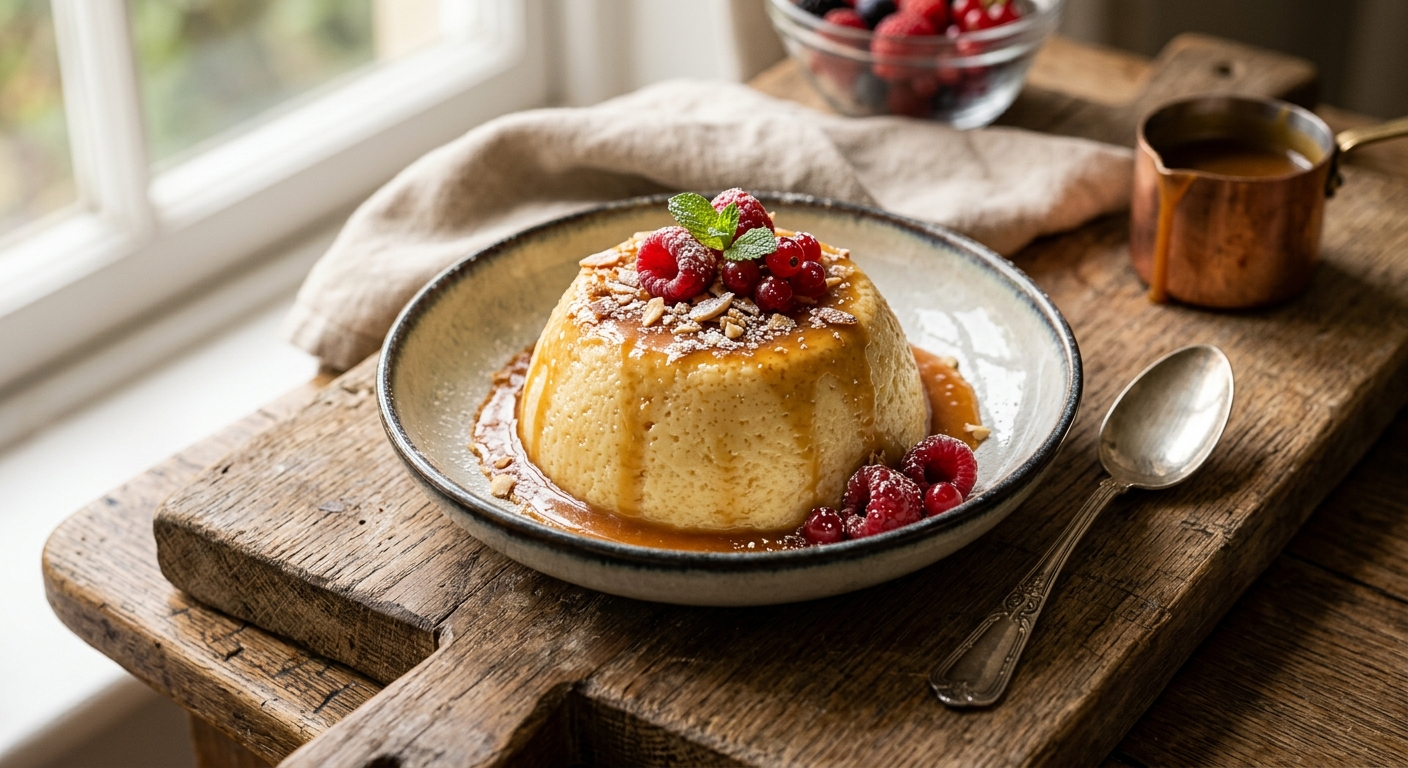
Recipe Filer has modernised two dishes from the book. Portable Soup is a strongly reduced broth, boiled down until it sets firm so that it can be stored and later dissolved in hot water. Quaking Pudding is a delicate boiled pudding, named for the way it wobbles when turned out. Together they show the range of the book, from provisioning and thrift to the pudding course.
Why it still matters
For food historians, The Compleat Housewife is a useful window onto what a comfortable English household aspired to eat in the early eighteenth century, and how it preserved, pickled and stretched its ingredients. Its long publishing life shows how much readers relied on it, and its American printing shows how English tastes and habits travelled across the Atlantic. For cooks today, the appeal is more practical. The recipes are short, direct and built on straightforward techniques, so they reward a little experimentation. Reading them alongside modern versions lets you see which methods have endured, which flavourings have fallen out of favour, and how much of the British kitchen was already recognisable almost three hundred years ago.
Recipes from The Compleat Housewife
Frequently asked questions
Who wrote The Compleat Housewife?
+
The title page credits Eliza Smith. Little is reliably known about her life, so the book itself is the main evidence of her work.
When was The Compleat Housewife first published?
+
It was first published in London in 1727 and was reprinted many times during the eighteenth century.
Was The Compleat Housewife the first cookbook printed in America?
+
An edition printed by William Parks in Williamsburg, Virginia, in 1742 is generally regarded as the first cookery book printed in the American colonies.