Historical cookbook
The Cook's Oracle: Kitchiner's Tested Regency Recipes
William Kitchiner's 1817 The Cook's Oracle brought exact quantities and tested methods to the English home kitchen.
The story behind the book
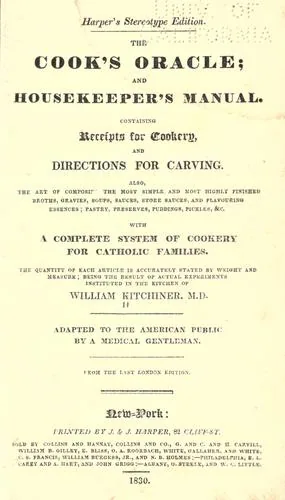
The Cook's Oracle first appeared in London in 1817, under the fuller title Apicius Redivivus; or, The Cook's Oracle. The first part of that title borrowed the name of the Roman associated with ancient cookery writing, and promised a kind of revival. The book was written for private households rather than professional chefs, and its selling point was reliability. Its author presented the recipes as tried and tested rather than copied from earlier cookery books. The approach found an audience: the book was reprinted many times in Britain and was also issued in the United States, which suggests how widely it travelled.
Who wrote it
William Kitchiner (c. 1775–1827) was a Londoner who trained in medicine but did not build a career around practising it. He is better remembered as a writer with wide interests, including food, health, optics and music. He is generally described as having had private means, which left him free to write and entertain. His dinners at his London home had a reputation for strict rules, punctuality among them, and he treated eating well as a matter of method and good sense rather than show. His other books include The Art of Invigorating and Prolonging Life (1821), The Housekeeper's Ledger (1825) and The Traveller's Oracle (1827), so cookery was only one part of a broader interest in domestic life and wellbeing.
What's inside
The Cook's Oracle covers the everyday business of a well-run kitchen. It moves through broths, soups, gravies and sauces, then meat, fish, poultry, game, vegetables, puddings and pastry, with advice on equipment and on seasoning and flavouring. Its distinctive feature is the effort to be precise. Kitchiner gives quantities and cooking times, and he adds frank comments on what he thinks tastes right, which was not yet standard practice in English cookery books of the time. Sauces and flavourings receive particular attention, and the book is a good place to see how Regency cooks lifted plain boiled and roasted meats with pickles, ketchups, mustard, wine and herbs.
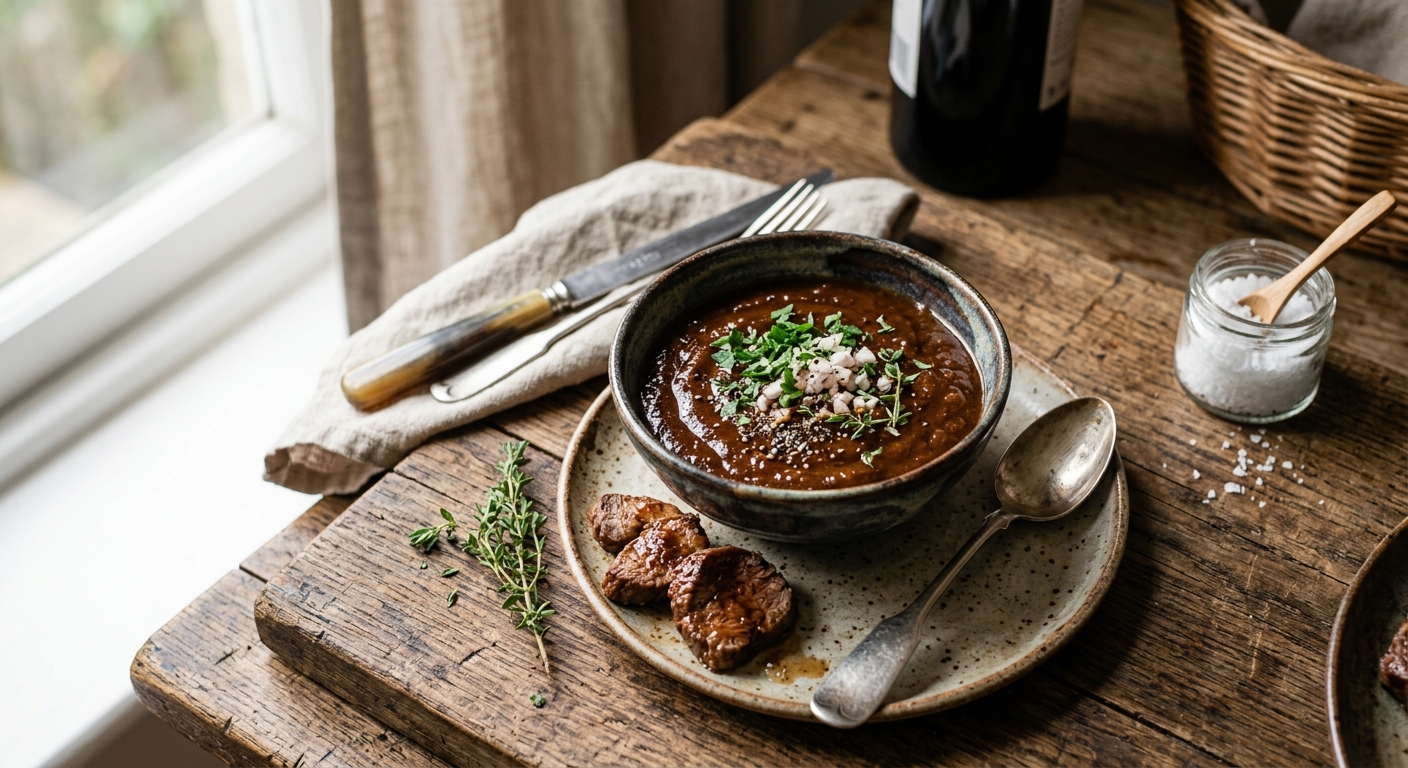
One example is Dr Kitchiner's Wow-Wow Sauce, which Recipe Filer has modernised. It is a piquant sauce meant to accompany beef. In Kitchiner's version it combines chopped parsley and pickles with mustard, vinegar, butter and port wine. It is a useful snapshot of the period's liking for sharp, savoury sauces served alongside plainly cooked meat.
Why it still matters
For food historians, The Cook's Oracle is a clear window onto the kitchens of early nineteenth-century England and the tastes of the households that used it. It also marks a step towards the modern recipe, in which a cook can expect measured ingredients, stated timings and some explanation of why a dish is made as it is. Kitchiner's confident, opinionated voice makes it readable as well as informative. For cooks today, modernised recipes such as the Wow-Wow Sauce offer a practical way into that world, using ingredients that are easy to find while keeping the character of the original.
Recipes from The Cook's Oracle
Frequently asked questions
Who wrote The Cook's Oracle and when was it published?
+
The Cook's Oracle was written by William Kitchiner and first published in London in 1817, under the fuller title Apicius Redivivus; or, The Cook's Oracle.
What is Dr Kitchiner's Wow-Wow Sauce?
+
It is a piquant sauce from The Cook's Oracle, intended to accompany beef. It combines parsley and pickles with mustard, vinegar, butter and port wine.
What makes The Cook's Oracle important in cookery history?
+
It stands out for its attempt at precision, with stated quantities and cooking times, and for its claim that the recipes had been tested. This anticipates the format of modern recipe writing.