Historical cookbook
The English Huswife: Markham's 1615 Household Guide
Gervase Markham's 1615 manual for running an English household, and the source of a famous Banbury cake recipe.
The story behind the book
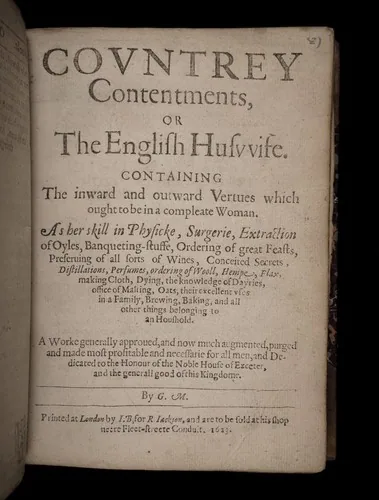
The English Huswife was first published in London in 1615, as a companion to Gervase Markham's Country Contentments, a book on country pursuits for gentlemen. Its full title promises the inward and outward virtues of a complete woman, and the book sets out to teach the mistress of a substantial household how to run it well. Markham treated the household as a working enterprise. Food, medicine, drink, dairy produce and cloth were all made at home, and the housewife oversaw every part. The book found a steady readership and was reprinted several times in the decades after it appeared. Today it is valued as a practical snapshot of how a comfortable English household was meant to operate in the early seventeenth century.
Who wrote it
Gervase Markham, who lived from about 1568 to 1637, was an English writer with an unusually wide range. He wrote poetry and plays as well as a long shelf of practical books, and he is especially associated with horsemanship, farming and country sports. He also had a career as a soldier. He made much of his living by his pen, producing guides for readers who wanted instruction in estate and household management. A man writing a manual for housewives may seem odd, but it fitted his habit of gathering practical knowledge into orderly books. Readers should treat the work as an ideal of good management, set down by a professional author, rather than as a diary of one woman's kitchen.
What's inside
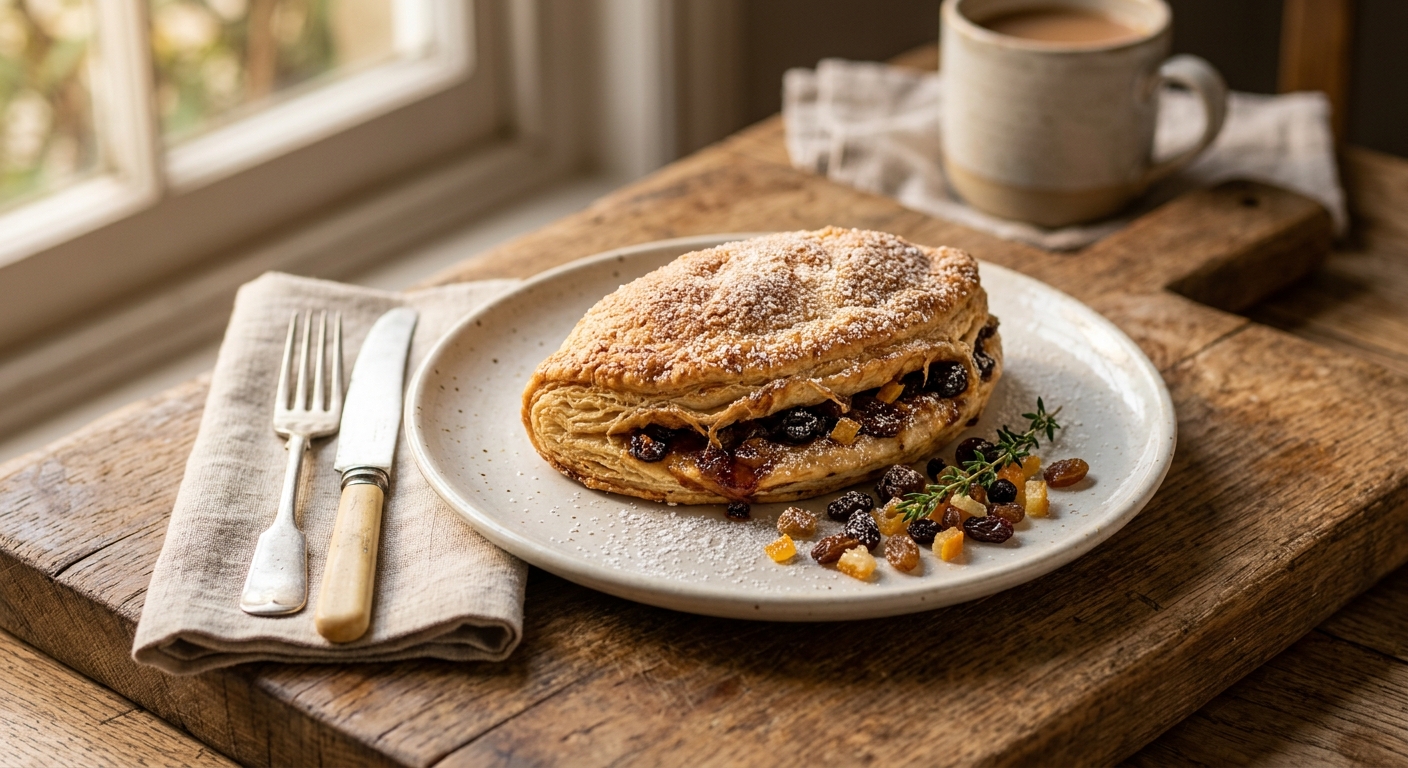
The book is organised by task rather than by course. It begins with the character a housewife should have, then moves through medicine, cookery, sweet banqueting dishes, distilling, perfumes, the working of wool, hemp and flax, dairy work, brewing, malting, and the making of oats, meal and bread. The cookery section sets out dishes for the table, and Markham writes in flowing prose with few exact quantities, assuming a cook who already knows her way around a hearth. His Banbury cake is built on currants, sweet spices, eggs and yeast, and it is the recipe Recipe Filer has modernised from the book. It differs from the small oval flaky pastries now sold as Banbury cakes, so it helps to know which tradition a recipe follows.
Why it still matters
The English Huswife matters because it shows what a household cook was expected to know when so many skills were still practised at home. It ties food to health, thrift and seasonal work, and its recipes reflect the spiced, sweet-and-savoury taste of the period. For cooks today, the Banbury cake is an easy way in: a fruited, spiced bake whose flavours still feel familiar. Modernising it means turning loose instructions into measured, repeatable steps while keeping the character of the original. Reading it beside the recipes gives context for dishes we still bake. The book is also a useful source for historians of domestic life and women's work, with the caveat that it records an author's prescription rather than everyday practice.
Recipes from The English Huswife
Frequently asked questions
Who wrote The English Huswife?
+
It was written by Gervase Markham (c. 1568–1637), an English author who wrote on farming, horses, country sports and household management, as well as poetry and plays.
When was The English Huswife published?
+
It was first published in London in 1615, issued alongside Markham's Country Contentments.
What kinds of recipes and advice does The English Huswife contain?
+
It covers medicine, cookery, banqueting dishes, distilling, perfumes, textiles, dairy work, brewing, malting and bread-making, and includes Markham's Banbury cake.