Historical cookbook
The Forme of Cury: Cooking at Richard II's Court
Compiled around 1390 by the master cooks of King Richard II, this is one of England's best-known medieval recipe collections.
The story behind the book
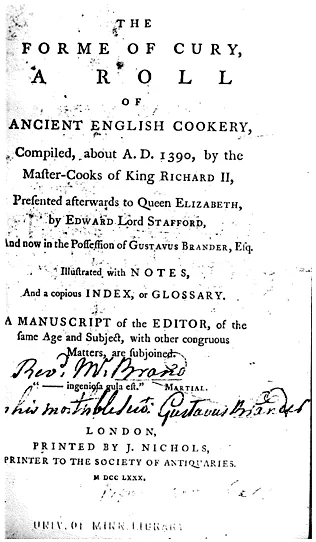
The Forme of Cury is a collection of medieval English recipes compiled around 1390, during the reign of Richard II. It is often given a publication date, but it began as a handwritten manuscript copied by scribes, not as a printed book. Several manuscript copies survive. The text reached a wider readership only in 1780, when the antiquary Samuel Pegge published an edition. The word cury is the Middle English word for cookery and has nothing to do with the spiced curries of India. According to its own preface, the work was compiled with the approval and advice of the masters of physic and philosophy at the king's court. That tells us food was then closely tied to ideas about health and the balance of the body, not just to pleasure or display.
Who wrote it
No individual author is named. The book is credited to the master cooks of Richard II, a team working in a royal household that had to feed a very large court. Their names were not recorded, and we cannot say how many people contributed or who actually wrote the text down. Because the recipes were copied by hand over time, the surviving manuscripts differ in detail. The title of Pegge's edition records that a copy was presented to Elizabeth I by Edward, Lord Stafford, which shows the roll was still valued as a curiosity two centuries after it was compiled.
What's inside
The collection runs to close to two hundred recipes, written in Middle English. They cover pottages, meat and fish dishes, sauces, tarts and even a salad of raw herbs dressed with oil, vinegar and salt. The instructions are brief. They rarely give quantities, cooking times or oven temperatures, and they assume the reader already knows how a kitchen works. Spices such as ginger and saffron appear often, alongside sugar, almonds and dried fruit, which reflects the tastes and budget of a wealthy household.
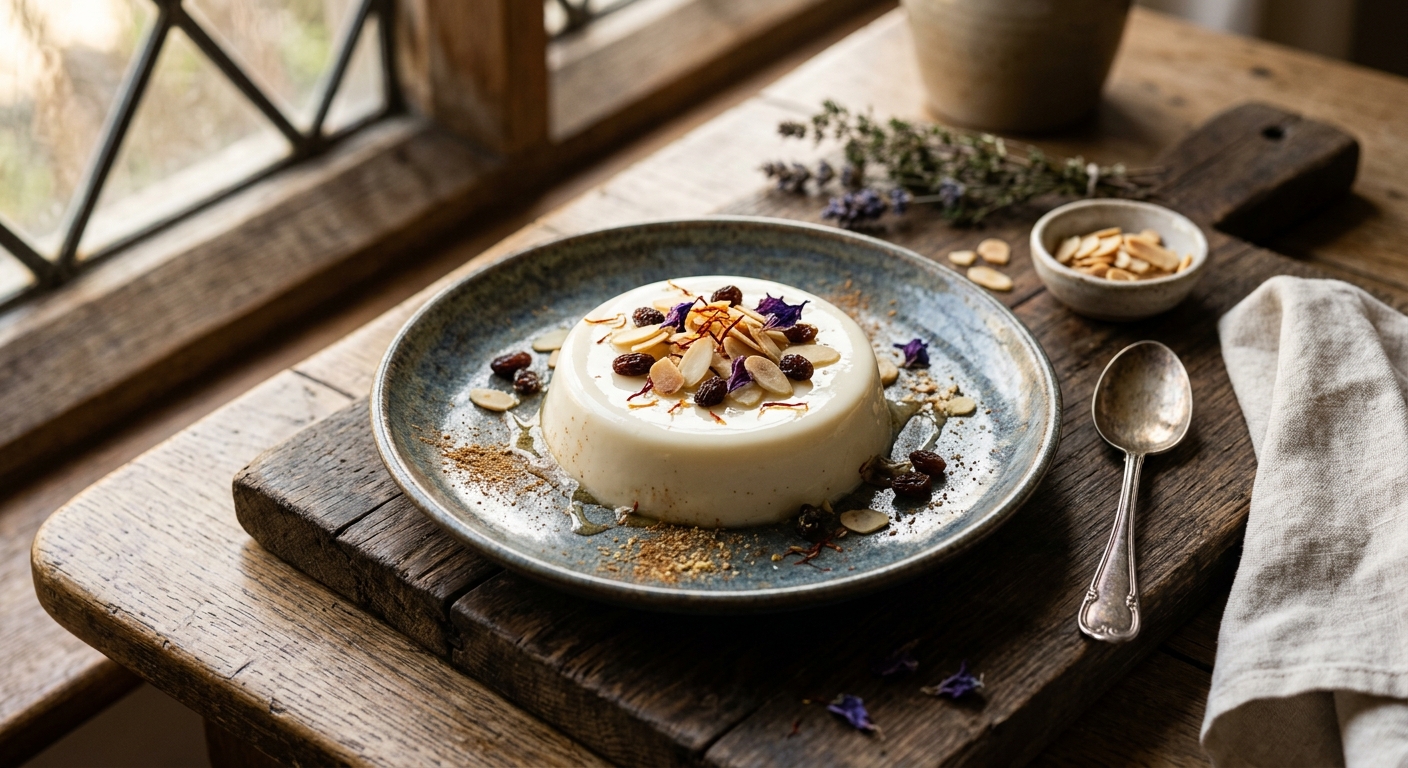
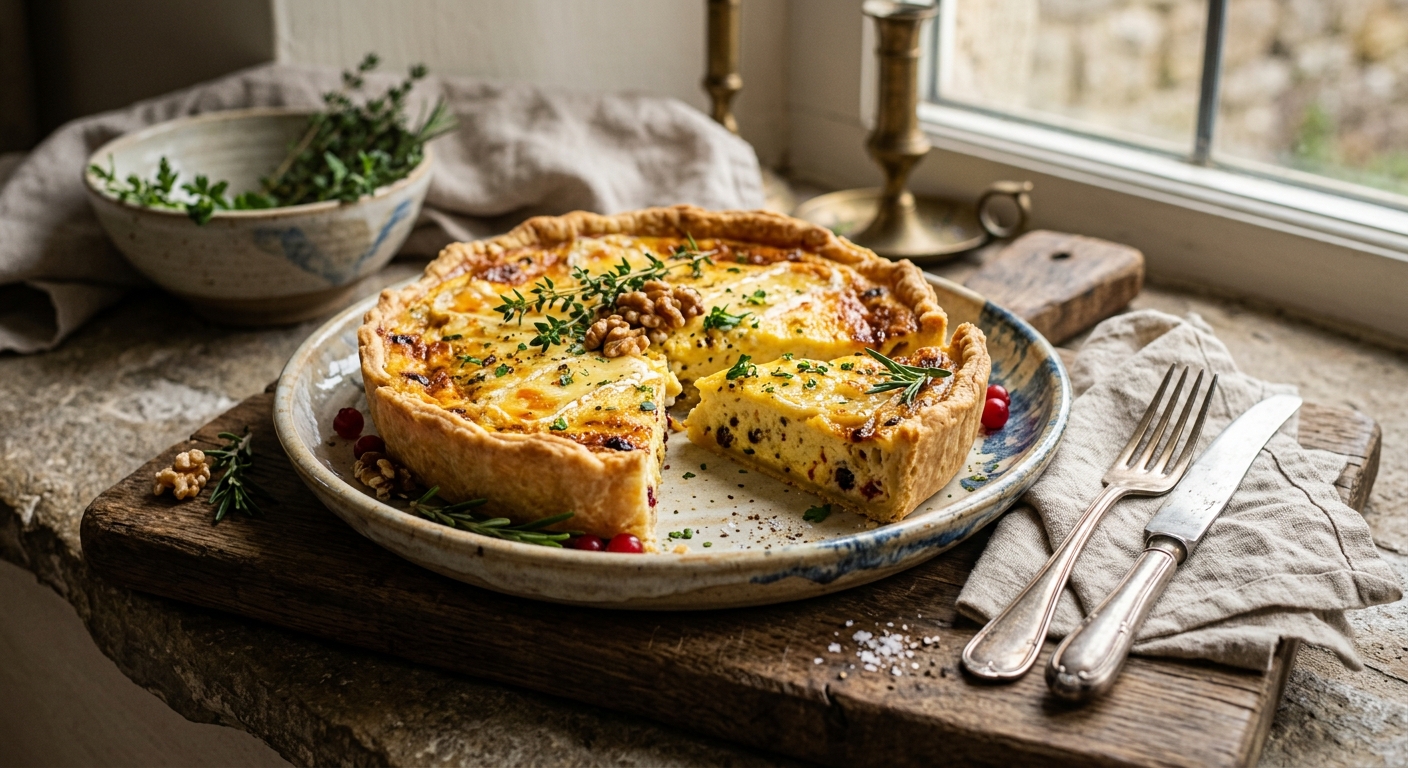
Two of the recipes Recipe Filer has modernised show the range. Blancmange here is not the set milk pudding of later centuries. It is a pale, mild dish built on almond milk, rice and poultry. The Tart de Bry is a pastry case filled with soft cheese and egg yolks, seasoned with spice and sweetened with sugar. The name suggests Brie, though medieval cheeses were not the same as those sold today.
Why it still matters
The Forme of Cury is one of the earliest substantial cookery collections in English, and it gives a rare look at how the highest tables of late medieval England were run. It shows a cuisine that happily mixed sweet, savoury and spiced flavours, and it reminds us that cooking was linked to medicine as well as hospitality. It is not a record of what ordinary people ate, since it reflects a royal and aristocratic kitchen. Turning its recipes into something usable today involves choices about quantities, timings and ingredients, because the originals leave so much unsaid. Our modernised versions aim to keep the character of the dishes while giving cooks the detail the master cooks never wrote down.
Recipes from The Forme of Cury
Frequently asked questions
When was The Forme of Cury written?
+
It was compiled around 1390, in the reign of Richard II, as a handwritten manuscript. It was not printed until Samuel Pegge's edition of 1780.
Who wrote The Forme of Cury?
+
It is credited to the master cooks of Richard II's household, but no individual is named. Its preface says it was compiled with the advice of the court's masters of physic and philosophy.
What does 'cury' mean in The Forme of Cury?
+
Cury is the Middle English word for cookery. It is not related to the modern word curry.