Historical cookbook
The Indian Cookery Book: A Kitchen Handbook from 1869
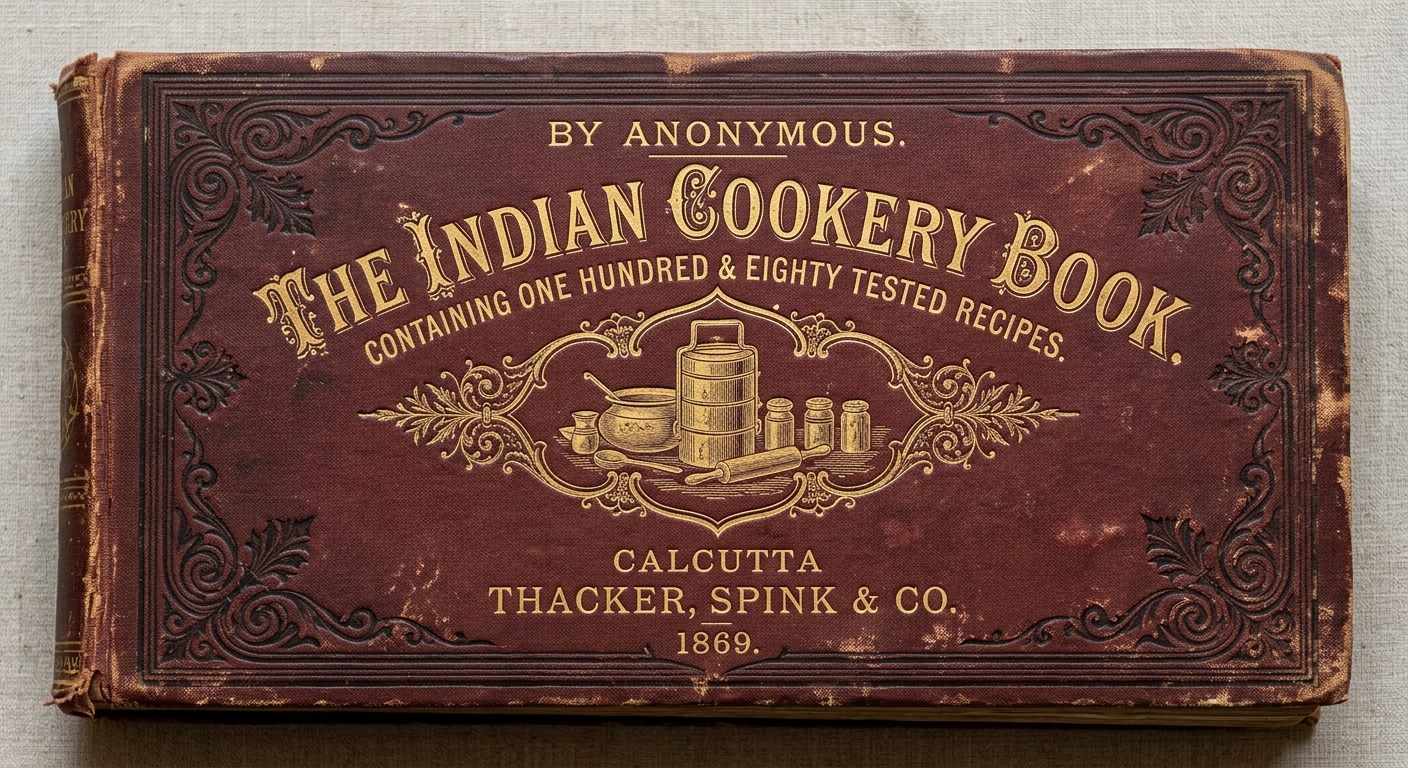
An anonymous 'thirty-five years' resident' wrote this Thacker, Spink & Co. kitchen handbook, published in 1869.
The story behind the book
The Indian Cookery Book was published in 1869 by Thacker, Spink & Co. in India, at a time when British households in the subcontinent relied on locally employed cooks and on printed guidance for running a kitchen. Its full title describes it as a practical handbook to the kitchen in India, adapted to the three Presidencies of Bengal, Madras and Bombay. That framing matters. The book was aimed at the working kitchen, where ingredients, climate and household customs differed from those of Britain, rather than at readers at home who were curious about curry. It belongs to a wider tradition of Anglo-Indian domestic manuals that grew through the nineteenth century, and it remains a useful window onto the everyday food of that world.
Who wrote it
The book is anonymous. Its title page credits it to "a thirty-five years' resident", which points to a long-serving observer of life in India, but the name is not established and Recipe Filer will not guess at one. What can be said is that the publisher, Thacker, Spink & Co., was a Calcutta firm of publishers and booksellers, so the book entered a commercial market of colonial readers rather than circulating privately. Without a named author, it is best read as a record of the habits and assumptions of one part of Anglo-Indian society, not as the work of a celebrated cook with a personal style to promote.
What's inside
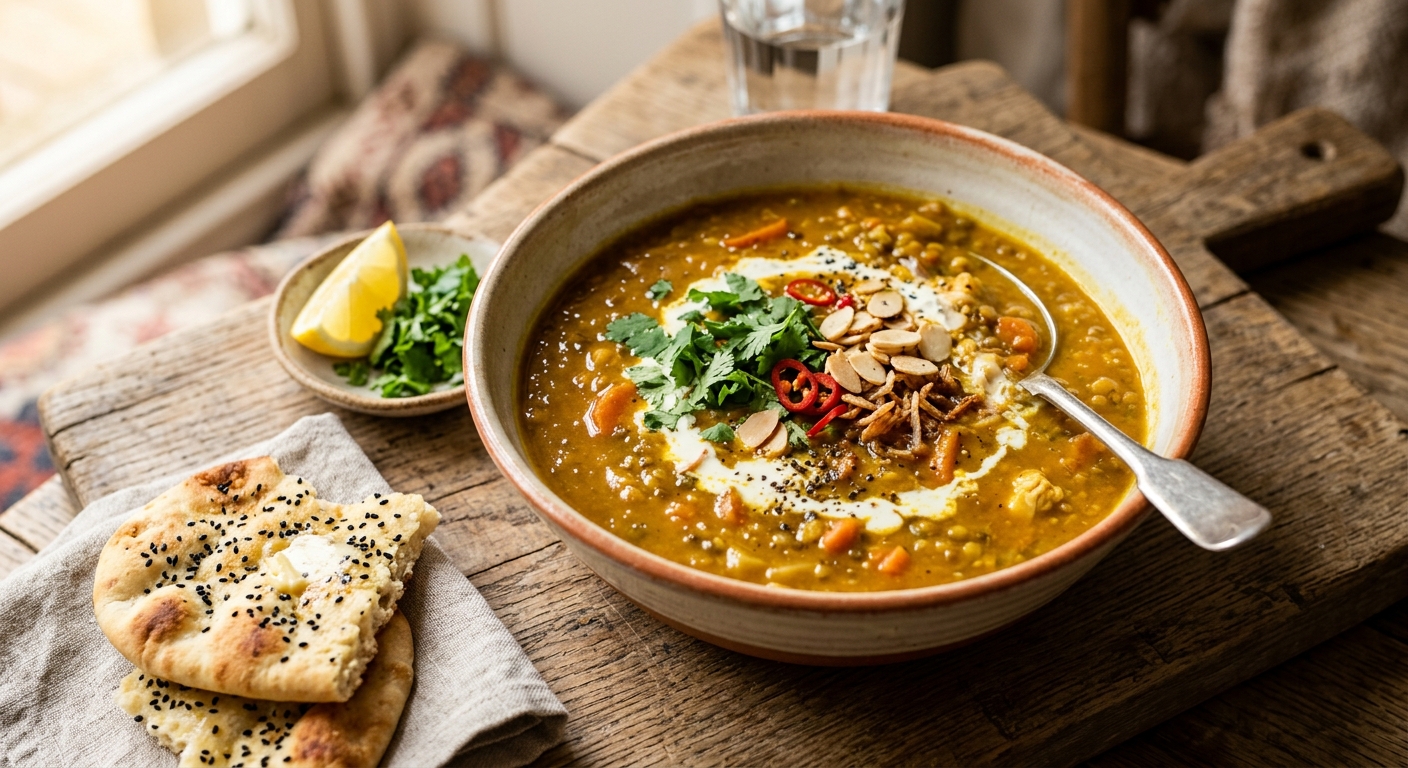
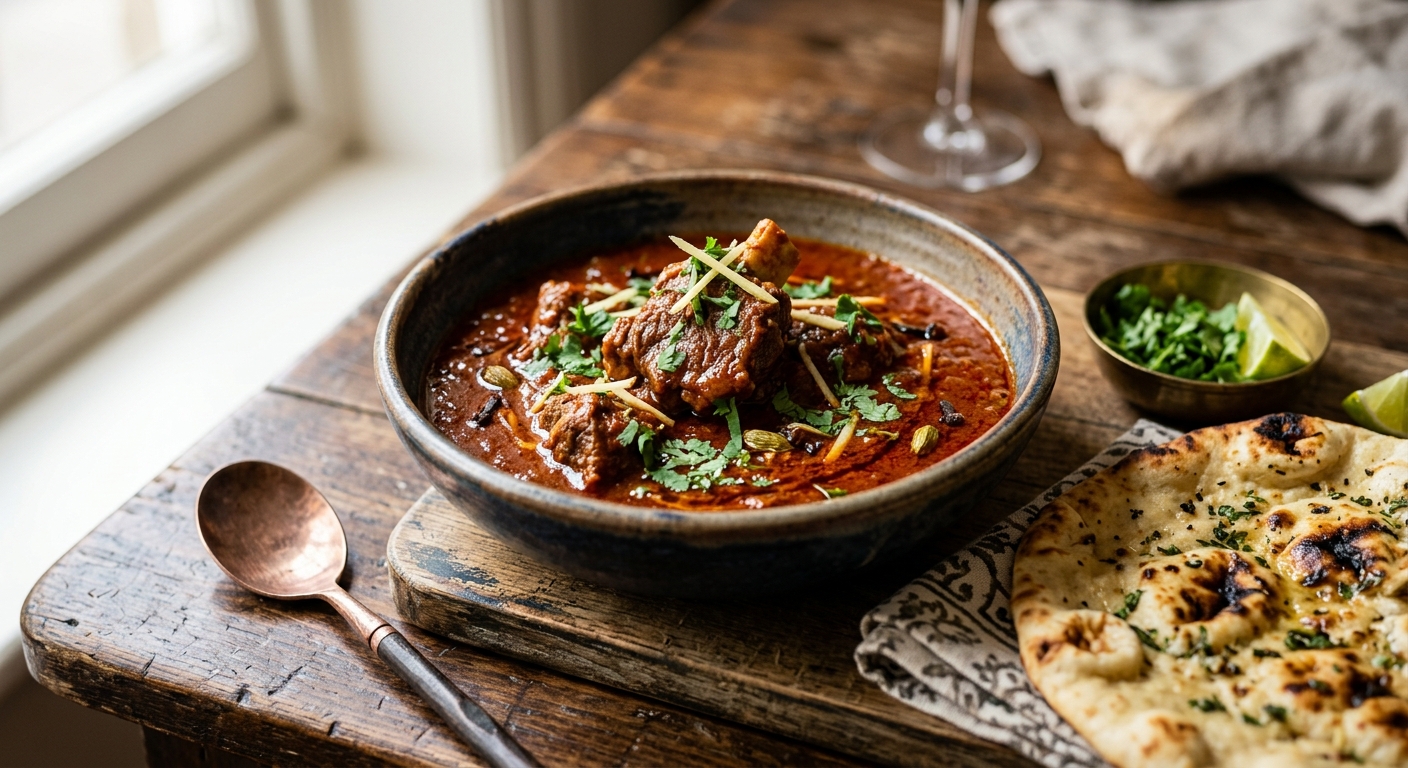
According to its title page, the book offers original and approved recipes in every department of Indian cookery, together with recipes for summer drinks and sweetmeats. Its scope reflects the mixed table of Anglo-Indian households, where dishes drawn from Indian cooking sat beside adapted European fare. Recipe Filer has modernised two dishes from it: Anglo-Indian Mulligatawny Soup and a Kashmir-style Rogan Josh. Mulligatawny is a good example of the hybrid cooking of the period. Its name is generally traced to a Tamil phrase meaning pepper water, yet the soup became a fixture of Anglo-Indian and later British tables. Rogan josh is associated with Kashmir and with meat cooked in a richly coloured, spiced sauce. Our versions adjust quantities, methods and ingredient names for a modern home kitchen, and we have tried to keep to the character of the originals rather than to the letter of them.
Why it still matters
For cooks today, the book is useful as a snapshot of how Indian dishes were described, adapted and passed on in the late 1860s. For historians, it shows how food was interpreted through colonial households, and how names and techniques moved between kitchens and languages. Reading it well means remembering whose voice is recorded: that of the anonymous author, not of the cooks who did much of the daily work and whose names rarely appear in such books. It also means treating the recipes as starting points. Measures, fuel and ingredients have changed, and so have tastes. That is why a modernised version is worth making: it lets you taste a dish with a documented history, while giving you instructions that work on a domestic hob and in a domestic oven.
Recipes from The Indian Cookery Book
Frequently asked questions
Who wrote The Indian Cookery Book?
+
The author is anonymous. The title page credits the book to "a thirty-five years' resident" of India, and no name is established.
When was The Indian Cookery Book first published?
+
It was first published in 1869 by Thacker, Spink & Co., a Calcutta publisher and bookseller.
Which recipes has Recipe Filer modernised from this book?
+
Recipe Filer has modernised Anglo-Indian Mulligatawny Soup and a Kashmir-style Rogan Josh, adapting quantities and methods for a modern home kitchen.