Historical cookbook
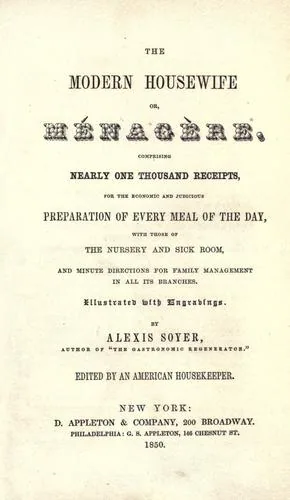
The Modern Housewife: Soyer's 1849 Guide to Home Cooking
Alexis Soyer's 1849 cookery book for the Victorian home, with recipes modernised for today's kitchen.
The story behind the book
The Modern Housewife, or Ménagère appeared in London in 1849, three years after Alexis Soyer's large professional volume, The Gastronomic Regenerator. Where that earlier book addressed wealthy households and trained cooks, this one spoke to the woman running an ordinary home. Its long title promises nearly a thousand receipts for the economical and judicious preparation of every meal of the day, along with guidance for the nursery, the sick room and the management of a household generally.
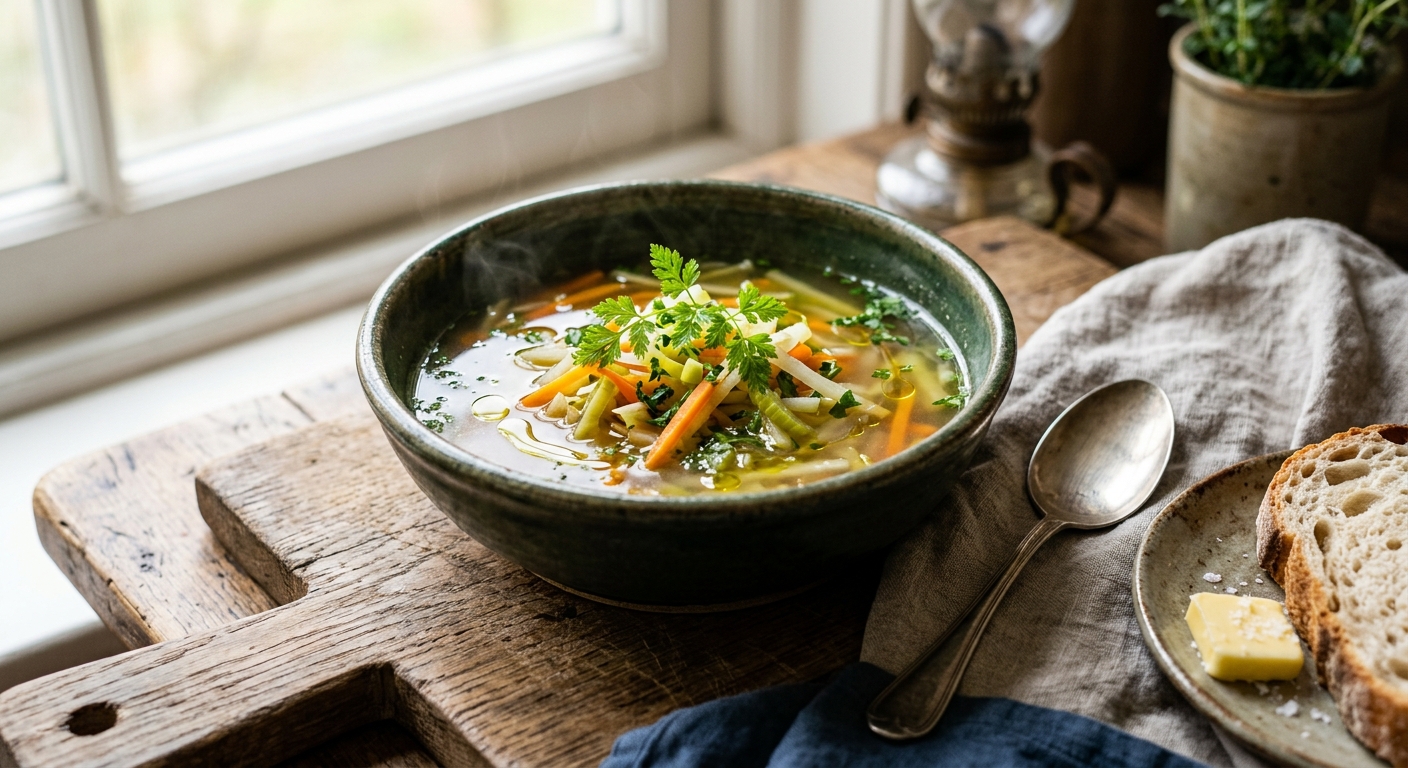
The book belongs to a period when British middle-class kitchens were becoming more ambitious, and readers increasingly expected cookery writers to explain themselves clearly. Soyer's Potage à la Julienne, a soup of vegetables cut into fine strips, is one of the dishes Recipe Filer has modernised from its pages, with updated measures and methods for a present-day kitchen.
Who wrote it
Alexis Soyer was born in Meaux-en-Brie, France, in 1810 and trained as a cook in Paris before moving to England in 1831. In 1837 he became chef at the Reform Club in Pall Mall, where he was celebrated for the kitchen he helped design. He was a public figure well beyond the club. During the Irish famine of 1847 he set up a soup kitchen in Dublin, and in 1855 he travelled to the Crimea to advise on feeding British troops. He died in London in 1858.
Soyer wrote several other books, including A Shilling Cookery for the People, published in 1855, and he devised a portable stove known as the Magic Stove. He combined French training with a strong interest in economy, and that mix shapes much of his writing.
What's inside
The Modern Housewife is organised around the daily needs of a household rather than the grand dinner. Readers will find soups, fish, meat, poultry, vegetables, sauces, puddings and preserves, alongside material on the nursery and the sick room. The voice is conversational, and the book is presented as an exchange between women rather than a dry list of instructions. Soyer tends to give quantities and explain his reasoning, which makes his recipes easier to follow than many of their period.
A julienne soup shows his approach well: a French-style preparation built on everyday vegetables and careful knife work. The word julienne is still used in kitchens today for vegetables cut into thin matchstick strips.
Why it still matters
The book gives a clear view of mid-Victorian home cooking, and of how French technique was adapted for British households with limited budgets and equipment. It also shows a professional chef writing directly for domestic cooks, which was far from universal at the time.
For modern cooks, the appeal is practical. Soyer's emphasis on thrift, sensible method and good flavour from modest ingredients still holds up. Recipe Filer's modernised versions keep the character of his dishes while translating the measures, timings and equipment into forms that suit a present-day kitchen.
Recipes from The Modern Housewife
Frequently asked questions
Who wrote The Modern Housewife?
+
The Modern Housewife was written by Alexis Soyer, the French-born chef who ran the kitchen at London's Reform Club from 1837. He wrote it for home cooks rather than professional kitchens.
When was The Modern Housewife first published?
+
It was first published in London in 1849, three years after Soyer's professional work The Gastronomic Regenerator.
What is Soyer's Potage à la Julienne?
+
It is a soup of vegetables cut into fine strips, one of the recipes from The Modern Housewife that Recipe Filer has modernised for current kitchens and measures.