Historical cookbook
The Queen-like Closet: Restoration Sweets and Stillroom Skill
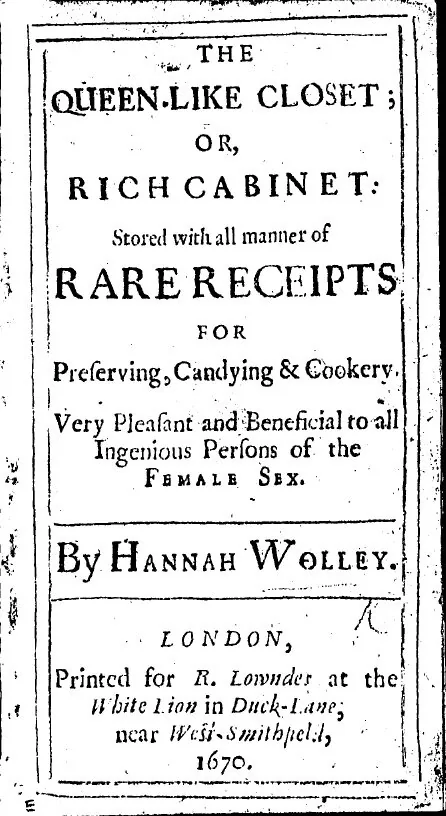
Hannah Woolley's 1670 collection of receipts for preserving, candying and cookery, written for the women who ran households.
The story behind the book
The Queen-like Closet was published in London in 1670, at a time when printed receipt books were finding a ready audience among women who ran households. Its full title promised a "rich cabinet" of rare receipts for preserving, candying and cookery, pleasant and beneficial to ingenious persons of the female sex. The word "closet" is the key: in a prosperous seventeenth-century home it meant a small private room where the mistress kept her sweetmeats, spices and stillroom supplies. The book was reprinted several times, and a supplement followed in 1674. Together they presented a polished, genteel kind of housekeeping, in which skill with sugar and cream counted as an accomplishment.
Who wrote it
Hannah Woolley, born around 1622, is often counted among the first Englishwomen to earn a living by writing. She was born Hannah Chaloner and married Richard Woolley, a schoolmaster. She later said that she had learned cookery and medicine while in service in a noble household. After Richard's death she married Francis Challinor in 1666, yet she continued to publish as Woolley. Her other books include The Cook's Guide (1664) and The Gentlewoman's Companion (1673), and she wrote on conduct and household management as well as recipes. Some works issued under her name are of disputed authorship, and much of her life story rests on her own account, so careful readers treat both with caution.
What's inside
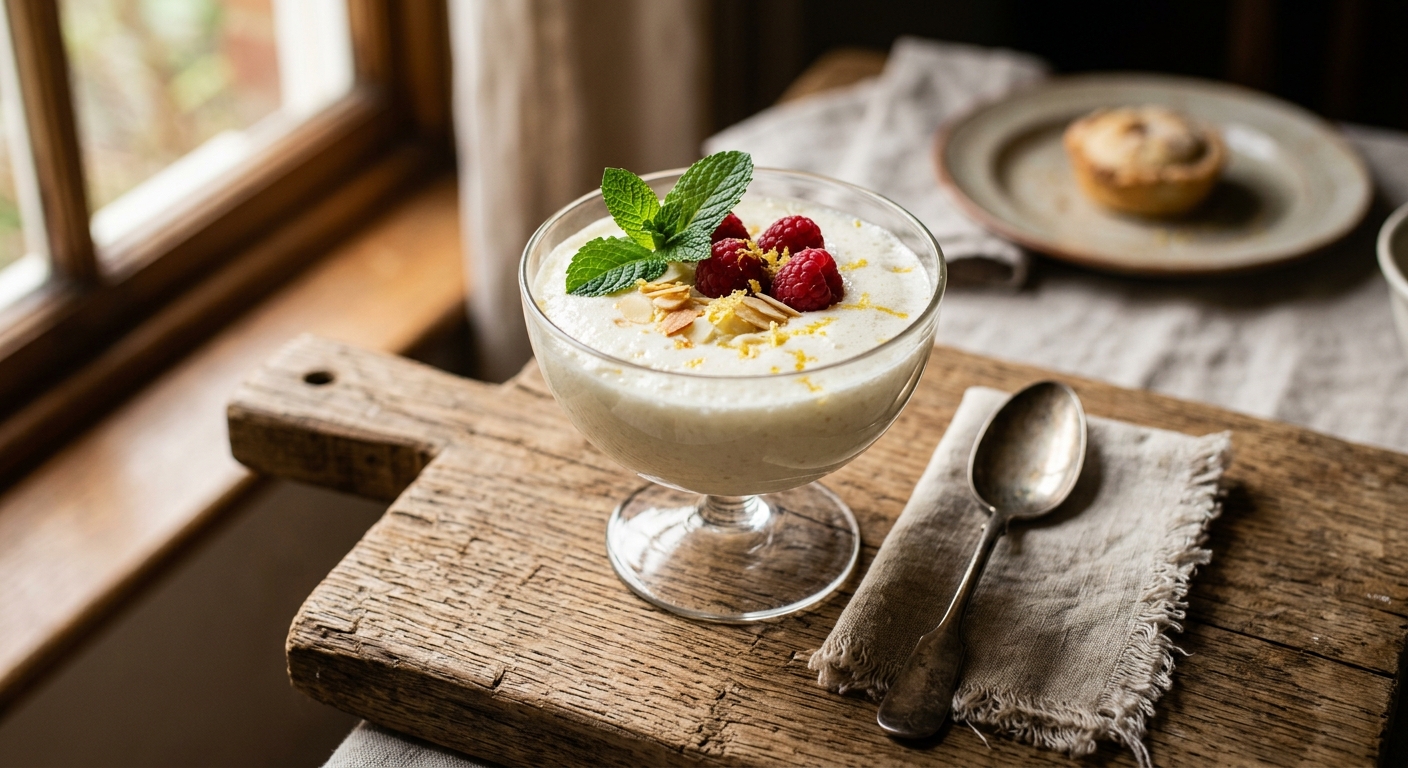
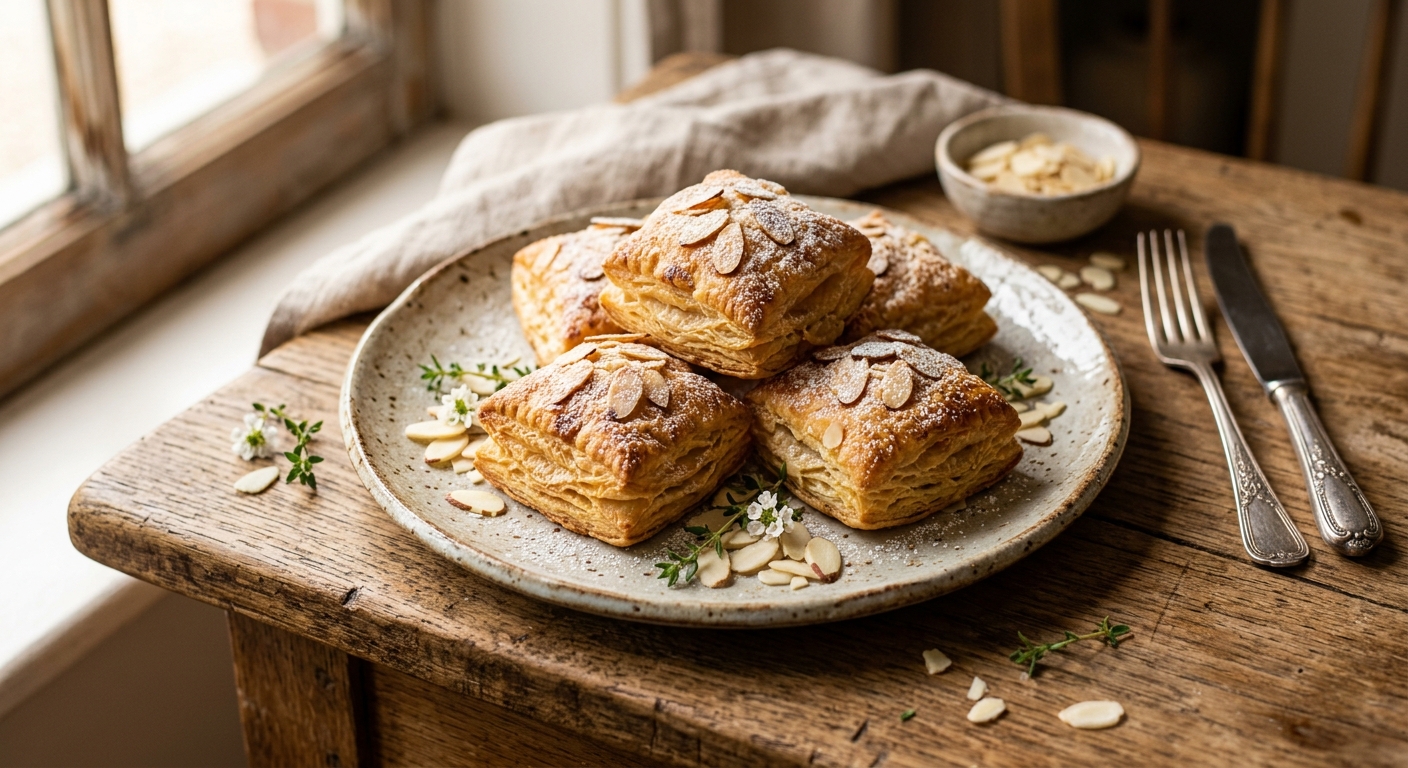
The recipes lean towards the preserver's and confectioner's arts: fruit kept in syrup, candied peels and flowers, conserves, creams, cakes and sweet dishes for the table, alongside plainer cookery. Sugar is the thread running through much of it, as the title's promise of preserving and candying suggests. Instructions are brief by modern standards, with few exact weights, times or temperatures, leaving the reader to judge by eye and experience. Recipe Filer's modernised versions draw on two sweet dishes from the book: Hannah Woolley's Syllabub, a frothy dish of the kind made from cream, wine and sugar, and Woolley's Almond Puffs, a small almond-based sweetmeat. We have adjusted quantities and methods for a modern kitchen while keeping the character of the originals.
Why it still matters
Woolley's book is a useful window onto how well-off households in Restoration England thought about sweet food, hospitality and domestic skill. It shows the stillroom as a place of expertise and status, and it belongs to a growing body of printed work written by and for women. Read beside her other titles, it shows how cookery, manners and household management were bundled together as accomplishments. For cooks today the appeal is practical as well as historical: syllabub and almond sweets remain approachable, and making them offers a real taste of seventeenth-century entertaining. The book also reminds us that questions of authorship and reputation are part of its story.
Recipes from The Queen-like Closet
Frequently asked questions
When was The Queen-like Closet first published?
+
It was first published in London in 1670 and reprinted several times, with a supplement attributed to Hannah Woolley following in 1674.
Who was Hannah Woolley?
+
Hannah Woolley (born around 1622) was an English author of cookery, household and conduct books, often regarded as one of the first Englishwomen to earn a living by writing. Some works under her name have disputed authorship.
What kinds of recipes are in The Queen-like Closet?
+
The book focuses on preserving, candying and cookery, with many sugar-based sweetmeats and dishes for the table. Recipe Filer has modernised two of them: a syllabub and almond puffs.