Historical cookbook
The Virginia Housewife: Mary Randolph's Pioneering 1824 Cookbook
Mary Randolph's 1824 guide to Virginian cooking and household management, widely seen as a regional first.
The story behind the book
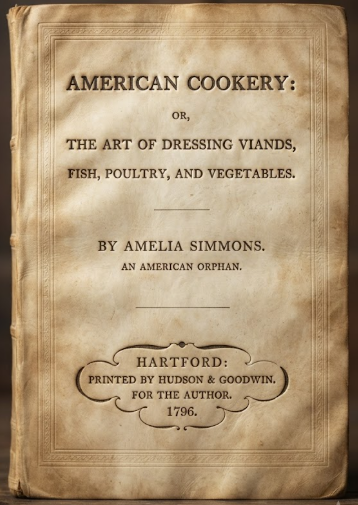
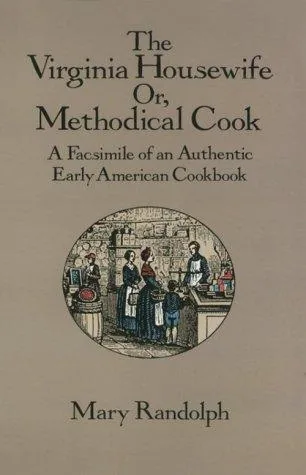
The Virginia Housewife, or, Methodical Cook was published in Washington, D.C., in 1824. It is widely regarded as the first regional American cookbook, and it was among the earliest to be rooted in the food of one place rather than leaning on British household manuals. Amelia Simmons's American Cookery had appeared in 1796, but Randolph wrote for the kitchens of Virginia and the households around them. The book found a steady readership, was reprinted many times through the nineteenth century, and stayed influential long after its author's death. It is also a book of its time. Virginia was a slaveholding society, and much of the cooking it describes would have been done by enslaved cooks, whose names rarely appear in print.
Who wrote it
Mary Randolph was born in 1762 into a well-connected Virginia family and grew up at Ampthill, near Richmond. She married her cousin David Meade Randolph, and the couple became known for their hospitality in Richmond. Her brother Thomas Mann Randolph Jr. married Thomas Jefferson's daughter Martha, which linked her by marriage to Jefferson's family. When the family's finances faltered, she ran a boarding house in Richmond, which gave her practical experience of feeding many people to a schedule. She later settled in Washington, where her cookbook was published. She died in 1828 and was buried at Arlington, on ground that later became part of Arlington National Cemetery.
What's inside
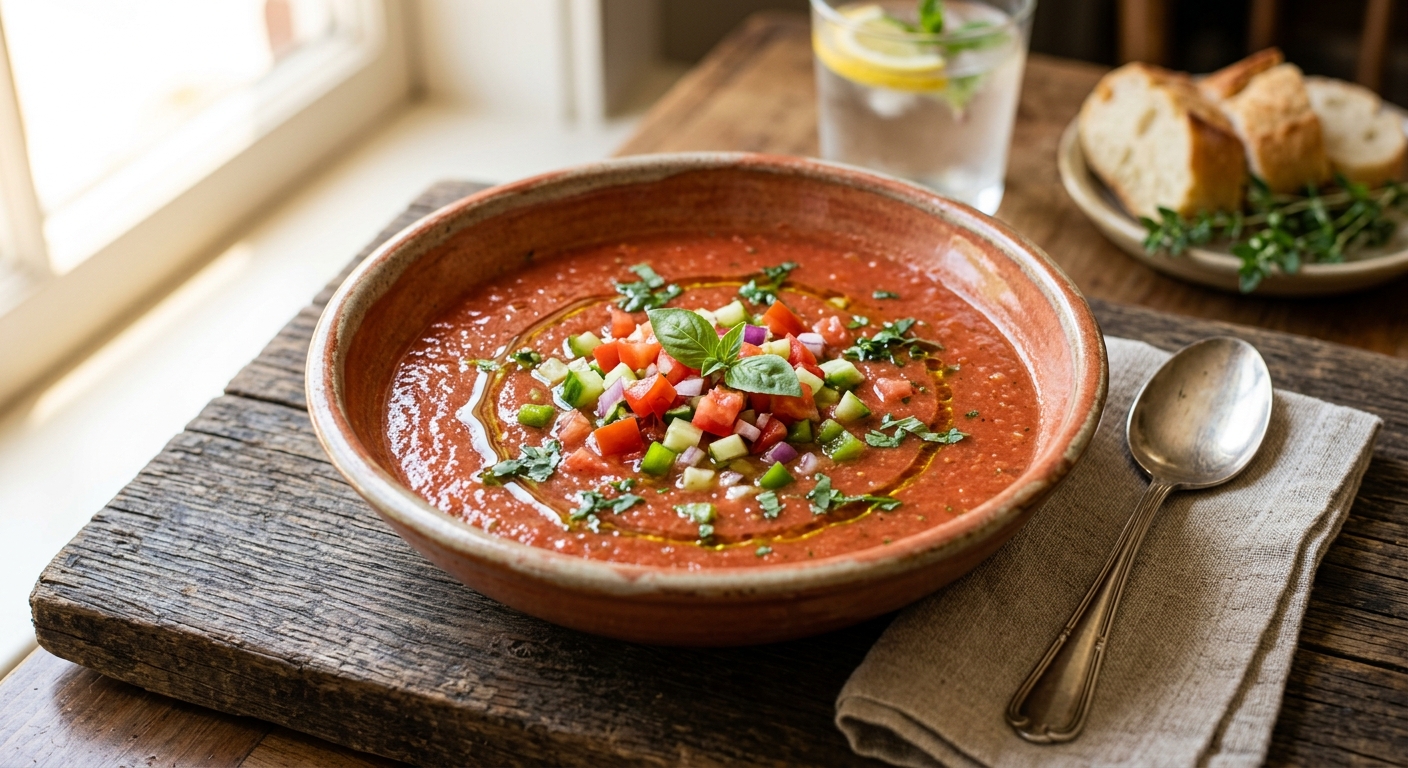
Randolph's title promises method, and the book delivers it. Alongside recipes for soups, fish, meat, poultry, vegetables, sauces, puddings, cakes and preserves, it gives guidance on running a household: how to arrange a kitchen, keep it clean and organise servants' work so that nothing is left to chance. Her recipes are written for the open hearth and assume a cook who already understands technique. The book is often noted for its attention to vegetables and to dishes now thought of as Southern, including gumbo and okra. Her gazpacho, which Recipe Filer has modernised, shows another side. It is a cold dish of bread and raw vegetables with Iberian roots, and its appearance in a Virginian cookbook of the 1820s shows how readily a well-read cook of her class drew on food from beyond Britain.
Why it still matters
For anyone curious about how Americans ate in the early republic, the book is a valuable record. It shows English, French, West Indian and African influences meeting in a single repertoire, and it sets out its instructions with a clarity that later cookery writers could build on. Reading it alongside later Southern cookbooks makes it easy to see where many regional traditions began to be written down. Facsimile editions have kept it accessible, and many of its recipes can still be cooked with modest adjustments. Modernising a dish such as gazpacho means translating old measures and loose directions into something a home cook can follow, while keeping the character of the original. Above all, the book reads as the work of someone who cooked, managed and fed people day after day, and that practical authority is why it remains worth reading.
Recipes from The Virginia Housewife
Frequently asked questions
When was The Virginia Housewife first published?
+
It was first published in 1824 in Washington, D.C. It was reprinted many times during the nineteenth century.
Who was Mary Randolph?
+
Mary Randolph (1762–1828) was a Virginian household manager and author who ran a boarding house in Richmond before settling in Washington. Her brother's marriage to Thomas Jefferson's daughter linked her to Jefferson's family.
Why is The Virginia Housewife important?
+
It is widely regarded as the first regional American cookbook, grounded in the food and household practice of Virginia. It is a valuable record of early nineteenth-century American cooking.