Historical cookbook
Yale Culinary Tablets (YBC 4644): Mesopotamia's Oldest Stews
Recorded by an anonymous scribe in southern Mesopotamia around 1750 BCE, these are among the oldest known recipes.
The story behind the book
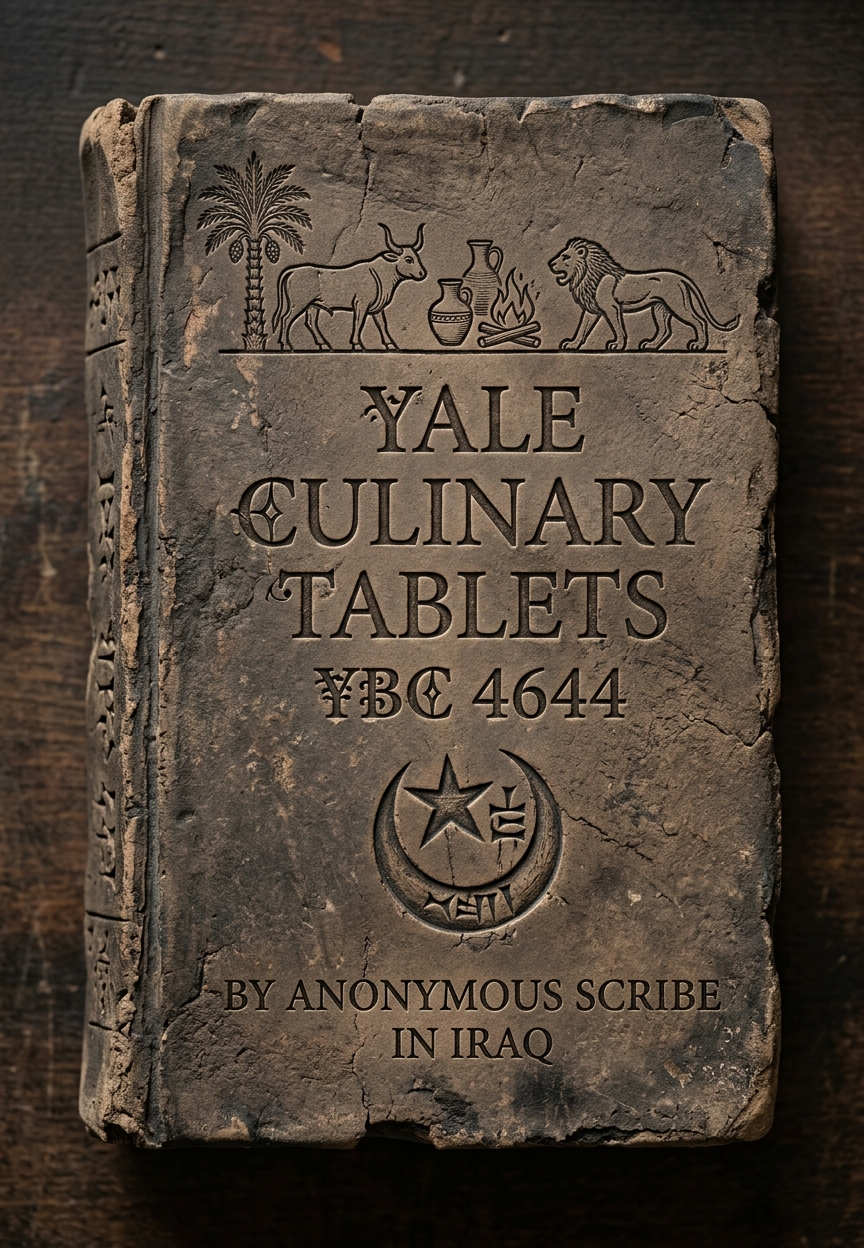
YBC 4644 is not a book in the modern sense but a clay tablet, one of three culinary tablets in the Yale Babylonian Collection at Yale University. The other two are catalogued as YBC 4648 and YBC 8958. They are usually dated to the Old Babylonian period, around 1750 BCE, and are thought to come from southern Mesopotamia, in present-day Iraq, although their exact provenance is not firmly established. The text is written in cuneiform, and the language is Akkadian.
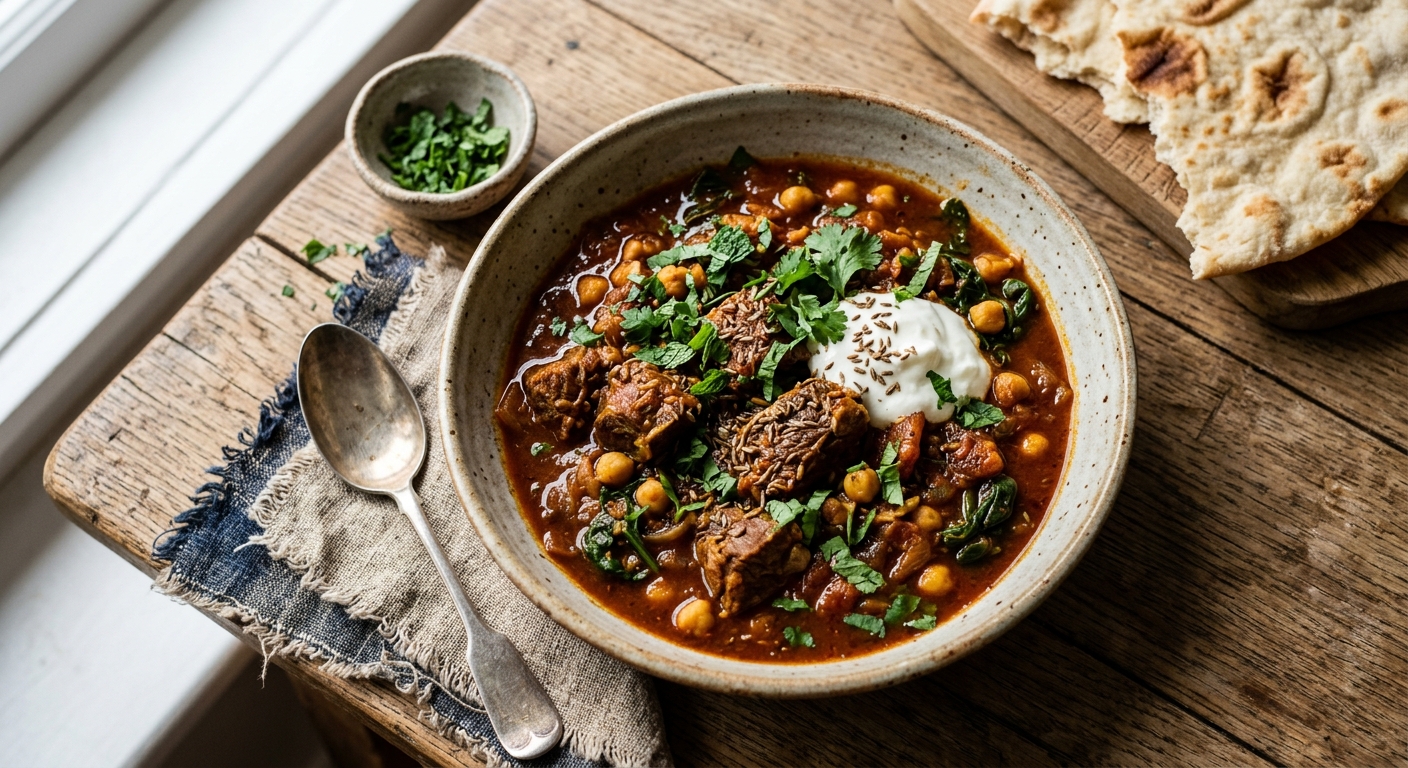
That last point matters for our modernised dish. Recipe Filer's Sumerian Lamb Stew takes its inspiration from this tablet, but the recipes are in Akkadian, the everyday language of the period, rather than Sumerian, which by then survived mainly as a scholarly and ritual language.
Who wrote it
The scribe is anonymous, and the tablet carries no author's name or date that we can read as a publication year. We know the text only through the work of modern Assyriologists, above all the French scholar Jean Bottéro, who published studies of the Yale tablets in the late 1980s and a fuller edition, Textes culinaires mésopotamiens, in 1995.
We cannot say for certain who the scribe wrote for. Bottéro and others have argued that the recipes reflect the food of a wealthy, perhaps court or temple, household, but that is an interpretation rather than something the tablet states. What is clear is that the writer assumed a reader who already knew how to cook.
What's inside
YBC 4644 holds roughly two dozen recipes, and the great majority are for meat stews and broths, with a small number of vegetable dishes. The meats include lamb or mutton and other animals, and several recipes are built on cooking in water with fat and salt, then flavouring with alliums such as onion, leek and garlic. Some dishes are given names, among them tuh'u, the name behind our stew.
The instructions are brief. There are no quantities, no cooking times and no oven temperatures, and the steps read more like an aide-memoire for a trained cook than a lesson for a beginner. For that reason any modern version, including ours, has to supply its own measurements and timings. Those are our interpretation, not something recorded on the clay.
The scholarly translations also contain uncertainties. Some Akkadian ingredient names have no agreed identification, so translators sometimes disagree about what exactly went into the pot.
Why it still matters
The Yale tablets are among the oldest surviving collections of recipes from anywhere in the world. They show that cooks in ancient Mesopotamia worked with a planned, layered approach to flavour rather than simply boiling meat, and that someone thought it worth writing the methods down.
For a modern home cook, the appeal is a direct line to a very old way of cooking: a gently simmered, aromatic stew that still feels recognisable. Working from such sparse instructions is also a useful reminder that recipes are a living tradition, always adapted by whoever is standing at the stove.
Recipes from Yale Culinary Tablets (YBC 4644)
Frequently asked questions
What is YBC 4644?
+
YBC 4644 is a cuneiform clay tablet in the Yale Babylonian Collection, one of three culinary tablets from Old Babylonian Mesopotamia. It records roughly two dozen recipes, mostly meat stews and broths.
How old are the Yale Culinary Tablets?
+
They are generally dated to around 1750 BCE, in the Old Babylonian period. That makes them some of the oldest known written recipes.
Are the recipes Sumerian?
+
Not strictly. The tablets are written in Akkadian, although Sumerian culture still influenced Mesopotamian writing and learning at the time.