Historical cookbook
De Observatione Ciborum: A Sixth-Century Guide to Eating Well
Anthimus's Latin dietary letter of 511 shows how a Byzantine Greek physician advised a Frankish king on food.
The story behind the book
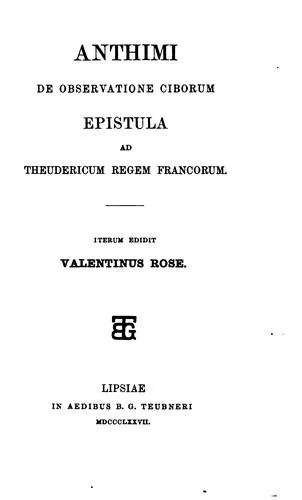
De Observatione Ciborum, usually translated as On the Observance of Foods, is a short Latin dietary letter from the early sixth century, traditionally dated to around 511. It is addressed to Theuderic, a Frankish king, and offers practical advice on which foods to eat, how to prepare them and how they affect the body. It is not a recipe collection in the modern sense. It is a medical text, yet it preserves a rare glimpse of how people ate in post-Roman Europe, a period for which written food sources are scarce. The work survives in only a small number of medieval manuscripts, which is one reason scholars handle its text with care.
Who wrote it
Anthimus was a Greek physician who had worked in the eastern Roman, or Byzantine, world and later moved among the courts of the western successor kingdoms. He is generally linked with the Ostrogothic king Theodoric the Great and is thought to have travelled to the Frankish court as an envoy. Beyond that, the details of his life are thin, and historians disagree on some points, so any more elaborate biography should be treated with caution. His Latin is plain and practical, with Greek-influenced vocabulary and informal grammar, which suggests a changing spoken language rather than the polished prose of classical authors. That plainness is part of the book's charm for modern readers.
What's inside
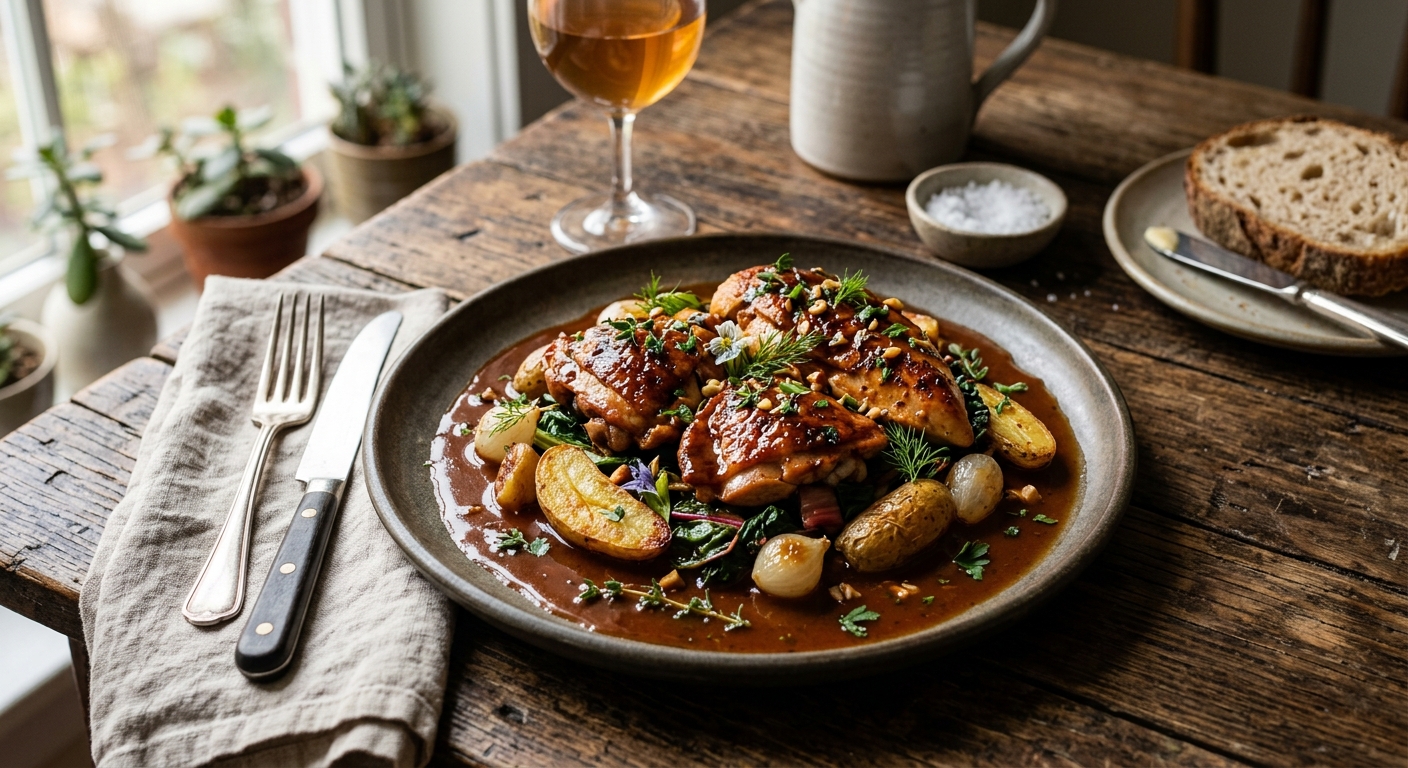
The letter follows the medical thinking inherited from Hippocrates and Galen, in which foods are judged by their effects on the body's balance of qualities such as hot, cold, moist and dry. Anthimus moves through meat, offal, game, birds, fish, eggs, dairy, honey, vegetables, fruit, grains and drinks, saying what is wholesome, what to avoid and how best to prepare it. He tends to favour gentle methods such as boiling and roasting, and he pairs ingredients with sauces and seasonings including vinegar, honey, herbs and spices. One of his best-known opinions is his approval of raw or very lightly cooked bacon, which surprises modern readers. The text gives no precise quantities or timings. Our modernised Chicken with Vinegar is therefore an adaptation in the spirit of the book, with measurements and methods supplied by us for a modern kitchen.
Why it still matters
Few texts survive from the centuries between the Roman cookery attributed to Apicius and the medieval recipe collections. Anthimus fills part of that gap, showing which foods were available and valued, and how Greek and Roman medical ideas about diet travelled into the Frankish world. Food historians use it to study the place of honey, vinegar, spices and fermented drinks, as well as attitudes to raw and cooked food. It is short enough to read in an afternoon, and an English translation by Mark Grant makes it accessible to general readers. For cooks, it is a useful reminder that many flavour pairings we still enjoy, such as sharp vinegar with rich meat, have a very long history, and that the line between medicine and cookery was once barely drawn at all.
Recipes from De Observatione Ciborum
Frequently asked questions
What is De Observatione Ciborum?
+
It is a short Latin letter on diet and health by the physician Anthimus, traditionally dated to around 511. It advises on foods and how to prepare them, rather than presenting formal recipes.
Who was Anthimus?
+
Anthimus was a Greek physician from the Byzantine world who is linked with the court of Theodoric the Great and is thought to have acted as an envoy to the Franks. Few other biographical details are certain.
Who was De Observatione Ciborum written for?
+
It is addressed to Theuderic, a Frankish king. Anthimus wrote it as practical dietary guidance based on Greek medical theory.