Historical cookbook
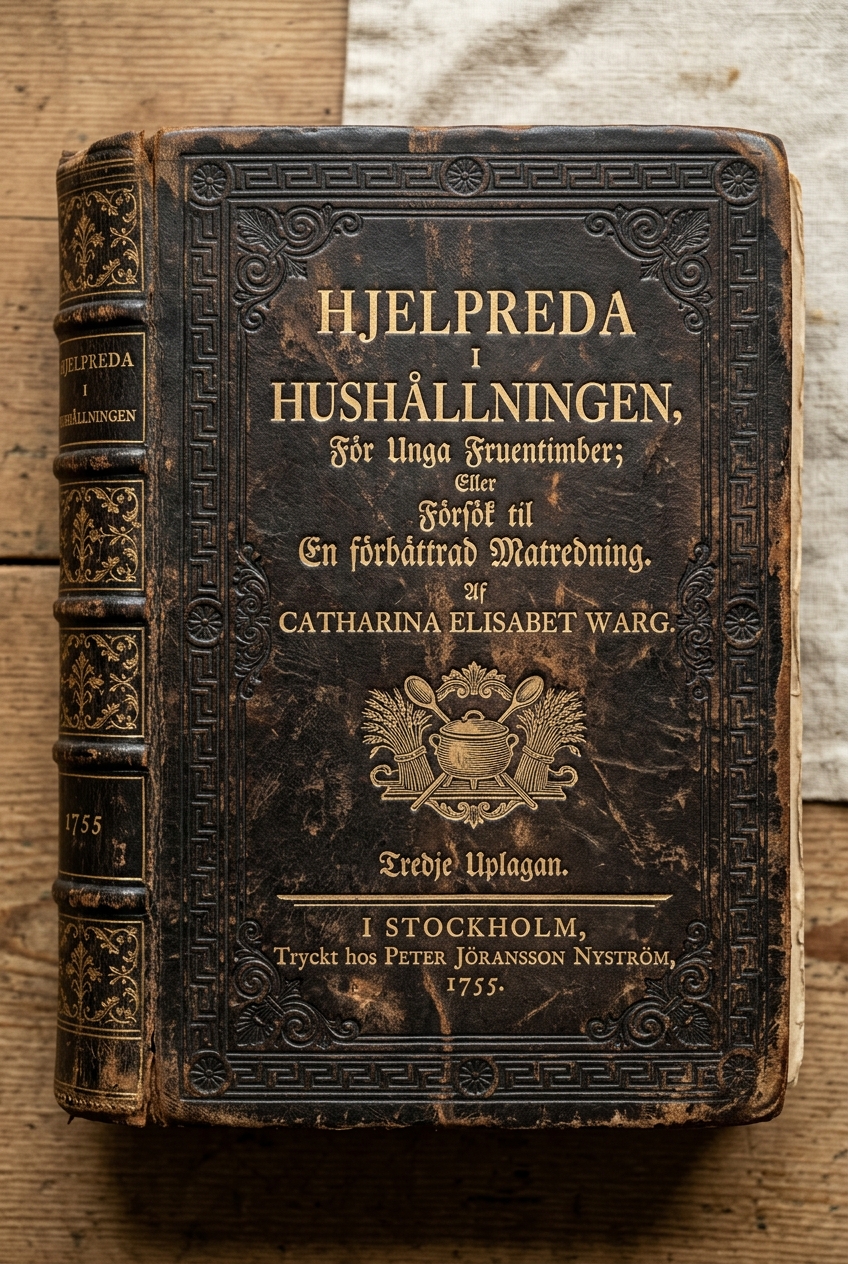
Hjelpreda i Hushållningen: Kajsa Warg's 1755 Kitchen Classic
Kajsa Warg's practical 1755 housekeeping book from Sweden, source of our modernised Swedish meatballs.
The story behind the book
Hjelpreda i Hushållningen För Unga Fruentimber was published in Sweden in 1755, during the period known as the Age of Liberty. The title translates roughly as "a helper in housekeeping for young women", and that is how it was pitched: a practical companion for anyone learning to run a household, rather than a showpiece for professional chefs. It is often shortened to Hjelpreda, and modern references frequently update the spelling to Hjälpreda.
Swedish kitchens were changing at the time. Overseas trade, including the Swedish East India Company founded in 1731, made imported goods such as spices, sugar and tea more familiar in comfortable homes, and the book belongs to that world of town houses and well-stocked pantries. It was reprinted many times in the decades that followed, and the author's name became shorthand for reliable Swedish home cooking.
Who wrote it
Kajsa Warg, sometimes spelled Cajsa, lived from 1703 to 1769. She made her living as a housekeeper, running the kitchens and domestic affairs of well-to-do households, and her book grew out of that working experience rather than from theory.
That background shows in the tone. Her instructions are those of someone who has fed large households, managed stores and made the most of expensive ingredients. She wrote for readers who needed to get dinner on the table and keep the larder in order, and that practical voice is a large part of why the book lasted.
What's inside
The book is a broad collection of recipes and household guidance, covering the everyday and the festive: meat, fish and game, soups and sauces, puddings, pastries and baking, and the preserving that kept a household fed through the Swedish winter. Quantities and methods are given in the old Swedish measures of the time, and directions are often brief, written for a cook who already knows her way around a fire and a larder.
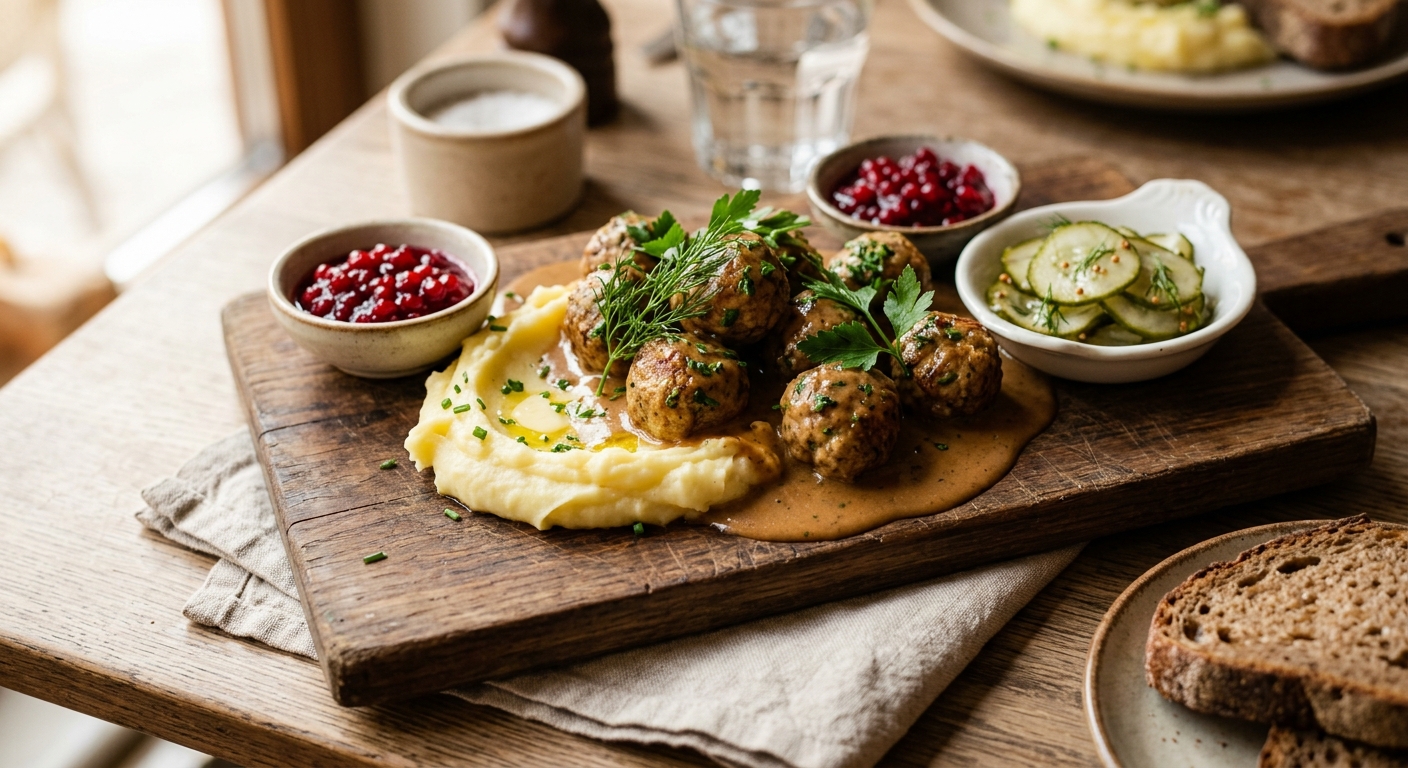
That is where modernisation comes in. Recipe Filer's Warg's Swedish Meatballs (1755) takes one of her dishes and translates it into modern weights, measures and cooking times, while keeping to the spirit of the original. We have adapted rather than reproduced it, so the result is a faithful interpretation, not a museum copy.
Why it still matters
Warg's book matters because it records how a Swedish household cook actually worked in the middle of the eighteenth century, at a moment when new ingredients and tastes were arriving. It is a primary source for historians of food, and a pleasure for cooks who like to see where familiar dishes come from.
It also deserves some care in how it is credited. Warg did not invent Swedish meatballs, and the dish was likely cooked in homes before her book appeared; what her pages give us is a named, dated and well-documented version. Reading her alongside modern recipes shows both how much has changed, from measures to seasonings, and how recognisable the core idea remains: seasoned minced meat, shaped by hand and cooked until golden.
Recipes from Hjelpreda i Hushållningen
Frequently asked questions
When was Hjelpreda i Hushållningen published?
+
It was first published in Sweden in 1755 and was reprinted many times afterwards.
Who was Kajsa Warg?
+
Kajsa (or Cajsa) Warg lived from 1703 to 1769 and worked as a housekeeper in well-to-do Swedish households. Her cookery book drew on that practical experience.
What does Hjelpreda i Hushållningen mean?
+
The full title, Hjelpreda i Hushållningen För Unga Fruentimber, translates roughly as a helper in housekeeping for young women. It was written as a practical guide for people running a household.