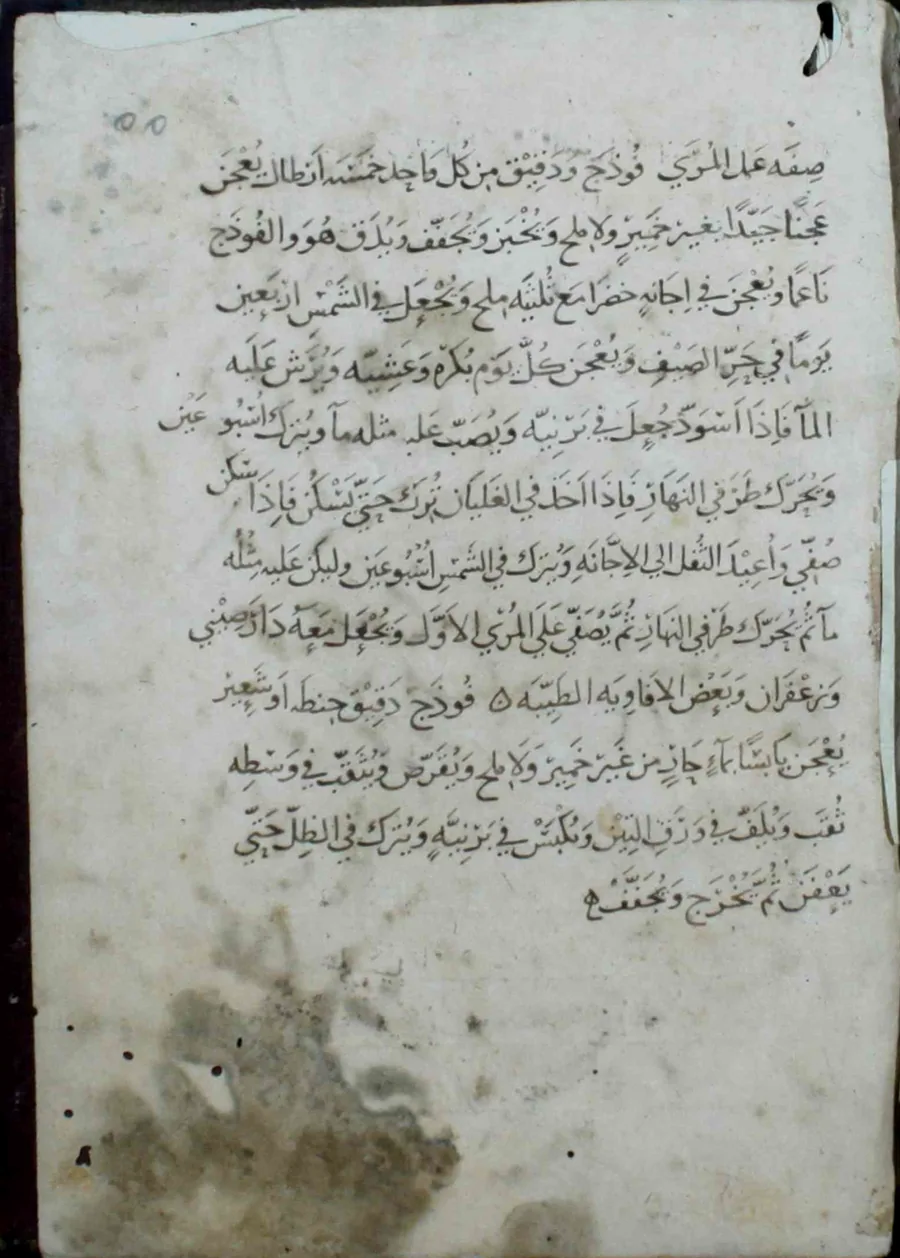
Historical cookbook
Kitab al-Tabikh: Baghdad's 13th-Century Cookbook
Muhammad al-Baghdadi's 1226 Kitab al-Tabikh records how Abbasid-era Iraq cooked, from spiced stews to almond sweets.
The story behind the book
Kitab al-Tabikh, literally "the book of cooking", was completed in 1226 in Baghdad, then the seat of the Abbasid caliphate. It was written only a few decades before the Mongol conquest of the city in 1258, and it preserves the food of a cosmopolitan urban culture at a late and fragile moment. It is a working collection of recipes rather than a theoretical treatise, and it sits within a longer Arabic tradition that includes an earlier tenth-century cookbook by Ibn Sayyar al-Warraq.
Most English-speaking readers know the book through translation. A. J. Arberry published an English version in 1939 under the title A Baghdad Cookery Book, and Charles Perry later produced another translation that made it more widely available to food historians and cooks.
Who wrote it
The author is given as Muhammad ibn al-Hasan ibn Muhammad ibn al-Karim al-Katib al-Baghdadi. The epithet al-Katib means secretary or scribe, and al-Baghdadi marks him as a man of Baghdad, which suggests someone from the educated, literate class. Beyond that, reliable biographical detail is scarce, and it is better to say so than to invent a life for him. What the book itself shows is a writer who knew the kitchens and tastes of comfortable households and wanted to set them down.
What's inside
The collection runs to roughly 160 recipes. Meat is central, especially lamb and chicken, often cooked in stews balanced between sweet and sour, using vinegar, sumac, verjuice or pomegranate against sugar, honey or dried fruit. Seasoning is lavish by later European standards, with spices, fresh herbs, saffron and rose water appearing again and again. There are also grain dishes, vegetable preparations, pastries and sweets, many of them built on almonds and sugar.
The instructions are brief. Quantities are generally given in medieval weights, and timings and temperatures are mostly left to the cook's judgement, so any modern version involves interpretation.
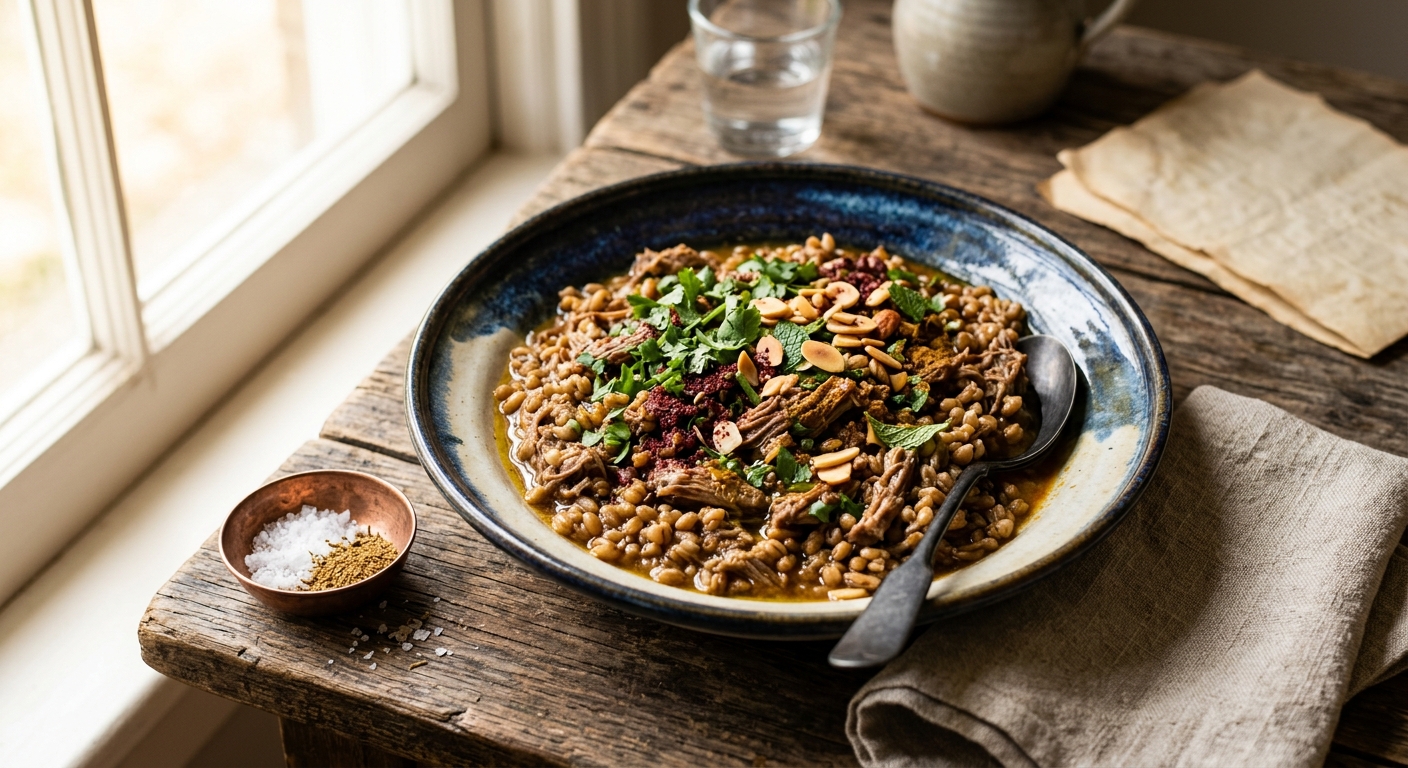
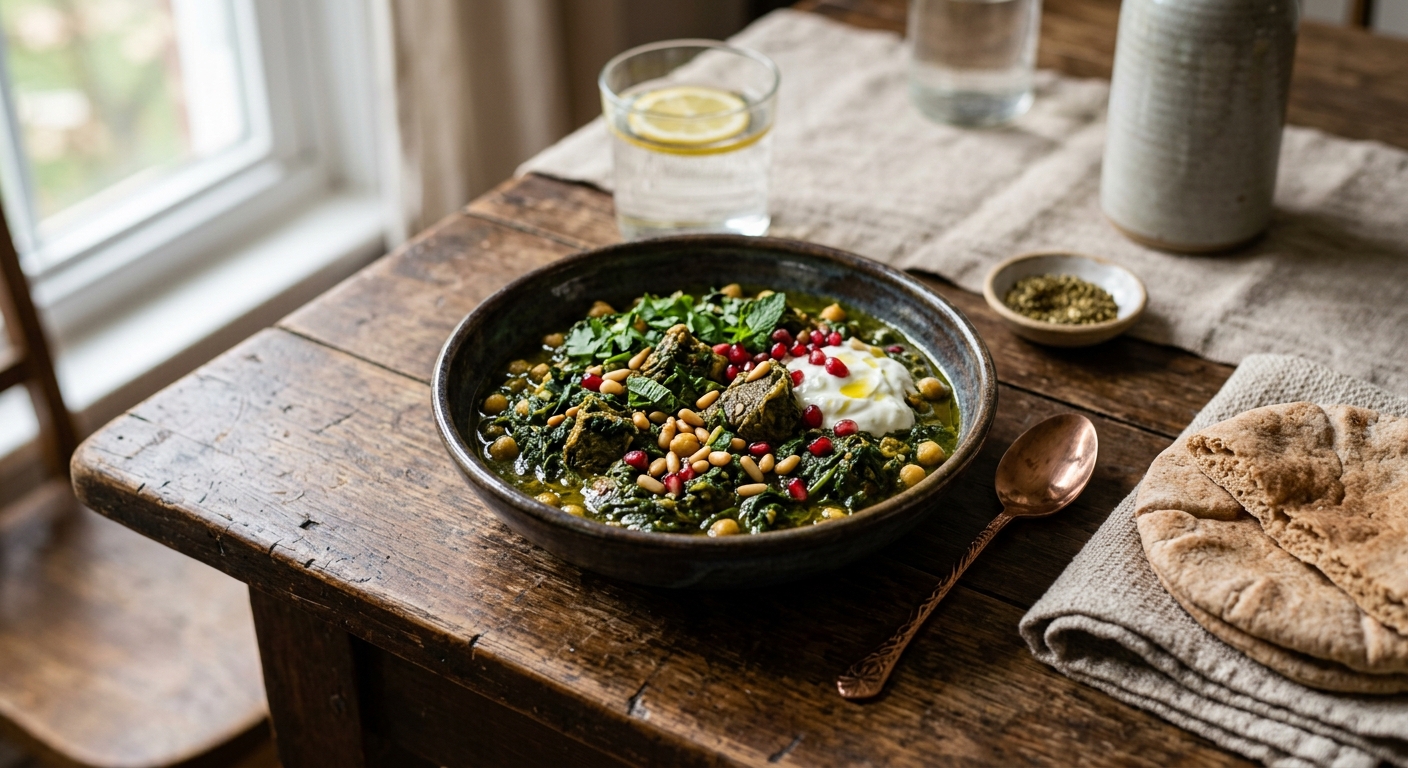
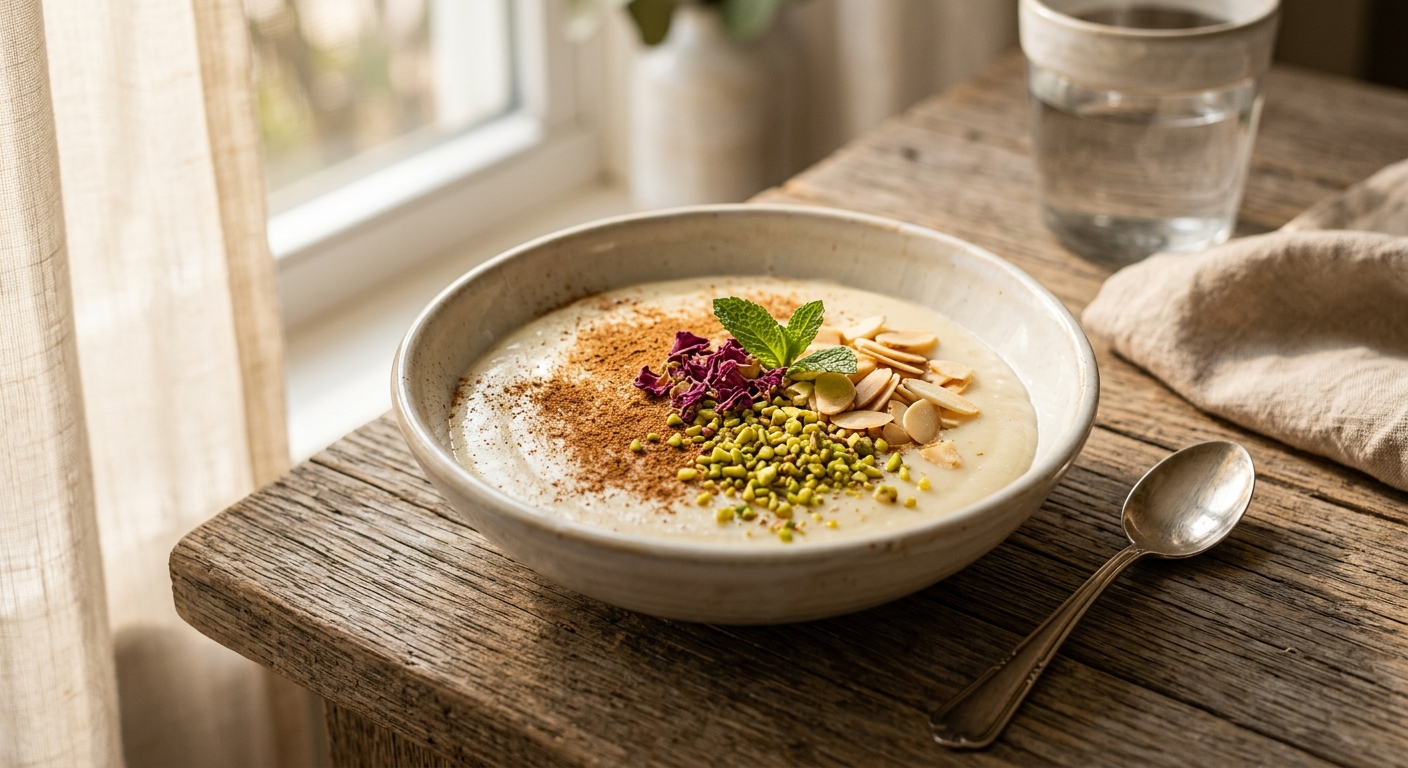
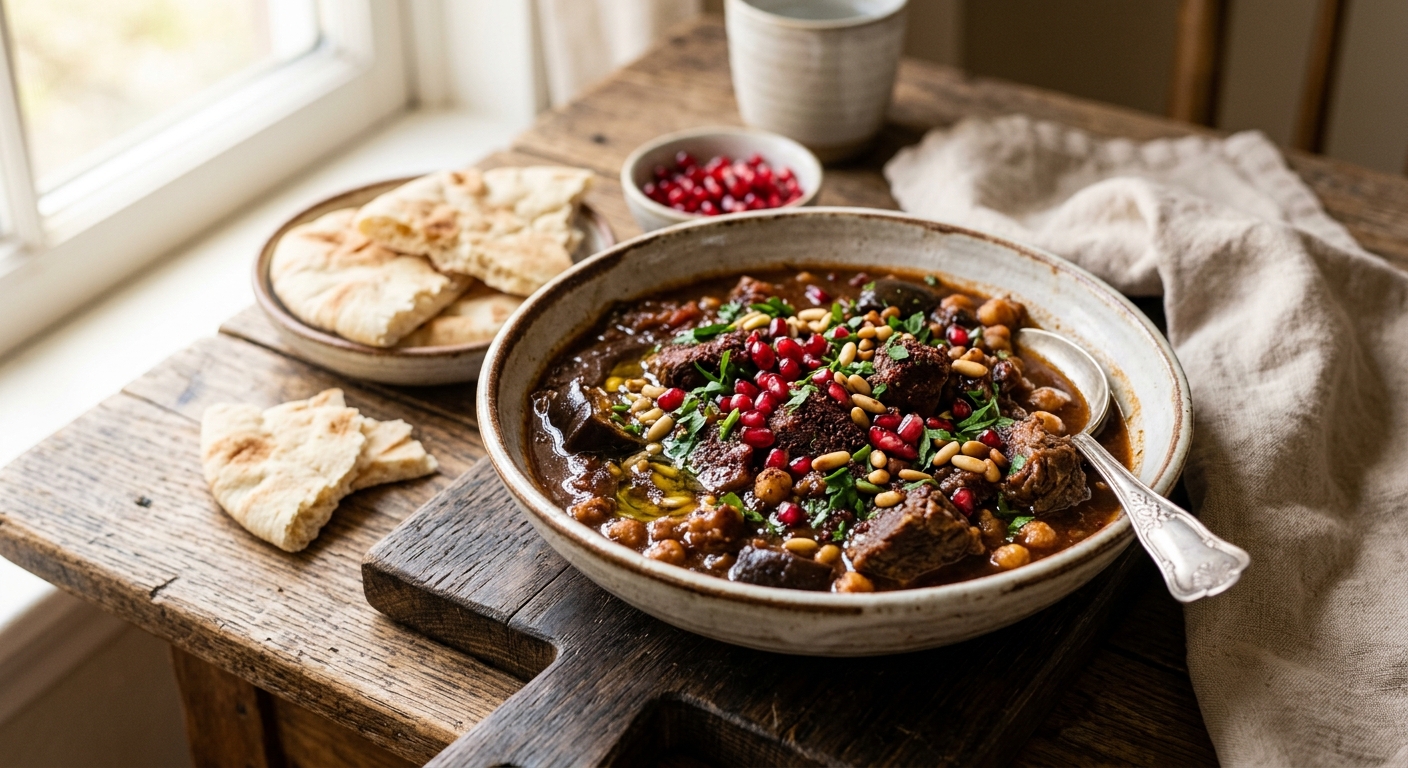
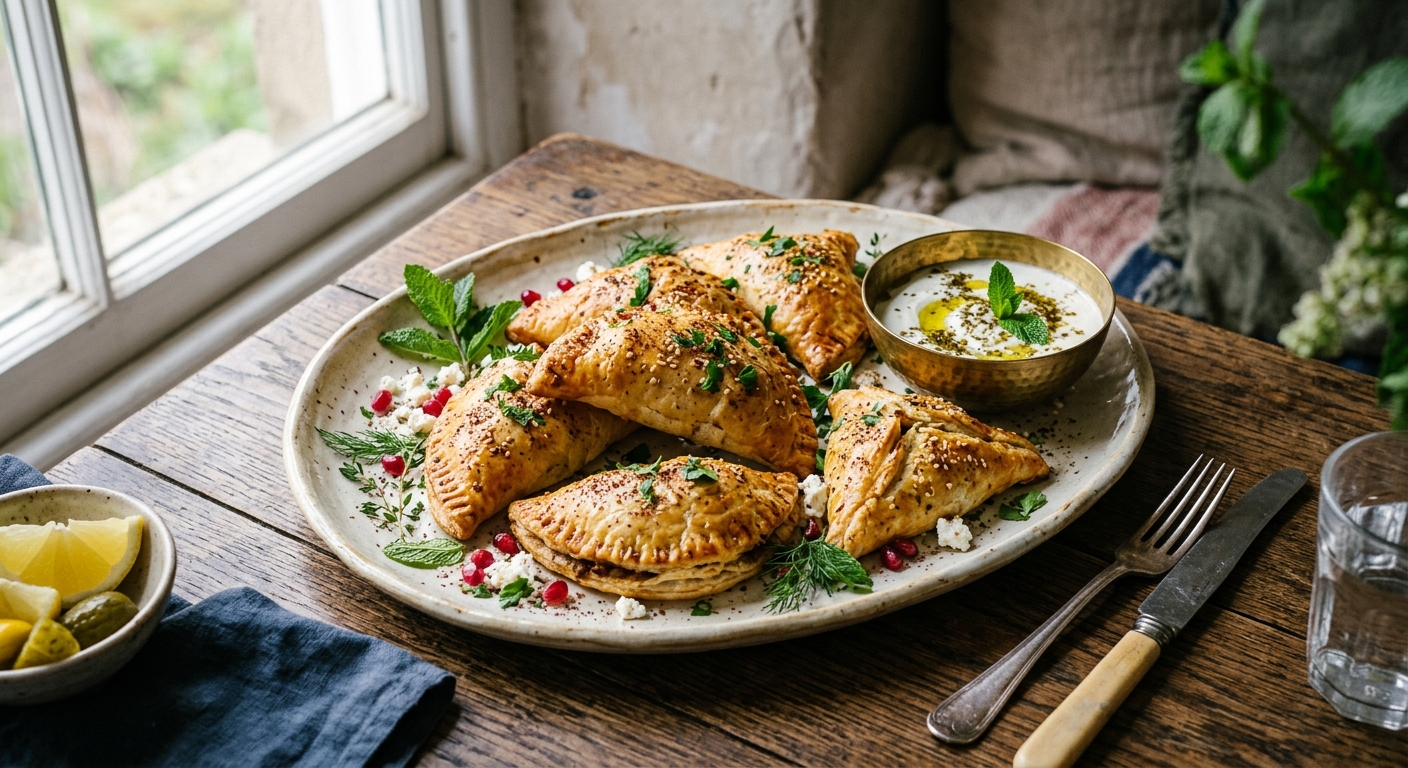
Recipe Filer has adapted five dishes for the contemporary kitchen: Harissa, Isfanakhiyya, Muhallabiyya, Rummaniyya and Sanbusaj. Harissa here is not the North African chilli paste but a medieval dish of meat and wheat cooked down to a thick porridge. Isfanakhiyya is a spinach dish, Muhallabiyya an almond milk pudding, Rummaniyya a pomegranate meat stew, and Sanbusaj a filled pastry related to the samosa. These are modernised adaptations, not strict reconstructions.
Why it still matters
Kitab al-Tabikh shows how much of the later food of the Middle East, and of Mediterranean cooking more broadly, has deep roots. Filled pastries, sweet-and-sour meat, almond puddings and fragrant rice and wheat dishes all appear on its pages in recognisable form. Reading it corrects the assumption that medieval food was plain or crude, and it reminds us that the Abbasid kitchen valued balance, aroma and refinement.
It is also a useful lesson in how recipes travel and change. A dish keeps its name while its ingredients shift, as harissa shows, and cooking from a source like this means making honest choices about what to keep and what to adapt. For home cooks, it offers flavour combinations that feel surprisingly fresh nearly eight centuries on.
Recipes from Kitab al-Tabikh
Frequently asked questions
Who wrote Kitab al-Tabikh and when?
+
It was compiled by Muhammad ibn al-Hasan ibn Muhammad ibn al-Karim al-Katib al-Baghdadi in Baghdad in 1226. Few details of his life are known beyond his name, which suggests a scribe from Baghdad.
Is Kitab al-Tabikh available in English?
+
Yes. A. J. Arberry published a translation in 1939 titled A Baghdad Cookery Book, and Charles Perry later produced another English translation.
What kind of food does Kitab al-Tabikh describe?
+
It describes the cooking of medieval Baghdad, with around 160 recipes featuring meat stews, grain dishes, pastries and sweets. Sweet-and-sour flavours, spices, rose water, saffron and almonds are recurring features.