Historical cookbook
La Cuisinière Bourgeoise: Menon's Home Cooking of 1746
Menon's 1746 French cookbook for the bourgeois household, and the beef braises Recipe Filer has adapted from it.
The story behind the book
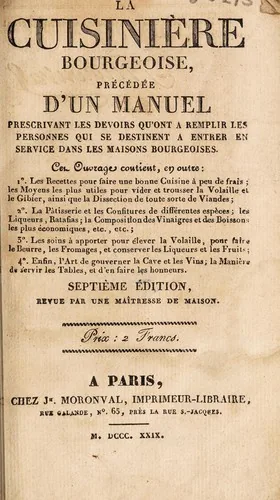
La Cuisinière bourgeoise first appeared in Paris in 1746. At that date, much French printed cookery was aimed at professional cooks serving great households, with grand dishes and large establishments in mind. Menon's book took a more domestic view. The title points to the bourgeois household, and the feminine "cuisinière" suggests the woman who ran its kitchen, whether as mistress or paid cook. The aim was a good table without princely resources, and the recipes are written with that practical reader in mind.
The book found a large audience. It was reprinted and revised many times in the decades that followed, which tells us how much demand there was for dependable home cookery. Its success shows that a cookbook could speak to ordinary households rather than only to the elite kitchens that dominated earlier publishing.
Who wrote it
Menon is the name that appears on the title pages, and very little about the man himself is securely documented. Even his full name is uncertain, so it is wiser to talk about the books than the biography. We would rather admit that gap than fill it with guesswork. Several other cookery titles carry the same name, among them Nouveau traité de la cuisine (1739), La Science du maître d'hôtel cuisinier (1749) and Les Soupers de la cour (1755). Together they suggest an author working across different parts of the cookery market in mid-eighteenth-century France. La Cuisinière bourgeoise is the one most closely tied to home cooking.
What's inside
The book is a collection of working recipes for everyday and occasional meals, covering soups, meat, poultry, fish, eggs, vegetables and sweet dishes. Menon's instructions are compact by modern standards and assume a cook who already knows basic technique.
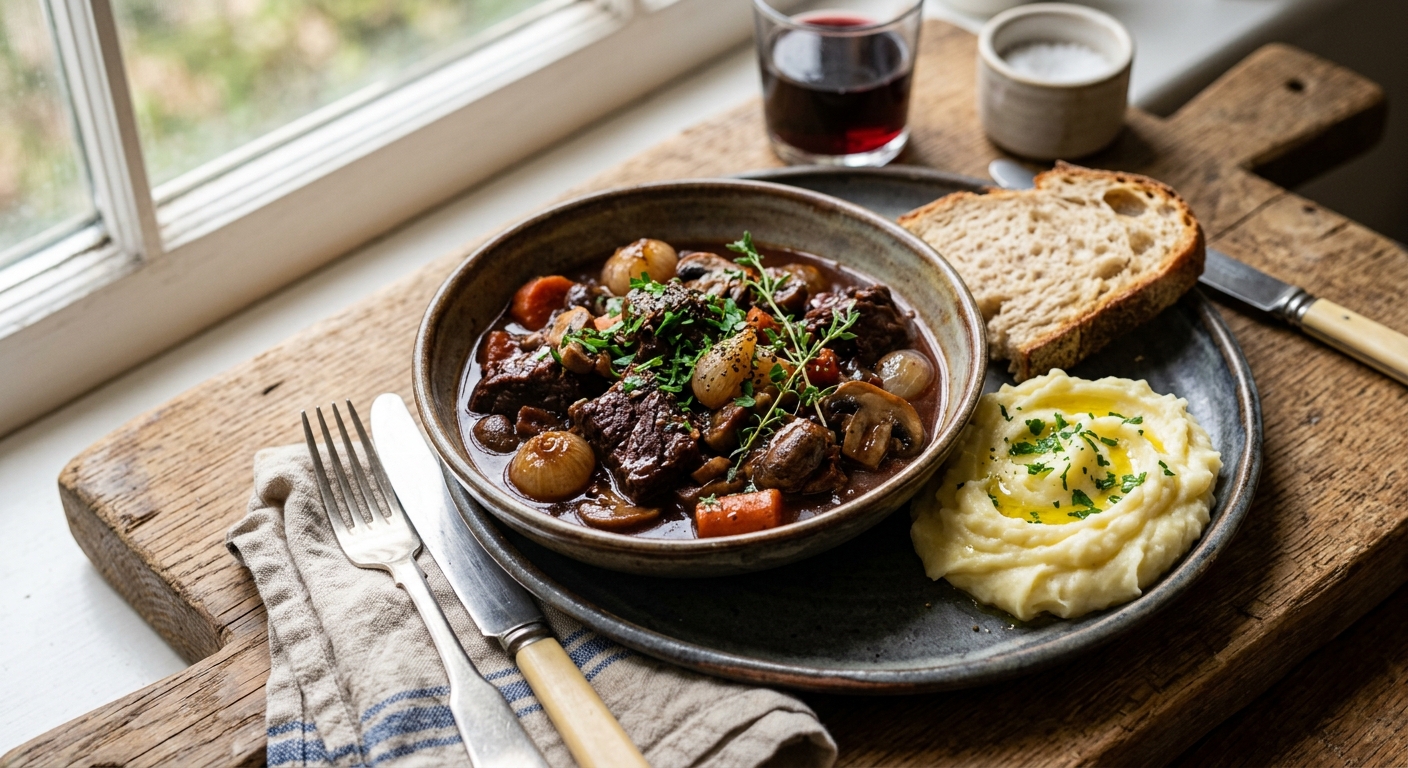
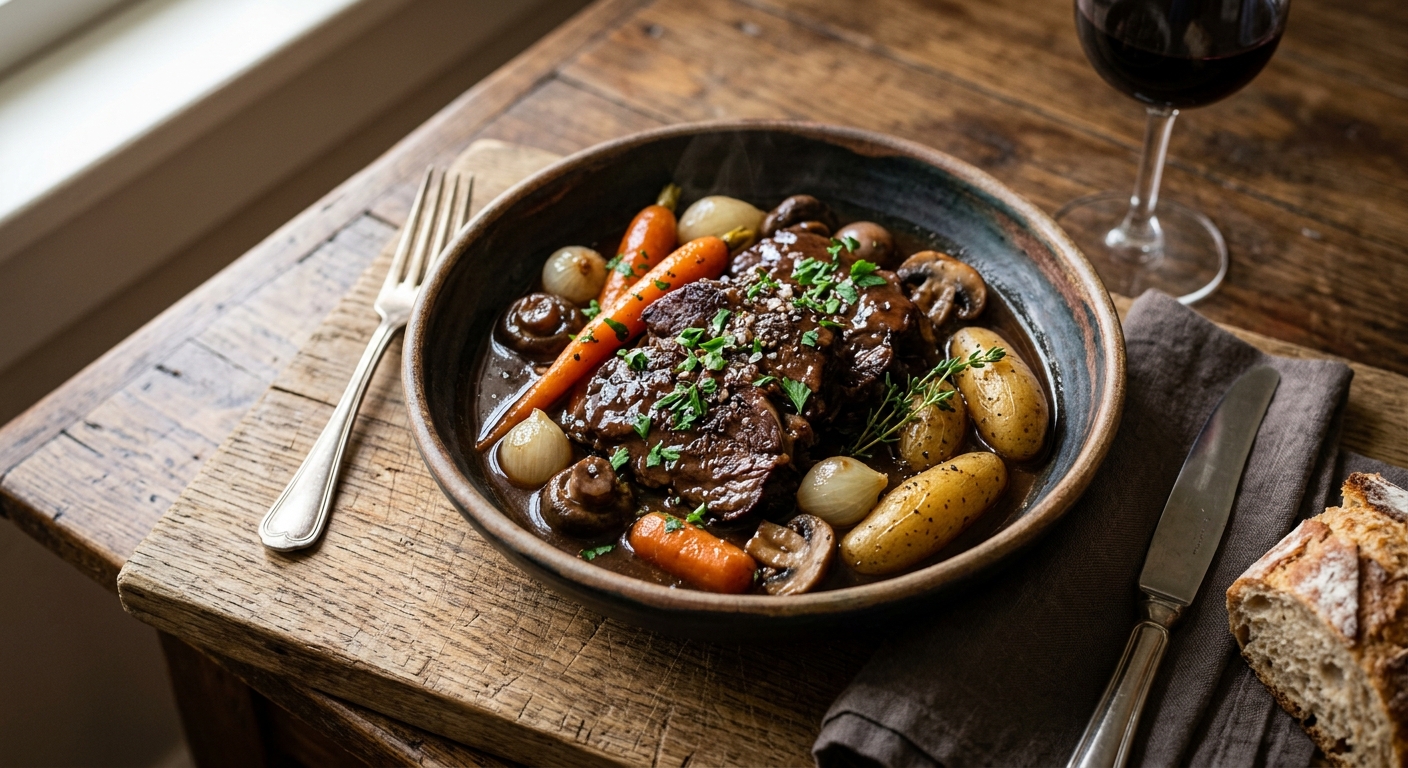
Recipe Filer has modernised two beef dishes from the book: Menon's Beef Bourguignon and Menon's Boeuf à la Mode. Both belong to the French tradition of cooking beef slowly in a savoury liquid until tender. We have adapted quantities, timings and methods for a modern British kitchen, so they should be read as interpretations rather than word-for-word transcriptions. The name beef bourguignon in particular is generally associated with later French cookery, so our version follows the spirit of Menon's braising rather than claiming to be his exact dish. If you cook them side by side, you can see how much a good braise depends on time, a well-seasoned liquid and a sensible choice of cut.
Why it still matters
La Cuisinière bourgeoise matters because it shows French cooking at home, not just at court. It documents the kind of food a prosperous eighteenth-century household might expect from its kitchen, and its long publishing life makes it a useful marker of changing domestic tastes. For the modern cook, its appeal lies in a straightforward logic: good ingredients, patience and sound seasoning. Braises such as boeuf à la mode suit British home kitchens well, since they use affordable cuts, reward slow cooking and can be made ahead. Reading Menon alongside a modern adaptation lets you see both what has changed in the kitchen and what has stayed reassuringly constant.
Recipes from La Cuisinière Bourgeoise
Frequently asked questions
Who wrote La Cuisinière bourgeoise?
+
The book was published under the name Menon, but little is securely known about the author, including his full name. He is also credited on other mid-eighteenth-century French cookery titles.
When was La Cuisinière bourgeoise first published?
+
It was first published in Paris in 1746. It was reprinted and revised many times in the years afterwards.
What does 'bourgeoise' mean in the title?
+
It refers to the middle-class, or bourgeois, household, as opposed to the great noble kitchens. The feminine 'cuisinière' suggests the book was meant for the woman who ran such a kitchen.