Historical cookbook
Opera dell'arte del cucinare: Renaissance Rome's Kitchen
Bartolomeo Scappi's 1570 cookery book, the great working manual of the Italian Renaissance kitchen, and the recipes we have adapted from it.
The story behind the book
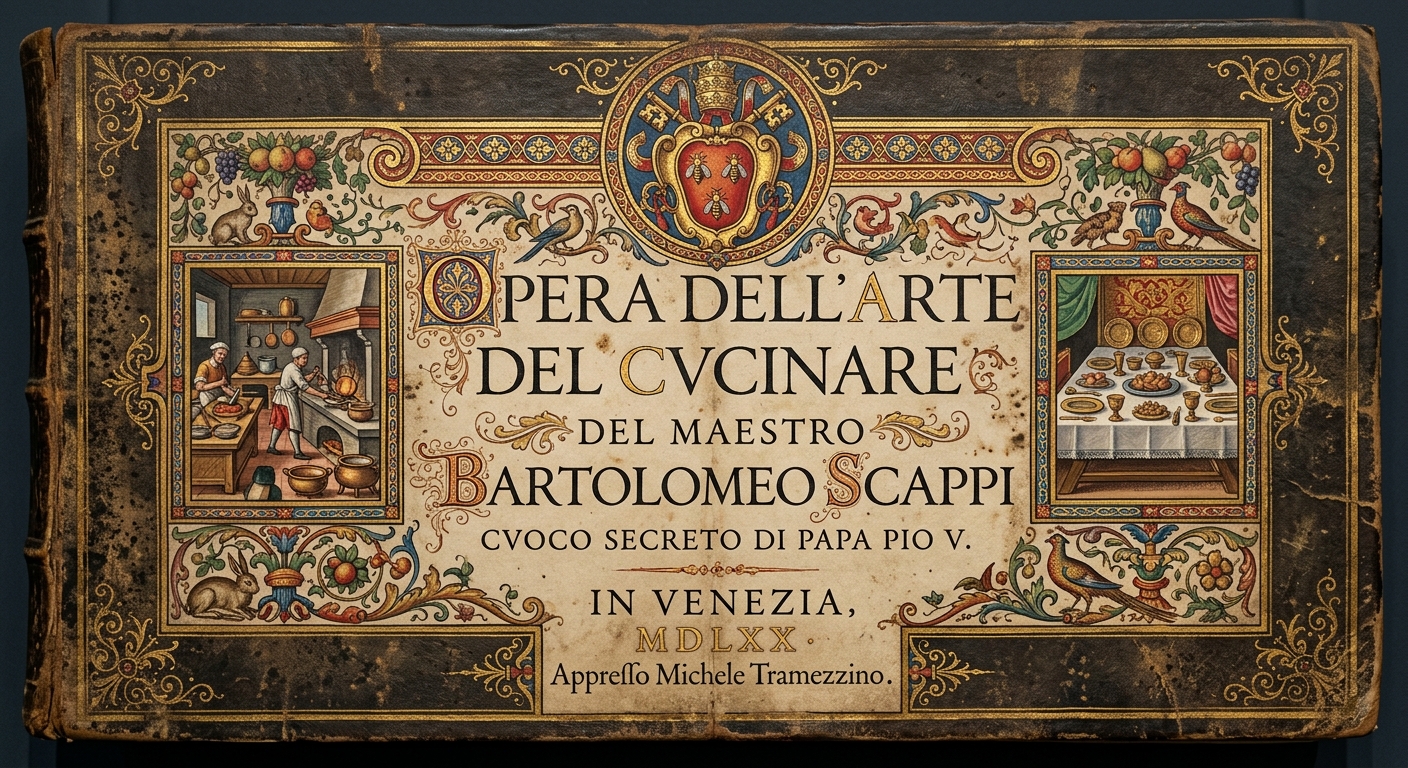
Opera dell'arte del cucinare, which means "Works on the art of cooking", was published in Venice in 1570. It was written in Italian rather than Latin, so working cooks and stewards could use it as well as scholars. It is among the most comprehensive cookery books of the Renaissance, and it reflects the scale of cooking in the great church households of Rome, where banquets for senior clergy and visiting dignitaries demanded careful planning, large kitchens and trained staff. Scappi wrote from long practical experience, and the book reads as a professional's manual rather than a gentleman's collection of curiosities. It was reprinted in the decades after its first appearance, and a complete English translation by Terence Scully was published in 2008, which opened it up to modern cooks and historians.
Who wrote it
Bartolomeo Scappi died in 1577. Little is securely documented about his early life, and his birth is usually placed around the start of the sixteenth century. He cooked in the households of senior churchmen in Rome and describes himself in the book as private cook to Pope Pius V. That position gave him access to the best ingredients and the largest kitchens of the day. His authority comes from that long career, and the book's tone is that of a man setting down a trade he knew thoroughly, not one repeating older sources.
What's inside
The work is divided into six books and contains somewhere around a thousand recipes. It covers the cook's craft and ingredients, meat, fish, pastry and tarts, menus for banquets, and dishes suitable for the sick and convalescent. It also gives separate treatment to meat days and to Lent, when the Church restricted what could be eaten. One of its best-known features is a series of engraved plates showing kitchen equipment, which is invaluable for understanding how a sixteenth-century kitchen actually worked. Tomatoes, potatoes and chocolate are not part of the picture, so the flavours lean on herbs, spices, sugar, verjuice, cheese and fresh and preserved meats and fish.
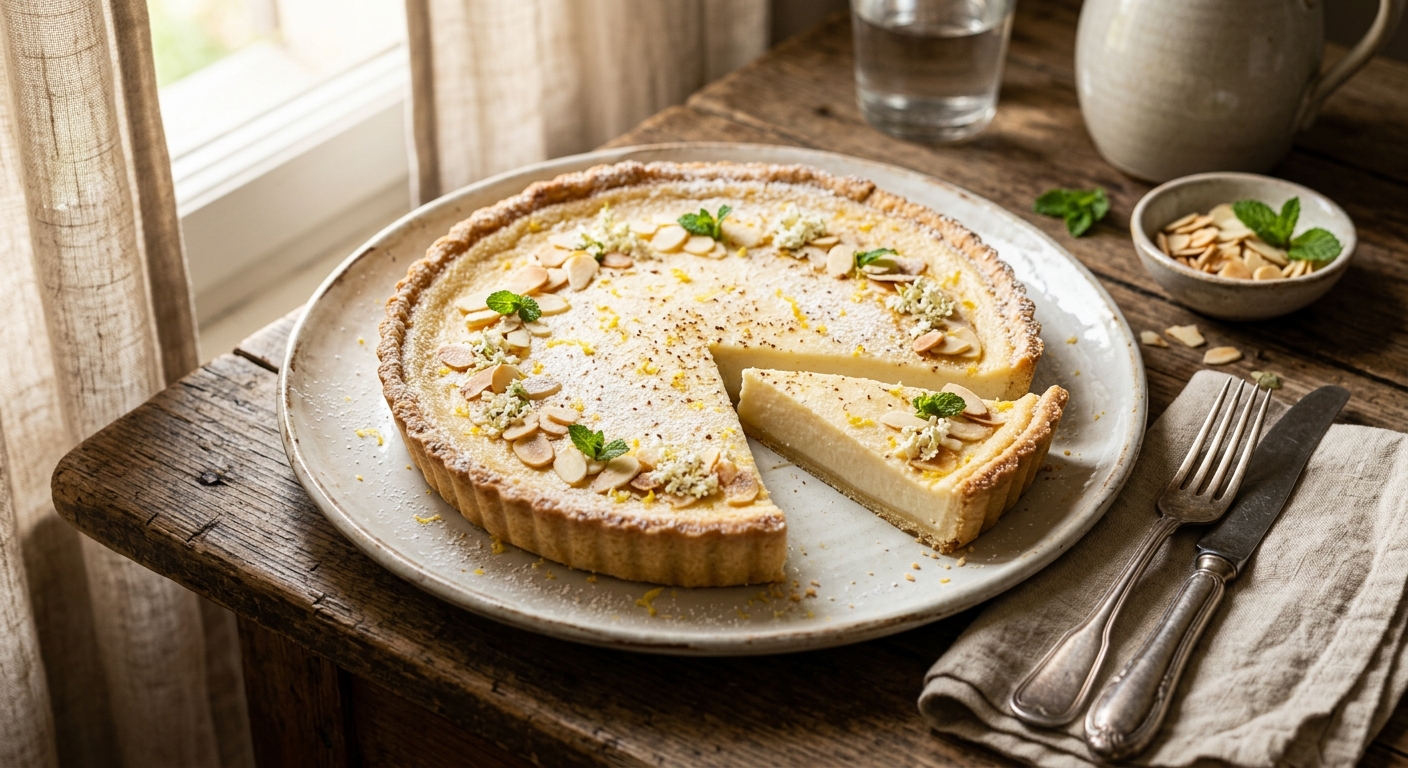
Our two adaptations are modern interpretations. Scappi's Torta Bianca belongs to the tradition of enriched tarts and pastry that fills much of his book, and we have scaled and simplified it for a home oven. Catherine de' Medici's Zabaione is a different case. The story that she introduced the dessert to France is a popular tradition rather than something we can document, and we do not claim it comes from Scappi's text. We include it because the whisked egg and sweet wine custard fits the broader Italian court cooking the book represents.
Why it still matters
For food historians, Scappi's book is a primary source for how a Renaissance kitchen was organised, from the layout of the working space to the logic of a multi-course banquet. It shows professional technique and presentation at a level few contemporary texts match, and many of the methods described, such as slow braising, careful pastry work and the layering of sweet and savoury flavours, still sit behind Italian cooking today. For home cooks, it is a reminder that much of what we think of as modern technique has long roots. Our adapted recipes aim to keep the spirit of the original while using ingredients, measurements and oven temperatures that work in a British kitchen.
Recipes from Opera dell'arte del cucinare
Frequently asked questions
Who was Bartolomeo Scappi?
+
Scappi was an Italian cook who died in 1577 and who described himself as private cook to Pope Pius V. He is best known for writing Opera dell'arte del cucinare.
When was Opera dell'arte del cucinare published?
+
It was first published in Venice in 1570. It was written in Italian and reprinted several times afterwards.
How many recipes does Scappi's book contain?
+
It contains around a thousand recipes across six books, along with menus and engraved illustrations of kitchen equipment. Terence Scully published a full English translation in 2008.