Historical cookbook
Praktisches Kochbuch: Davidis's German Kitchen Classic
Henriette Davidis's 1845 household cookbook, and the Sauerbraten recipe Recipe Filer has modernised from it.
The story behind the book
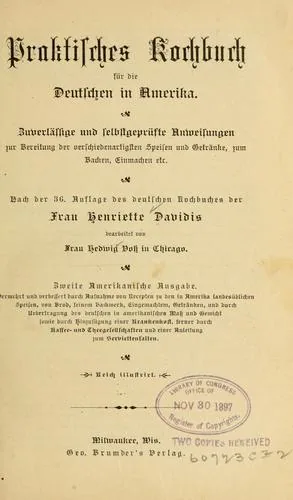
Praktisches Kochbuch für die gewöhnliche und feinere Küche first appeared in 1845 and became one of the most widely used German-language cookery books of the nineteenth century. Its title promised cooking for the "ordinary and finer" kitchen, and that range was the point. It spoke to households that needed everyday economy as well as the occasional dinner for guests. Over the following decades it was reissued and revised many times, and it became a standard household reference in German-speaking homes. It also travelled abroad, as editions were prepared for German emigrants in the United States, carrying familiar dishes into new kitchens.
Who wrote it
Henriette Davidis was born in 1801 in Wengern, in Westphalia, and died in 1876. She grew up in a pastor's household and worked as a teacher and governess before building a reputation as a writer on domestic skills. Her readers were chiefly young women learning to run a home, and she wrote with that audience in mind. The instructions are practical and orderly, and they assume a reader who wants to do things properly and without waste. Her name became so closely tied to German home cooking that it is still recognised today, long after most of her contemporaries have been forgotten.
What's inside
Like other general household cookbooks of its period, the book is built around the needs of a whole kitchen rather than a single style of dish. It offers a broad repertoire of everyday and more elaborate cooking, set out with an emphasis on method and good management. Its recipes tend to describe technique in running prose instead of the tidy ingredient lists we expect now, so a modern cook has to read closely.
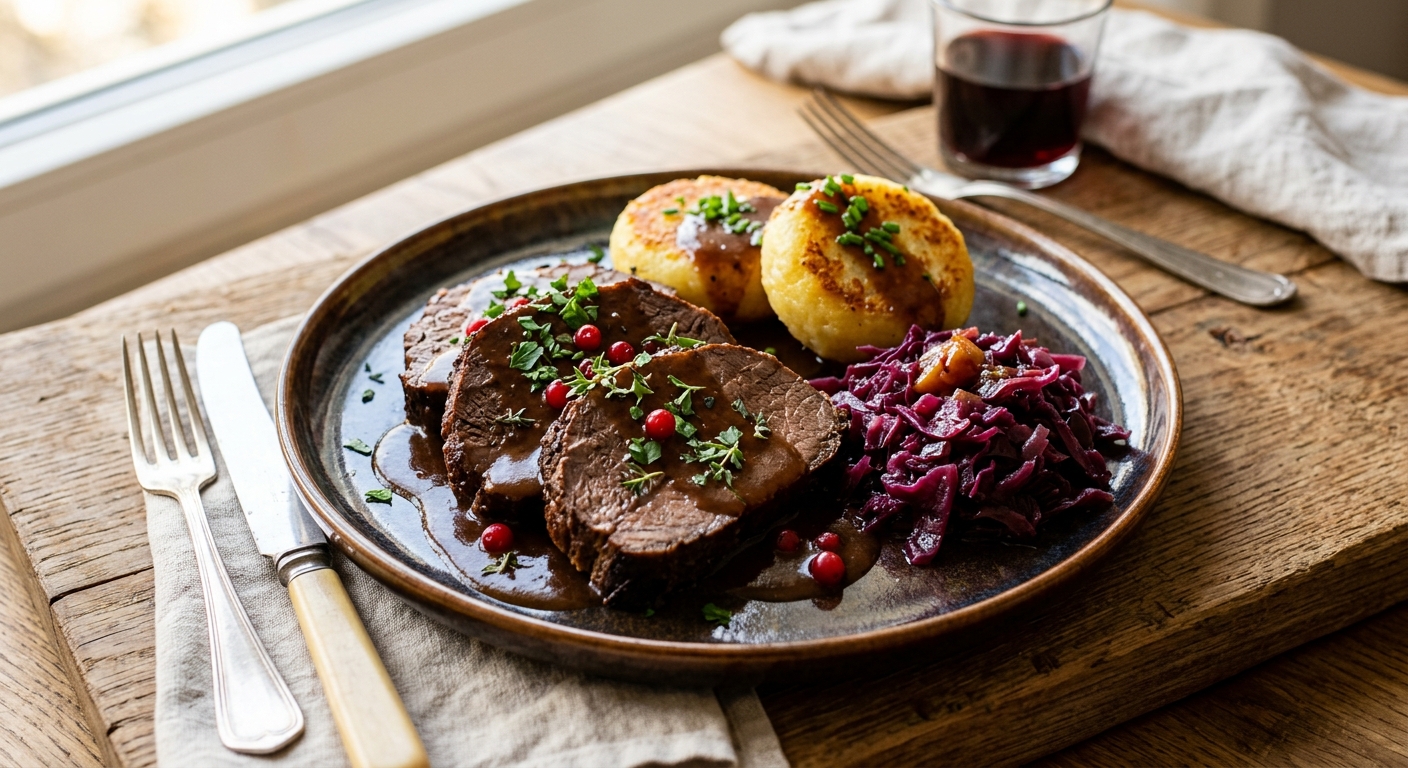
Sauerbraten is a good example of the kind of cooking that suits this tradition. It is a pot roast in which a joint of beef is left for days in an acidic marinade with onions and spices, then browned and braised slowly until tender. The cooking liquid is turned into the gravy. Regional versions differ in the marinade, the spicing and how the sauce is finished, which is part of why the dish is so often argued over. Our modernised recipe keeps that basic logic of marinating, braising and making a sauce from the pot. It adapts the quantities, timings and instructions for a present-day British kitchen, with ingredients that are easy to find and measurements you can follow without guesswork.
Why it still matters
Davidis's book matters because it records how an ordinary German household was expected to eat, cook and manage its money in the middle of the nineteenth century. It shows dishes we now think of as classics as part of a working domestic repertoire, not as restaurant fare. It is also a useful reminder of how recipes were once taught: by explanation, judgement and repetition rather than by exact charts.
For cooks today, the appeal is partly historical and partly practical. Slow, patient dishes such as sauerbraten reward planning, and they make good use of cheaper cuts of meat. Working from a modernised version lets you taste something of that tradition without having to decode nineteenth-century shorthand. The original remains the best place to see the larger picture of the cooking it was written to teach.
Recipes from Praktisches Kochbuch
Frequently asked questions
Who wrote Praktisches Kochbuch?
+
It was written by Henriette Davidis (1801–1876), a Westphalian teacher and household-management writer, and first published in 1845.
What is Praktisches Kochbuch known for?
+
It became one of the most widely used German household cookbooks of the nineteenth century, covering both everyday and more refined cooking. It was reissued many times and adapted for German-American readers.
Is there a Sauerbraten recipe from Davidis on Recipe Filer?
+
Yes. Recipe Filer has a modernised Marinated Pot-Roast Beef (Sauerbraten) recipe based on the book, with clear quantities and timings for a present-day kitchen.