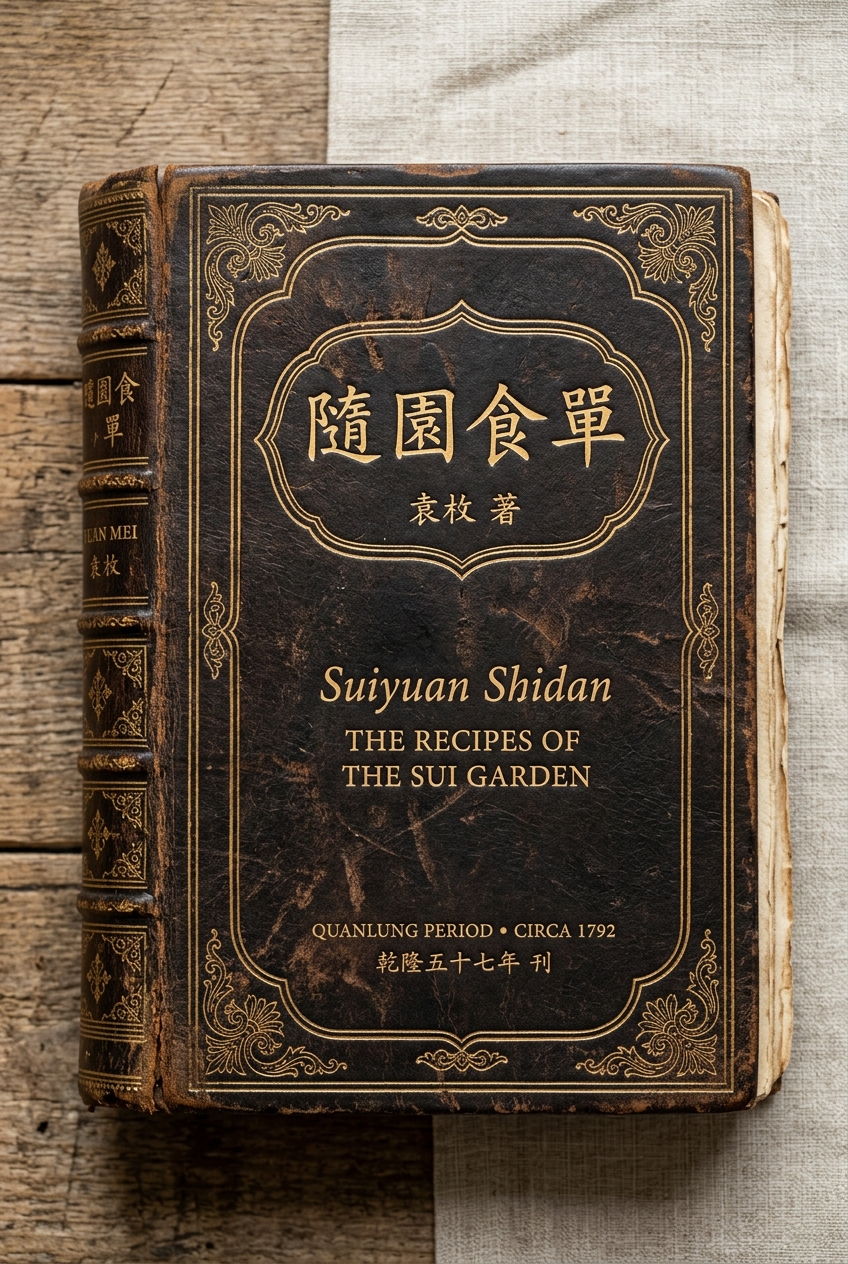
Historical cookbook
Suiyuan Shidan: Yuan Mei's Guide to Eating Well
Yuan Mei's 1792 Qing-dynasty food manual, with recipes and rules of taste from his Nanjing estate.
The story behind the book
Suiyuan Shidan, usually translated as Recipes from the Sui Garden, was first published in 1792, during the reign of the Qianlong Emperor. The title combines the name of Yuan Mei's estate with shidan, a word for a list of foods or a menu. The book belongs to a long Chinese tradition of writing about food, yet it stands out because it reads less like a kitchen manual than like a gourmet's argument. Yuan Mei recorded dishes he had eaten and admired over many years, often at the tables of friends, and set them beside firm views on how food should be chosen, seasoned and served. The recipes are brief, sometimes only a few lines, and assume the reader already understands the basics of a Chinese kitchen.
Who wrote it
Yuan Mei (1716–1798) was born in Qiantang, near Hangzhou, and became one of the leading poets of the Qing period. He passed the highest level of the civil service examinations in 1739 and served as a local magistrate in Jiangsu, but he withdrew from office while still in his thirties. He settled in Nanjing, where he bought and rebuilt an estate he named the Sui Garden, and he spent the rest of his life writing, teaching and entertaining there. He was known for taking women as poetry pupils, which was unusual for his time. The cookbook grew out of this life of leisure and hospitality rather than from any professional training in the kitchen.
What's inside
The book opens with two short chapters of principles. The first, on what a cook needs to know, deals with matters such as choosing ingredients, seasoning, controlling the heat and timing. The second is a list of warnings against common faults, including greasiness, overcooking and showy excess. The remainder is arranged by ingredient and type of dish, covering seafood, river fish, pork and other meats, poultry, vegetables, small relishes, snacks, rice and congee, and finally tea and wine. Yuan Mei argues repeatedly that a dish should taste of its main ingredient, that each item deserves to be cooked to its own correct point, and that a few well-made dishes beat a crowded table. Instructions rely on judgement and sensory cues more than on exact weights or times.
Why it still matters
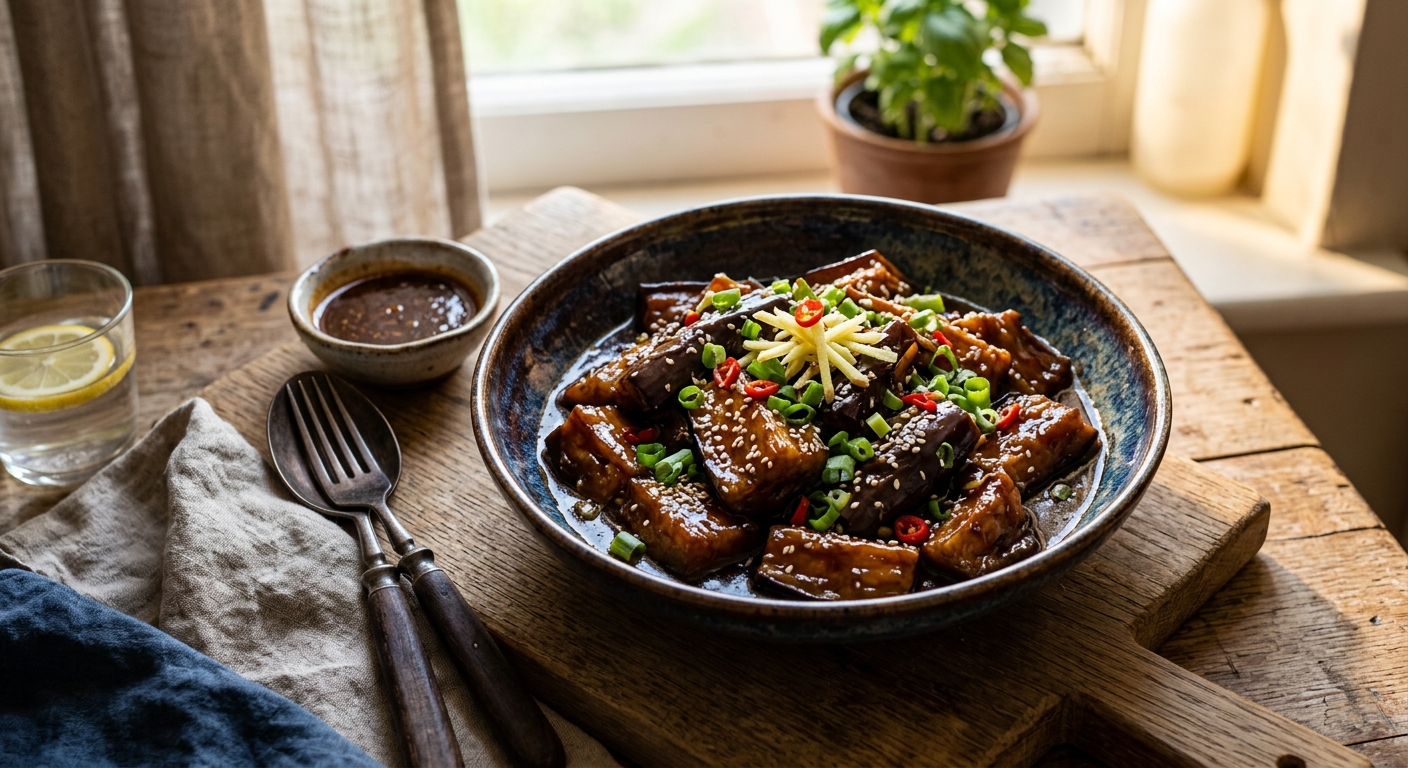
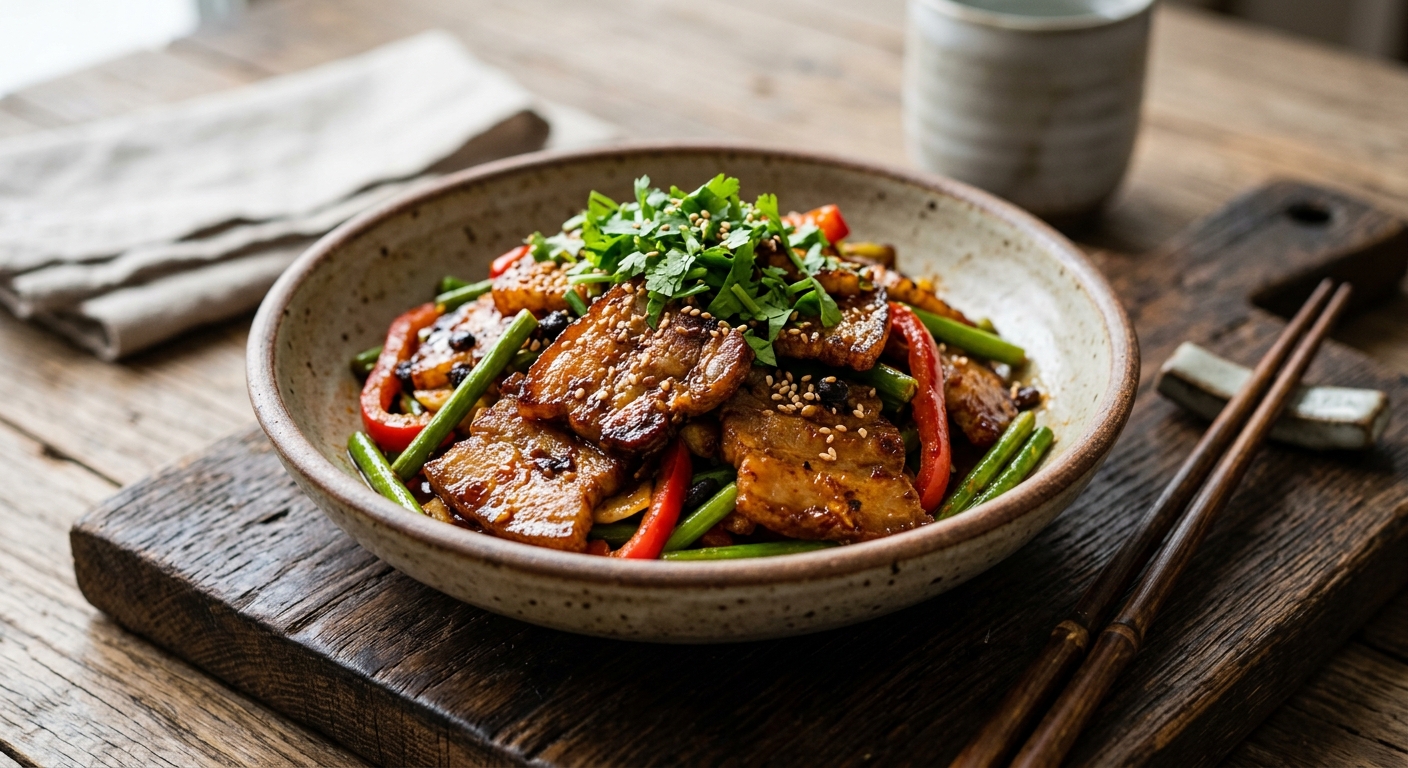
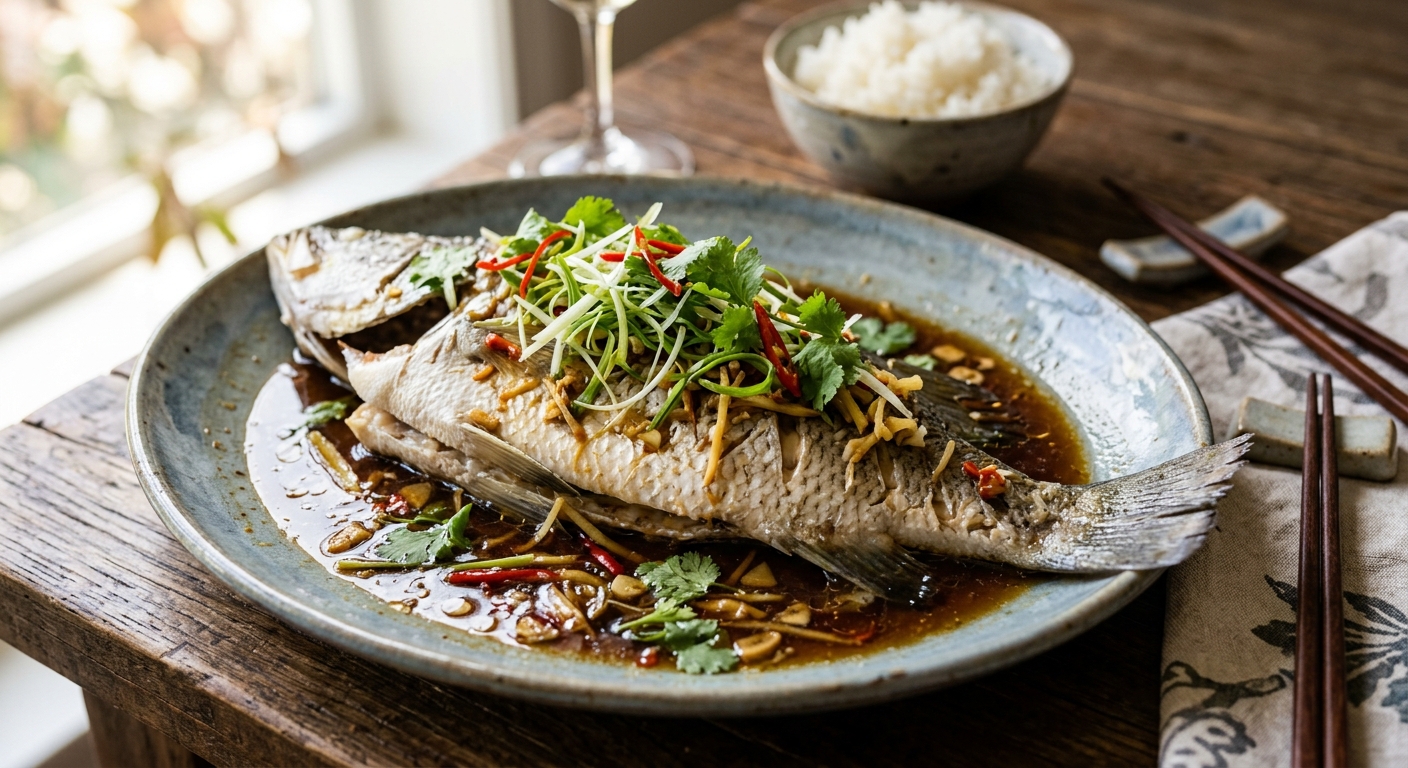
The book is unusually direct about its author's preferences, which makes it valuable to historians as a record of educated taste in eighteenth-century Jiangnan, the region around the lower Yangtze. It has been reprinted many times and translated into several languages. It also remains useful as practical advice: buy good ingredients, season with restraint and mind the fire. Recipe Filer's modernised Braised Aubergine, Twice-Cooked Pork and Steamed Fish take that spirit as their starting point, adapting methods and quantities for a British kitchen and for ingredients found in UK shops. They are interpretations rather than literal translations, since the original text rarely gives measurements, and we have written them so that a home cook can follow them without guesswork. Reading the book alongside them shows how much of Yuan Mei's advice still holds.
Recipes from Suiyuan Shidan 隨園食單
Frequently asked questions
Who wrote Suiyuan Shidan and when was it published?
+
Suiyuan Shidan was written by the Qing-dynasty poet and scholar Yuan Mei (1716–1798) and first published in 1792.
What does Suiyuan Shidan mean?
+
It is usually translated as Recipes from the Sui Garden, or the Sui Garden Menu. Suiyuan is the name of Yuan Mei's estate in Nanjing, and shidan means a list of foods.
What kind of book is Suiyuan Shidan?
+
It is a collection of recipes and opinions on food, opening with rules for good cooking and common faults to avoid. The dishes that follow are grouped by ingredient and type, from seafood and meat to vegetables, snacks, rice, tea and wine.